I used to think healthy eating meant sad, wilted lettuce and flavorless chicken breast. Boy, was I wrong! The first time I visited a small taverna in Santorini, the explosion of lemon, oregano, and garlic changed my palate forever. Did you know that the Mediterranean diet is consistently ranked as the #1 best diet overall for health?
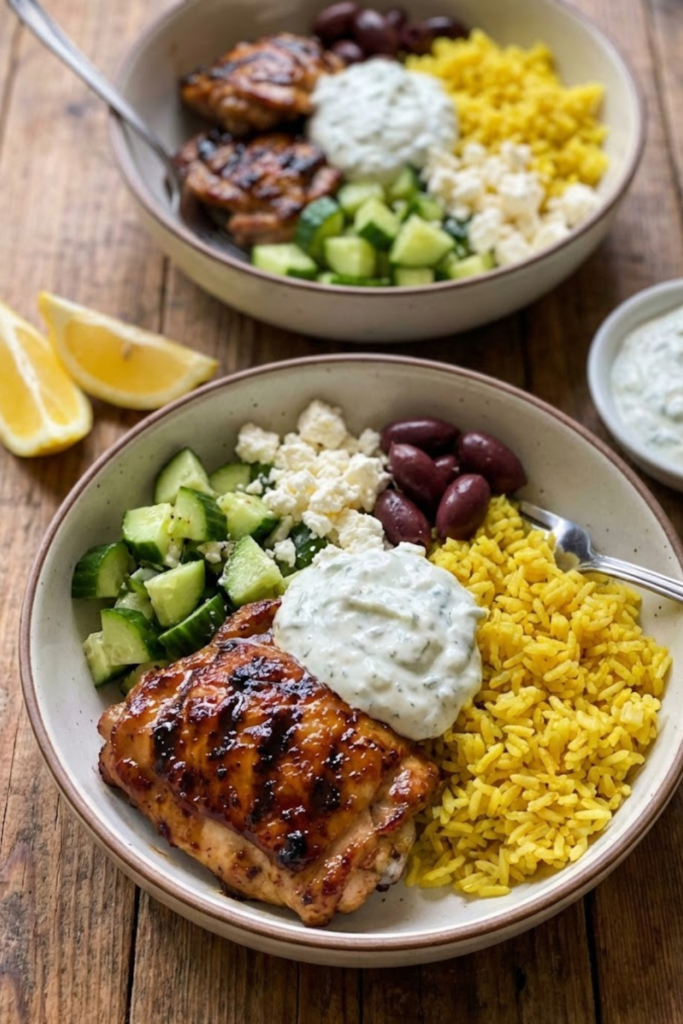
These Greek Lemon Chicken Bowls are my love letter to those sunny days. They are vibrant, zesty, and incredibly satisfying. We aren’t just tossing ingredients in a bowl; we are building layers of flavor that will make your coworkers jealous when you pull this out for lunch! Whether you are a meal-prep pro or just looking for a quick dinner, this recipe brings the “opa!” right to your kitchen table.
Marinating for Maximum Flavor: The Chicken Base
I’ve gotta admit something embarrassing. For years, I avoided making Greek lemon chicken bowls at home because my chicken always tasted like seasoned cardboard. I would buy expensive organic breasts, soak them in juice, and they’d still come out dry and sad. It was super frustrating! I remember serving a dinner party once where everyone drank three glasses of water just to get the meat down. Yikes.
But I finally figured out the secret, and it’s honestly a game changer. It’s not about being a master chef; it’s about choosing the right meat and treating it nice.
Why Thighs Save Lives (and Dinner)
First off, ditch the chicken breasts for this recipe. Seriously. I know, I know, we’re all told white meat is “better,” but for a bowl recipe where you want juicy, reheat-friendly meat, boneless skinless chicken thighs are the MVP.
Chicken thighs have a little more fat content, which keeps them moist even if you accidentally cook them a minute too long (which I definitely still do). When you grill or pan-sear them, they get those crispy edges while staying tender inside. If you absolutely must use breasts, pound them flat first so they cook evenly. But trust me, thighs are where the flavor is at.
The “Holy Trinity” Marinade
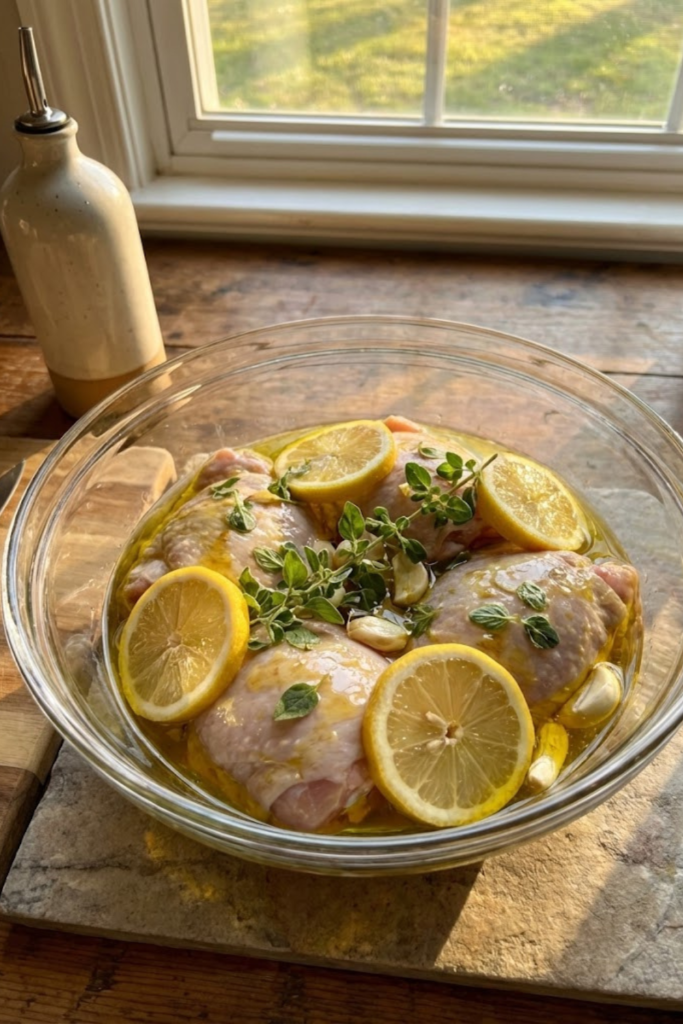
You don’t need a pantry full of weird spices to get that authentic Mediterranean flavor. You really just need three main things: fresh lemon juice, dried oregano, and good olive oil.
I used to use the bottled lemon juice—big mistake. It tastes metallic. Squeeze fresh lemons. It makes a huge difference. Then, I go heavy on the dried oregano. I rub it between my palms before dropping it in the bowl to wake up the oils in the herb. It smells amazing immediately.
Here is a quick breakdown of what I throw in the bag:
- Extra Virgin Olive Oil: About half a cup. It carries the flavor into the meat.
- Fresh Lemon Juice: Acid tenderizes the meat.
- Garlic: Smash it. Don’t just chop it; smash it so the juices get out.
Don’t Let It Sit Too Long
Here is a tip I learned the hard way. I used to think “longer is better” for marinating. I’d leave the chicken in lemon juice overnight. The next day, the texture was mushy and weird because the acid literally cooked the meat.
For these Greek lemon chicken bowls, the sweet spot is 30 minutes to 2 hours. That’s it!
If you are meal prepping on a Sunday, just toss the chicken in the marinade while you chop your veggies. By the time you are done dicing cucumbers, the chicken is ready to hit the pan. It keeps the texture perfect—firm but tender.
The Perfect Base: Rice, Quinoa, or Greens?
Okay, let’s be real for a second. The chicken gets all the glory in Greek lemon chicken bowls, but the base is the unsung hero. I learned this lesson the hard way a few years ago. I spent all this time marinating my meat perfectly, only to slap it on top of plain, sticky white rice that I forgot to salt. The whole meal felt flat. It was a total letdown.
The base is what soaks up all those delicious juices from the chicken and the tzatziki. If your base is boring, your bowl is boring. And nobody wants a boring lunch, right?
Leveling Up Your Rice Game
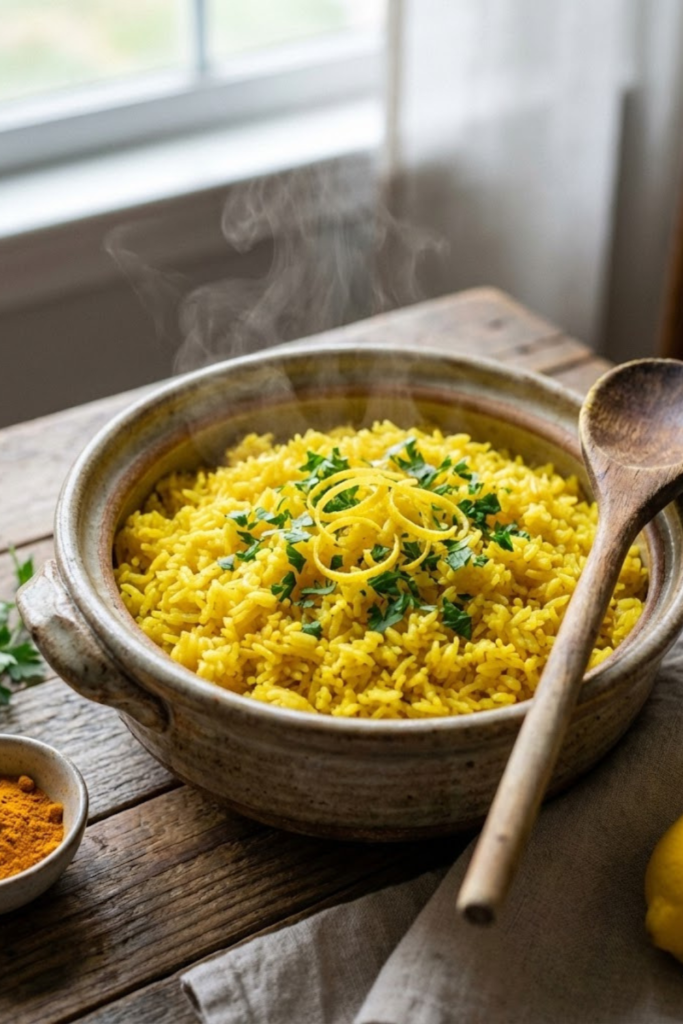
If you want that restaurant-style vibe, you can’t just use water. Seriously, stop using plain water to cook your rice! I switched to using chicken broth (or vegetable broth) years ago, and I haven’t looked back. It adds a savory depth that makes the lemon herb rice taste like it simmered for hours.
Also, I have a little secret weapon: turmeric.
I used to wonder how the local Greek spot got their rice that beautiful golden color. I thought it was saffron, which is way too expensive for my teacher budget. Turns out, it’s just a pinch of turmeric. I add about half a teaspoon to the pot right before the liquid boils.
A quick warning though: turmeric stains everything. I have a wooden spoon that is permanently yellow now. Consider it a battle scar of a good cook! Stir in some lemon zest and fresh parsley right at the end, and you’ve got a Mediterranean flavor bomb.
The Quinoa Dilemma
Maybe you are trying to be healthier and want a quinoa boost. I get it. Quinoa is great for protein. But have you ever made it and it tasted kind of… soapy? I did that. I served un-rinsed quinoa to my husband, and he politely asked if I hadn’t rinsed the dish soap off the pot.
Quinoa has a natural coating called saponin that tastes bitter. You have to rinse it really well in a fine-mesh strainer before cooking. Once I started doing that, the nutty flavor actually came through. It adds a nice texture to the chicken bowls that doesn’t get mushy as fast as rice does.
Going Green (and Low Carb)
Sometimes, after a heavy weekend of eating pizza, I just want low-carb options. Swapping grains for greens is an easy fix. But don’t just throw raw kale in a bowl and call it a day. That stuff is tough like leather!
You have to massage the kale. I know it sounds high-maintenance, but hear me out. Put the chopped kale in a bowl with a little olive oil and lemon juice, and scrunch it with your hands for about two minutes until it turns dark green and soft. It makes it actually chewable and way more delicious to eat.
Whether you choose turmeric rice recipe styles, nutty quinoa, or greens, just make sure you season it. A bland base is a crime against flavor!
Fresh Toppings: The Greek Salad Element
I have a confession to make. For the longest time, my idea of a salad was chopping up whatever was dying in my crisper drawer and hoping for the best. It usually ended up being a watery, sad mess by the time I sat down to eat lunch. There is nothing worse than opening your container and finding your fresh cucumber salad floating in a pool of tomato juice. Gross.
The toppings are where the texture happens. You need that crunch to balance out the soft rice and chicken. If you skip this part, you’re basically just eating baby food.
The Crunch Factor
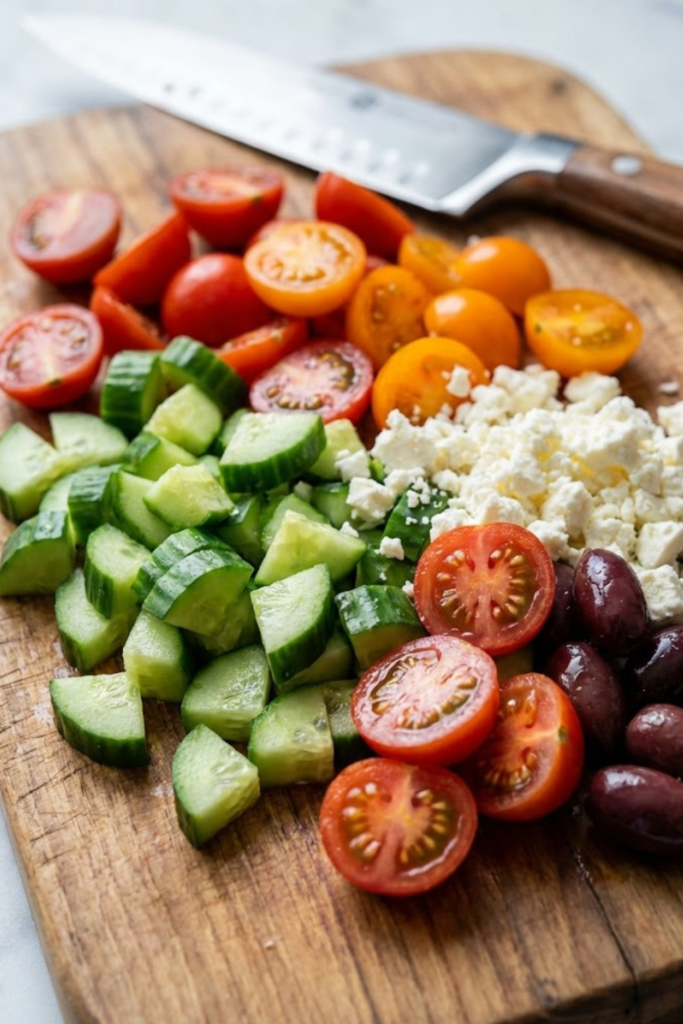
Let’s talk cucumbers. I used to buy those cheap, waxy ones because I’m thrifty. But peeling them is a pain, and the seeds are watery. I finally switched to English cucumbers (the long ones wrapped in plastic). You don’t have to peel them! The skin is thin, and they have way fewer seeds. It saves me like, five minutes of prep time, which is huge when you’re rushing.
Also, raw red onions can be aggressive. I love them, but I don’t love having “onion breath” for three hours after lunch. A trick I learned? Slice them thin and soak them in a bowl of ice water for ten minutes while you prep everything else. It takes the bite out and leaves the red onion crunch.
The Tomato Trouble
Here is a mistake I’ve made a hundred times. I used to chop up big beefsteak tomatoes for my bowls. By day two in the fridge, they would turn into mush.
For meal prep, you’ve gotta stick to cherry tomatoes or grape tomatoes. They hold their shape way better. I usually keep them whole or just slice them in half right before I eat. If you cut them too early, they leak everywhere. Nobody wants a soggy bowl.
The Salty Goodness
Now for the best part: the cheese and olives.
Please, I am begging you, stop buying pre-crumbled feta cheese. It tastes like chalk. They put this anti-caking powder on it so it doesn’t stick together, but it also dries it out. Buy the block of feta in the brine. It stays moist and creamy. Crumbing it yourself takes two seconds and the flavor difference is wild. It’s one of those Greek salad ingredients that makes or breaks the dish.
And don’t forget the Kalamata olives. I used to use those bland black olives from a can (pizza olives, I call them). They add nothing. Kalamata olives have that vinegary, salty punch that wakes up the whole dish. Just make sure you get the pitted ones, or you might crack a tooth.
Fresh vs. Dried Herbs
Lastly, don’t skimp on the herbs. I know dried herbs are easier, but fresh dill and parsley are non-negotiable here. Fresh dill recipes just smell like summer. I usually chop a huge handful and sprinkle it over everything right at the end. It makes the bowl look like it came from a fancy kitchen instead of my chaotic countertop.
The Sauce: Homemade Tzatziki and Hummus
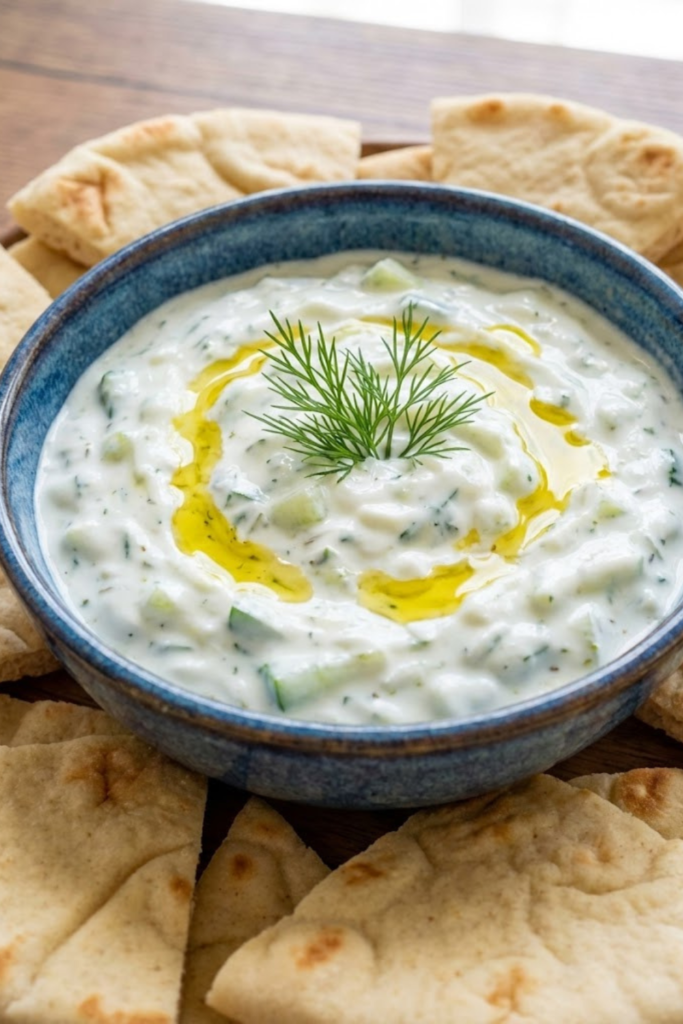
If the chicken is the heart of the bowl, the sauce is definitely the soul. You can have the best-grilled meat in the world, but if you serve it dry, it’s just sad. I remember the first time I tried to make homemade tzatziki sauce for a dinner party. I didn’t look up a recipe; I just dumped chopped cucumber into yogurt.
It was a disaster. Within ten minutes, the water from the cucumber seeped out and turned my beautiful sauce into a milky, watery soup. It ran all over the plates and made the pita bread soggy. It was tragic, honestly. I learned a big lesson that day: water is the enemy of a good dip.
Tzatziki 101: Squeeze It
Here is the secret to thick, creamy tzatziki that stays put: you have to squeeze the life out of the cucumber. And I mean really squeeze it.
I usually grate the cucumber on a box grater first. Then, I take handfuls of the shreds and squeeze them over the sink until my knuckles turn white. You will be shocked at how much liquid comes out! If you want to be fancy, you can use a cheesecloth, but using your hands works just fine and saves you from doing extra laundry. Once the cucumber is dry, then you mix it with the yogurt, garlic, lemon, and dill.
Fat is Flavor
Speaking of yogurt, please don’t use the non-fat stuff for this. I went through a phase where I was obsessed with cutting calories, so I used 0% fat yogurt. It was chalky and had this weird, tart aftertaste that overpowered everything.
For the best results, use full-fat Greek yogurt (5% or higher). It makes the sauce rich and velvety. It coats the chicken perfectly instead of sliding right off. This is one of those Greek yogurt recipes where the quality of the ingredients really shows, so treat yourself to the good stuff.
The Hummus Shortcut
Now, I know I talk a big game about cooking from scratch, but I have limits. Making hummus from scratch? Ain’t nobody got time for that on a Tuesday night. Peeling those little skins off chickpeas takes forever.
I usually just grab a tub of high-quality store-bought hummus. I love using roasted red pepper hummus for these bowls because it adds a nice pop of orange color and a little smoky sweetness that goes great with the lemon chicken. If you want to make it look homemade, just spoon it into the bowl and drizzle a little olive oil and paprika on top. Nobody will know the difference.
Dairy-Free? No Problem
I have a few friends who can’t do dairy, and missing out on tzatziki is a bummer. But you don’t have to eat a dry bowl. I whip up a quick dairy free greek dressing for them. It’s just olive oil, lots of lemon juice, dried oregano, and a little Dijon mustard to help it emulsify. Shake it up in a jar, and you’re good to go. It adds that necessary moisture and zing without the stomach ache.
Assembly and Meal Prep Storage Tips
I used to be a total hot mess when it came to packing my lunch. I’d spend hours cooking on Sunday, feeling super proud of myself. Then, I’d throw everything into a plastic tub while it was still piping hot and shove it in the fridge. By Tuesday, my healthy lunch was a soggy, sad disaster. The rice was mushy, the cucumbers were cooked from the steam, and the whole thing smelled kind of funky.
I learned the hard way that how you store the food is just as important as how you cook it. If you want your Greek lemon chicken bowls to taste fresh on Friday, you have to be a little strategic.
The Cooling Rule
This is the number one mistake I see people make. Do not, I repeat, do not put the lid on your containers while the food is hot!
I used to think I was being efficient by packing it away quickly. Nope. When you seal hot chicken and rice, steam gets trapped inside. That condensation drips back down onto the food, creating a breeding ground for bacteria (yuck) and turning your fluffy rice into paste. I usually lay out my meal prep containers on the counter and let the hot ingredients cool completely—like, for at least 45 minutes—before I even think about putting the lids on.
Layering Logic
If you don’t have those fancy glass containers with the dividers, you have to layer smart. I used to just pile everything in, but then reheating was a nightmare. Have you ever tried to microwave a salad? It’s gross. Hot lettuce is not a vibe.
Here is my trick: I put the lemon herb rice and the chicken on one side or at the bottom. Then, I put the cold stuff—the cucumber salad, olives, and feta—in a silicone cupcake liner or a small ziplock bag sitting right on top. When it’s time to heat up my lunch at work, I just lift out the cold baggie, zap the rest, and then dump the cold toppings back on. It keeps the textures crisp and distinct.
Sauce on the Side
I know it looks pretty on Instagram to have the tzatziki drizzled perfectly over the bowl. But if you do that on Sunday, the sauce will either vanish (soaked up by the rice) or make the chicken soggy by Monday.
Invest in those tiny little condiment cups. They are cheap and totally worth it. I fill five of them with tzatziki or hummus during my Sunday meal prep and toss one in with each bowl. Keeping the sauce separate until the very last second keeps the flavor punchy.
Batch Cooking Reality
Honesty time: by Thursday, chicken can start to taste a little “leftover-y.” It happens. One thing I do to freshen it up is pack a fresh lemon wedge in the container. Squeezing fresh juice over the meal right before I eat it wakes up the flavors and masks that fridge taste.
These batch cooking tips might sound extra, but they make the difference between actually eating your lunch or ordering takeout because your prep looks unappetizing.
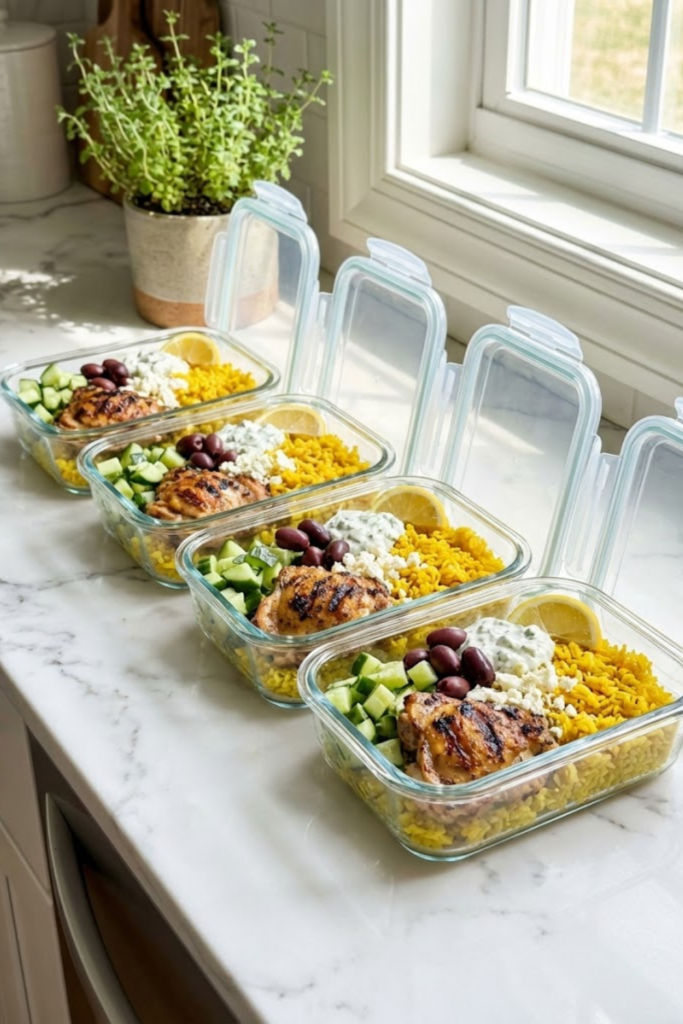
So, there you have it. A bowl full of sunshine! These Greek Lemon Chicken Bowls prove that healthy food doesn’t have to be boring. With tender marinated chicken, fluffy rice, and that cool, creamy tzatziki, every bite is a perfect balance of texture and taste. Give this recipe a try for your next meal prep Sunday; your future self will thank you.
Don’t forget to save this recipe! Share this pin to your “Healthy Dinner Ideas” board on Pinterest so you never lose this delicious inspiration.