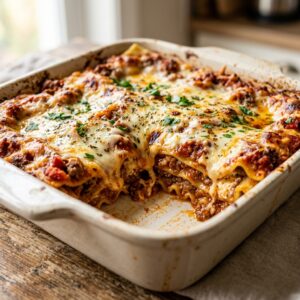
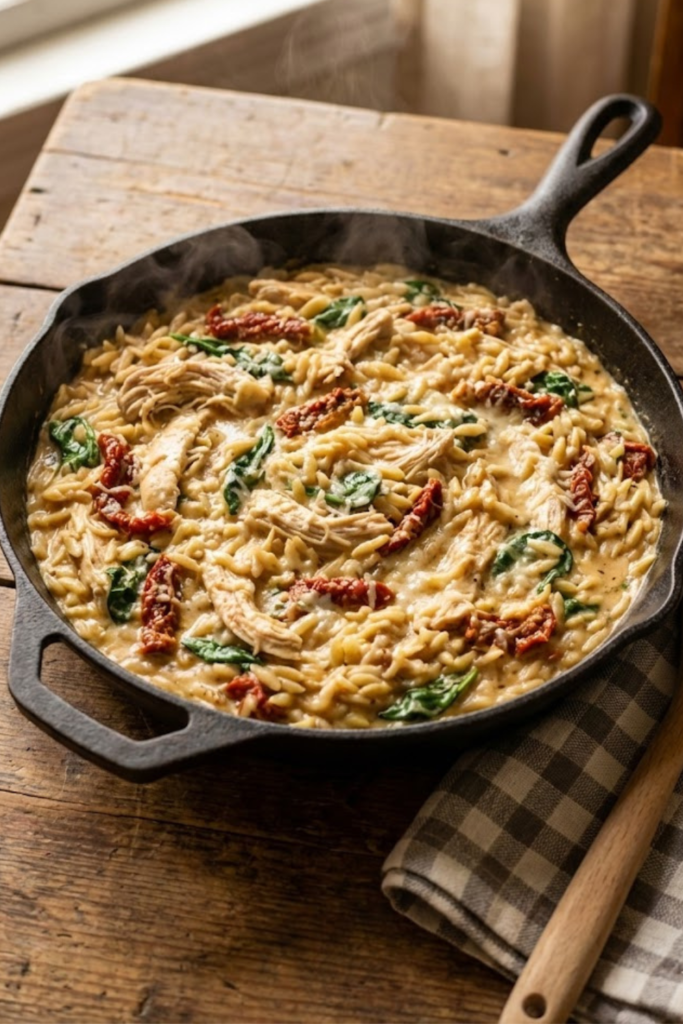
You know that specific feeling when you can’t decide between a rich, broth-heavy soup and a hearty, cheesy pasta bake? It’s a real struggle! But I have good news. This French Onion Chicken Orzo Casserole is basically a warm hug in a skillet. Did you know that savory “umami” flavors, like those found in caramelized onions and beef broth, are scientifically proven to trigger comfort signals in the brain? It’s true!
I remember the first time I tried to mash these two recipes together; I was terrified it would be a soggy mess. Instead? Magic happened. We are talking about tender chicken nestled in a bed of orzo that has absorbed all that savory onion goodness, topped with bubbly, golden-brown cheese. It’s not just dinner; it’s an experience. Let’s dive into this deliciousness!

Why This One-Pan Chicken Orzo Recipe Works
Honest confession time: I used to be terrified of cooking orzo. Seriously, for the longest time, every time I tried to make it, I ended up with a gloopy, sticky mess that looked more like wallpaper paste than a fancy side dish. I avoided it like the plague. But then, on a particularly busy Tuesday when my sink was already overflowing with breakfast dishes I hadn’t touched, I decided to throw everything into my cast iron skillet and pray for the best.
The result? Absolute magic. And a lot less dishwashing soap was used that night.
The Magic of the “Fond”
Here is the thing about this French onion chicken orzo casserole: it builds flavor in layers right in the pan. When you sear the chicken first, you get those brown, crusty bits stuck to the bottom of the skillet. In the culinary world (and my kitchen), we call that “fond.”
If you were boiling pasta in a separate pot, you’d wash all that flavor down the drain. What a waste! By cooking the toasted orzo directly in the broth that deglazes those brown bits, the pasta absorbs that deep, meaty flavor. It transforms a simple grain into something that tastes like it simmered for hours.
Texture Troubles (and Triumphs)
I’ve learned the hard way that texture is everything with casseroles. Too often, they turn into a soft, one-note mush. I hate that. The beauty here is the contrast.
- The Creaminess: Because the orzo releases starch directly into the sauce as it cooks, you get a creamy consistency similar to risotto, without standing at the stove stirring for 40 minutes.
- The Crunch: Broiling the Gruyère cheese at the end creates this crispy, golden crust that shatters when you dig in.
I remember serving this to a friend who claims to hate “soggy food.” I watched her nervously take the first bite. The look on her face when she hit that crunchy cheese layer mixed with the tender chicken? priceless. She went back for seconds.
Saving Your Sanity
Let’s be real for a second. We are all busy. The last thing I want to do at 7 PM is wash a pot for pasta, a pan for sauce, and a baking dish. This one pot chicken dinner saves my sanity.
However, a quick word of warning from my own failures: make sure your skillet is big enough! I once tried to squeeze this into a 10-inch pan and it bubbled over into my oven. Smoke alarm. Open windows. The whole drama. Use a 12-inch skillet or a Dutch oven to be safe. It gives the caramelized onions room to breathe and brown properly without steaming.
This recipe manages to feel fancy enough for a Saturday night dinner party but is low-effort enough for a tired Tuesday. It hits that sweet spot of comfort food without requiring a culinary degree to pull off. Plus, the smell of thyme and onions wafting through the house? It beats a scented candle any day.
Essential Ingredients for Authentic French Onion Flavor
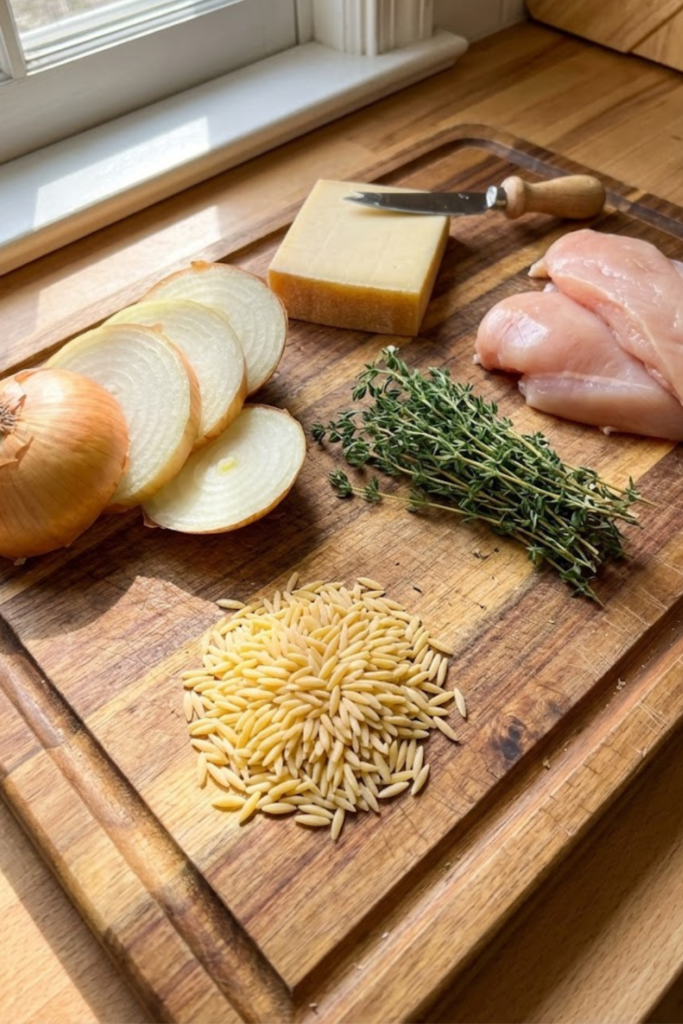
You might think that because this is a casserole, you can just throw whatever is in the fridge into the pan. I’ve been there. I once tried to make this using purple onions and cheddar cheese because I was too lazy to go to the store. Let me tell you, it was edible, but it looked like a science experiment gone wrong. The purple onions turned the pasta a weird gray color, and the cheddar just overpowered everything.
If you want that true bistro vibe, you have to respect the ingredients list a little bit.
The Great Onion Debate
First off, let’s talk about the star of the show. You need a lot of onions. Like, an amount that seems excessive when you are slicing them. I usually grab about three large yellow onions or sweet onions.
Here is a mistake I used to make constantly: I would look at the pile of raw onions and think, “Whoa, that’s way too much,” and I’d put one back. Big mistake. Onions shrink down to almost nothing when they caramelize. It is actually kind of rude how much they shrink. If you skimp here, you lose that deep, sweet base that makes French onion soup so iconic. Stick to yellow or sweet varieties; they have the right sugar content to get that jammy texture we want.
Cheese: To Splurge or Not?
Okay, let’s address the elephant in the room. Gruyère cheese can be pricey. I remember standing in the cheese aisle staring at a block of it, wondering if I could pay my electric bill if I bought it. But here is the thing: it melts like a dream and has this specific nutty flavor that you just can’t fake.
If you really can’t swing it (I get it!), or if you can’t find it, you can swap it for a good Swiss cheese or even a mix of Mozzarella and Provolone. Just don’t use the pre-shredded stuff in a bag. It’s coated in potato starch to keep it from clumping, which means it won’t melt into that gooey, stretchy topping we are after. Grating your own cheese is annoying, but it makes a huge difference.
The Liquid Gold
The liquid you cook the toasted orzo in matters a lot. Water is a hard no. You need rich, dark beef stock to mimic the soup base. I’ve tried chicken stock, and it’s… fine? But it lacks that punch.
Also, don’t skip the wine! A splash of dry white wine (like a Sauvignon Blanc or Pinot Grigio) is used to deglaze the pan. It cuts through the richness of the cheese and beef fat. If you don’t drink alcohol, a little splash of apple cider vinegar works in a pinch to add that necessary acid.
Don’t Forget the Green Stuff
Finally, fresh thyme is non-negotiable for me. Dried thyme works if you are in a bind, but fresh sprigs add a floral, earthy note that ties the savory winter meal together. Throw in a bay leaf while it simmers, too. Just remember to fish it out before serving—I once almost choked on a bay leaf in a restaurant, and it wasn’t my finest moment.
Mastering the Caramelized Onions (Patience is Key)
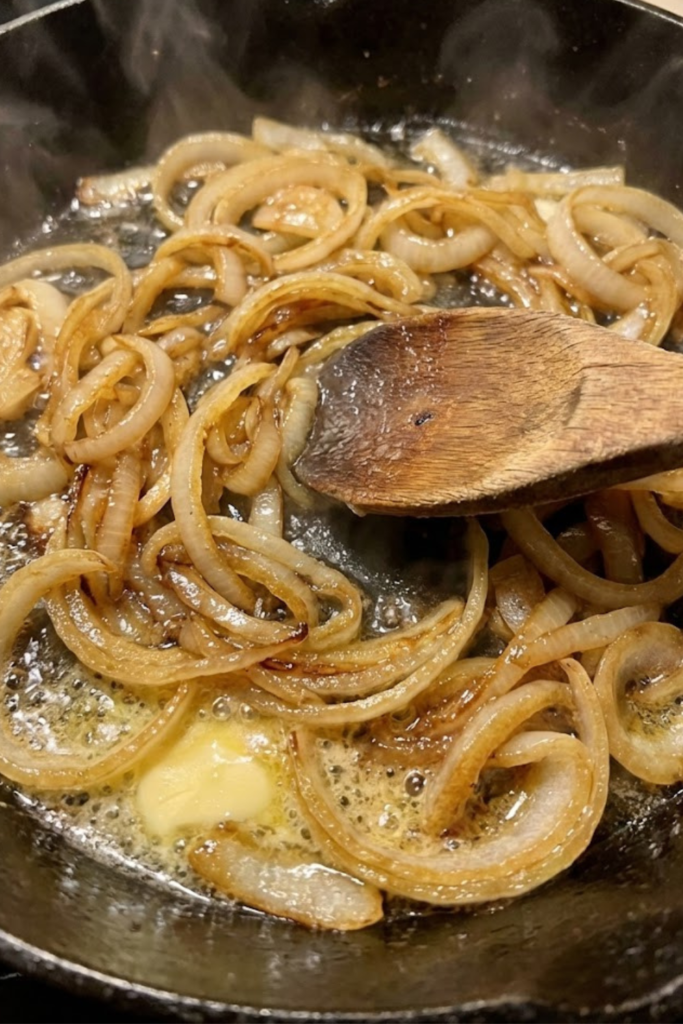
I have a bone to pick with most recipes on the internet. You know the ones. They tell you that you can caramelize onions in five to ten minutes. That is a straight-up lie. If you crank the heat that high, you don’t get sweet, jammy goodness; you get burnt, crispy bits that taste like charcoal. I learned this the hard way when I ruined a whole batch of French onion soup variations for a dinner party. I was sweating, the kitchen was smoky, and my guests were hungry. Not fun.
Real caramelized onions recipe success comes down to one thing: patience. You can’t cheat the system here.
The Butter and Oil Duo
Here is a little trick I picked up after watching way too many cooking shows. Don’t just use butter. Butter burns too fast if you aren’t careful. I like to use a mix of unsalted butter and olive oil. The oil protects the butter solids from burning, while the butter gives you that rich, creamy flavor we all crave in savory winter meals.
Throw your onions into your skillet (I prefer cast iron skillet meals for this because they hold heat so evenly) and toss them to coat. Then, turn the heat to medium-low. And then? You wait.
The Waiting Game
This process is going to take about 20 to 30 minutes. I usually pour myself a drink or clean up the prep bowls while I wait. You want to stir them every few minutes, but don’t obsess over it. You need them to make contact with the pan to brown.
There is a moment—usually around the 15-minute mark—where you will think, “These are done.” They will be soft and translucent. Don’t stop. Keep going until they are a deep, golden brown color. That is where the magic flavor lives.
Scraping Up the Good Stuff
As the onions release their sugars, you might see brown stuff sticking to the bottom of the pan. Don’t panic! That is not burning (usually); that is the “fond.” This is where the deglazing pan technique comes in handy later. When you eventually add your liquid, all those sticky bits lift off and flavor the sauce.
If things start looking a little too dry or dark before the onions are soft, just add a splash of water. It helps steam them a bit and keeps them from scorching. Just remember, if you rush this step, you are basically just eating boiled onions. And nobody wants that.
Step-by-Step Instructions for Perfect Casserole
Okay, now that we have cried our eyes out chopping onions (wear swimming goggles, trust me, it helps), it is time to actually build this French onion chicken orzo casserole. I used to be the kind of cook who just threw everything in the pot at once and hoped for the best. I call that my “chaos era.” But I learned that building the dish in steps is the only way to get those distinct layers of flavor.
Searing the Chicken Correctly
We start with the chicken. I usually use boneless, skinless thighs because they stay juicy, but breasts work too if you are careful. The biggest mistake I made for years was overcrowding the pan. I’d throw all the chicken in at once, and instead of getting a nice brown sear, the meat would just steam in its own juices. It turned this unappetizing gray color. Yuck.
So, sear your seasoned chicken in batches if you have to. You want that golden-brown crust. It’s not just about looks; that color equals flavor. Once it’s browned, take it out and set it aside. It doesn’t need to be cooked all the way through yet because it will finish in the oven.
The Toasting Trick
This is the secret weapon: toasted orzo. After your onions are caramelized and you’ve deglazed the pan with that wine (and scraped up the fond!), toss the dry, uncooked orzo right into the skillet.
Stir it around for a minute or two. You want the pasta to get coated in that onion-y, buttery mixture. It adds a nutty depth that you just don’t get if you skip this step. I skipped it once because I was in a rush, and the dish tasted… flat. Never again.
The Simmer and The Broil
Add your broth and nestle the chicken back in. Now, you have to baby it a little. Orzo loves to stick to the bottom of the pan. I usually stand by the stove and give it a stir every so often while it simmers. You want the liquid to be mostly absorbed and the pasta to be tender.
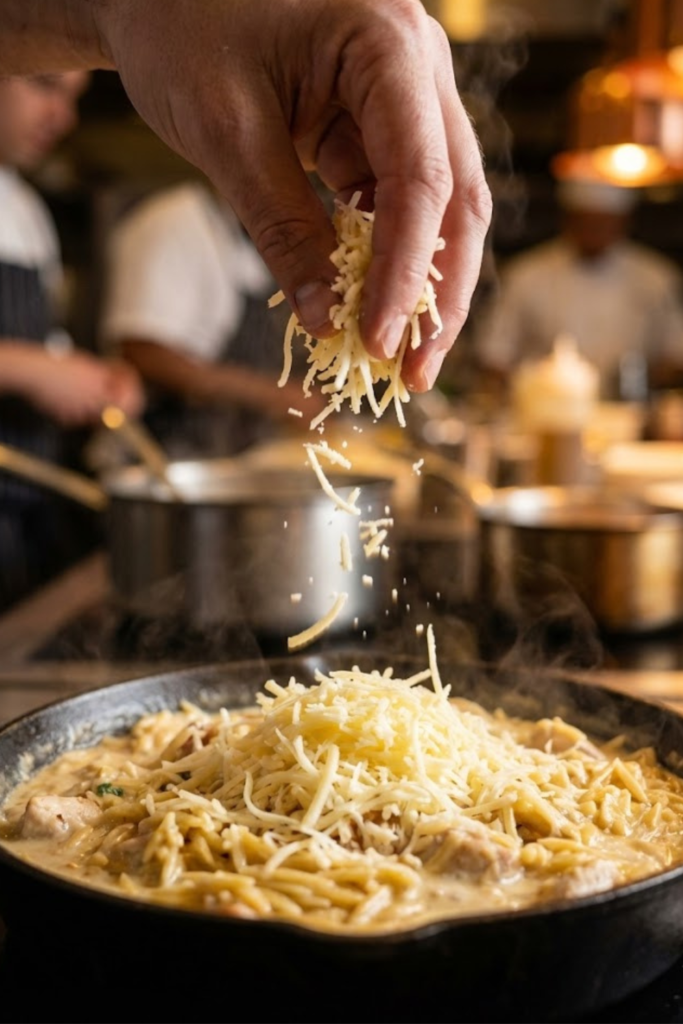
Finally, the best part. Cover the whole thing in cheese and stick it under the broiler.
Storage, Reheating, and Leftover Tips
I am a huge fan of leftovers. In fact, I usually cook with the specific intention of having lunch sorted for the next two days. But I have to be honest with you: pasta casseroles can be a bit high maintenance the next day. The first time I packed this French onion chicken orzo casserole for work, I was so excited. But when I opened the container, it looked like a solid brick of cement.
Don’t let that scare you, though. It still tastes amazing, but you have to know how to handle it.
The Thirsty Orzo Problem
Here is the science-y part (or at least what I’ve observed). Orzo is like a tiny sponge. Even after you take it off the heat, it keeps drinking up moisture. So, if you shove the leftovers in the fridge, by morning, that creamy sauce has vanished into the pasta.
Reheating pasta tips usually tell you to just zap it in the microwave. Don’t do that immediately. If you microwave it as is, it’ll be dry and sad.
My trick? I add a splash of water or beef broth to the bowl before reheating. I’m talking maybe a tablespoon or two. It loosens everything up and brings that creamy, glossy texture back to life. I did this yesterday for lunch, and my coworker actually asked if I had just made it fresh.
Fridge Life and Freezing
If you are into meal prep chicken dishes, this one holds up pretty well in the fridge for about 3 to 4 days. You need to use good airtight containers, though. If air gets in, the cheese gets hard and rubbery.
Now, about freezing. Can you freeze it? Technically, yes. But I have had mixed results. The flavor stays great—actually, the caramelized onions taste even better after sitting—but the texture can get a little soft. The dairy in the sauce might separate a tiny bit when it thaws. It’s not a dealbreaker for me, but if you are picky about texture, I’d stick to eating it fresh or from the fridge.
Balancing the Plate
Since this dish is incredibly rich—we are talking cheese, butter, and carbs—I usually try to pair my leftovers with something bright. It needs acid.
When I serve this for dinner, I almost always have a green salad with a sharp vinaigrette on the side. It cuts through the heaviness of the Gruyère cheese and makes you feel a little less like you need a nap immediately after eating. A piece of crusty baguette to mop up any extra sauce doesn’t hurt, either. Just don’t blame me if you end up in a food coma!
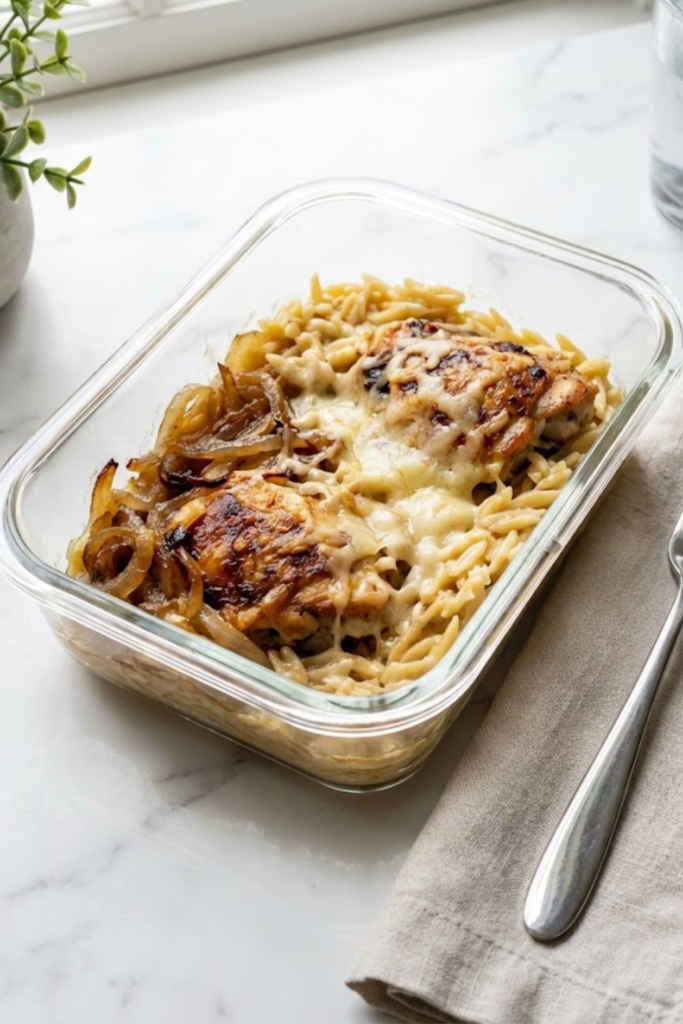
So, there you have it. This French onion chicken orzo casserole is honestly one of those recipes that stays in your rotation forever once you nail it. It’s funny how something as humble as an onion can transform into such a luxurious meal with just a little bit of heat and patience.
I really hope you give this a shot. Whether you are looking for easy weeknight meals to feed a hungry family or you just need a big bowl of comfort food to get you through a cold evening, this dish delivers. It hits every single craving: salty, sweet, cheesy, and carb-heavy. Plus, looking at that skillet of bubbling golden cheese just makes you feel like a professional chef, even if you are wearing pajama pants.
If you make this and love it (and I have a feeling you might), do me a huge favor. Pin this recipe to your “Dinner Ideas” or “Comfort Food” board on Pinterest. It helps other people find the recipe, and honestly, it makes my day to see my recipes popping up on your boards.
Now, go grab some onions and get cooking!