Mom, can we have that again?” That is the sound of victory! Did you know that the average family rotates through the same five meals every week? It’s time to break that cycle. I am telling you, these sticky chicken tenders are not just food; they are an experience. They are crispy, they are messy in the best way possible, and they vanish from the plate faster than you can say “dinner is served.” Whether you are cooking for picky eaters or prepping for a game day feast, this recipe hits every single note!
Gathering Ingredients for the Perfect Sticky Glaze
I have to be honest with you; I used to be that person who started cooking without checking the pantry first. There is nothing worse than getting halfway through a recipe for sticky chicken tenders, pan heating up, only to realize you are out of honey. I did that once and tried to swap in pancake syrup. Let me tell you, it was a disaster! My kids still make fun of me for the “maple chicken incident.”
So, before we even think about turning on the stove, let’s get our ducks—or chickens—in a row. We need to gather the right stuff to make this glaze sing.
The Chicken Situation
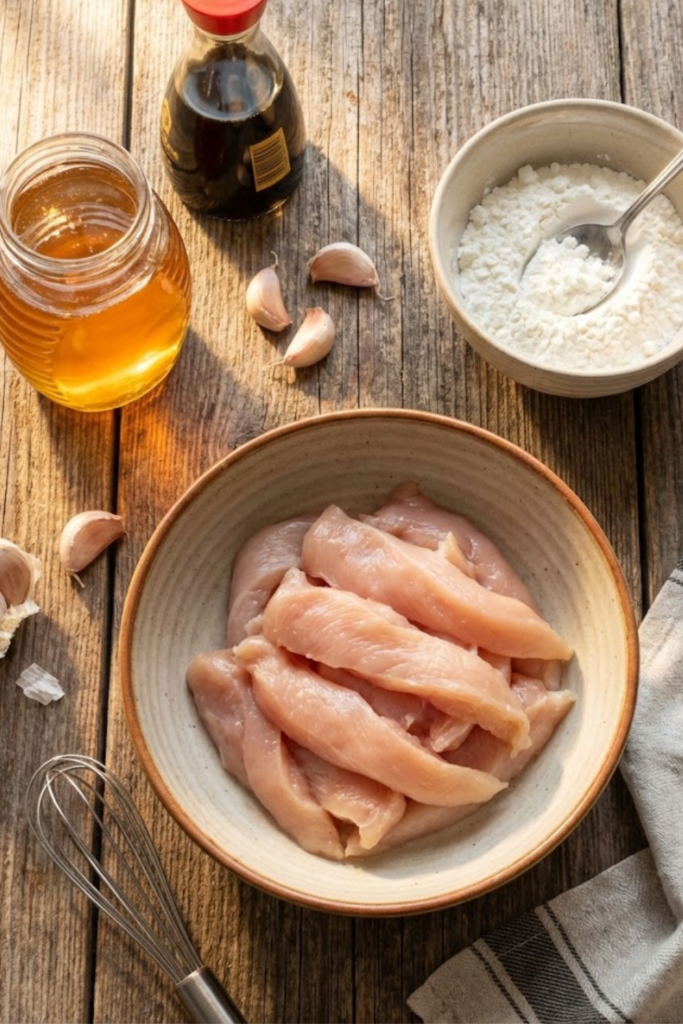
First off, you need the meat. You can buy pre-cut chicken tenderloins, which saves a ton of time. But, I usually just grab a pack of boneless, skinless chicken breasts and slice them myself. It is way cheaper that way.
If you do buy the tenders, watch out for that weird white tendon hanging out at the top. You have to pull that out, or the texture gets all rubbery and gross. I learned a trick where you use a fork to slide it right out. It is oddly satisfying! Just make sure your pieces are roughly the same size so they cook evenly. Nobody wants one burnt nugget and one raw one.
The Sauce Squad
Now, for the star of the show: the sauce. This is where the magic happens for your sticky chicken tenders. You are going to need a good amount of honey. I prefer the raw stuff because it is thicker, but the bear bottle works just fine too.
Next up is soy sauce. I always go for low-sodium. Why? Because you can always add salt, but you can’t take it out once it’s in there. I ruined a whole batch years ago by using full-salt soy sauce and then adding salt to the flour mix. It was like eating a salt lick.
You also need sweet chili sauce. This gives it that little kick without burning your tongue off. If you don’t have it, a pinch of red pepper flakes and a splash of vinegar can work in a pinch, but the bottle stuff is better.
The Crispy Coating
Finally, let’s talk about the dry stuff. You need cornstarch, not just flour. Cornstarch is the secret weapon for that super crunch that stays crunchy even after you sauce it.
- Garlic Powder: Don’t be shy with it.
- Paprika: Smoked paprika if you have it, for a little depth.
- Black Pepper: Fresh cracked is best.
Getting these ingredients set up on the counter makes the actual cooking part a breeze. It stops the frantic cabinet searching while your oil is smoking. Trust me, I have set off the smoke detector enough times to know better now!
Preparing the Chicken for Maximum Crunch
Okay, let’s get real for a second. Have you ever spent time breading chicken, cooked it, and then watched in horror as the crust slid off like a shedding snake? I have. It is heartbreaking. You are left with this sad, naked piece of meat and a pile of soggy breading in the pan. We are not doing that today with these sticky chicken tenders.
I learned the hard way that you can’t just slap flour on wet chicken and pray for the best. You have to treat it with a little respect if you want that crunch to survive the sauce.
The Magic Soak
Before we even look at the flour, we need to talk about moisture. I used to skip this step because I was lazy, but marinating is a game-changer. You don’t need all day; even 15 minutes helps.
I usually soak my chicken strips in buttermilk. If I am out of buttermilk (which is like, 90% of the time), I make my own with milk and a splash of vinegar. Or, if you want to get crazy, use pickle juice! I tried pickle juice last summer after seeing it online, and my mind was blown. It makes the meat super tender and adds a nice tang.
The Dredging Drama
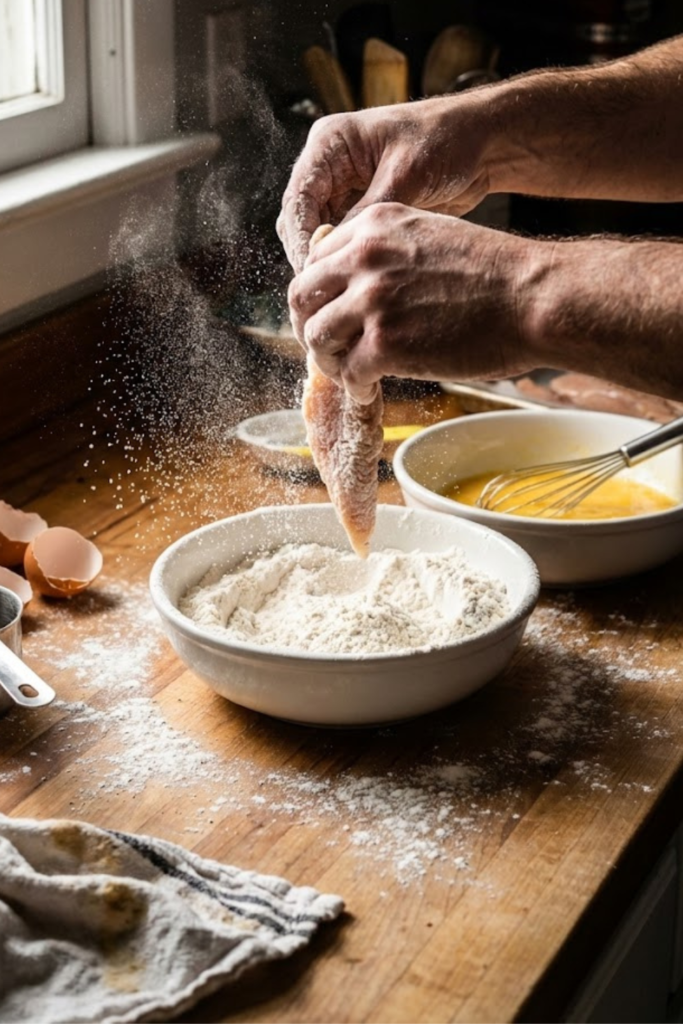
Now comes the messy part. The dredging technique is where wars are won or lost. You need three bowls: one for flour/cornstarch, one for egg wash, and maybe another for panko if you are going that route.
Here is the golden rule: keep one hand wet and one hand dry. I cannot stress this enough! The first time I tried this, I used both hands for everything. Within two minutes, my fingers were breaded more than the chicken. I had these giant “club hands” made of dough. It was gross and impossible to wash off.
- Take the chicken out of the marinade and shake off the excess.
- Dip it in the seasoned flour mix first.
- Dunk it in the egg.
- Back into the flour (or panko).
This double-dip method creates a barrier that locks in juices and locks out oil.
The Patience Test
Here is the tip that changed my life: let them rest. Once your sticky chicken tenders are breaded, lay them on a wire rack and walk away. Just for 5 or 10 minutes.
I used to throw them straight into the hot oil because I was hungry and impatient. Big mistake. Letting them sit allows the gluten to relax and the coating to dry out a bit, so it really grabs onto the meat. It makes a huge difference. Go wipe down the counter or yell at the kids to wash their hands while you wait. Your patience will be rewarded with the crunchiest bite you’ve ever had.
Cooking Method: Frying vs. Baking vs. Air Frying
Now we have arrived at the crossroads. How are we going to cook these beauties? I have tried every method under the sun for sticky chicken tenders, and honestly, they all have their time and place. It usually depends on how much energy I have and how much I feel like scrubbing grease off my stovetop later.
The Pan-Frying Purist
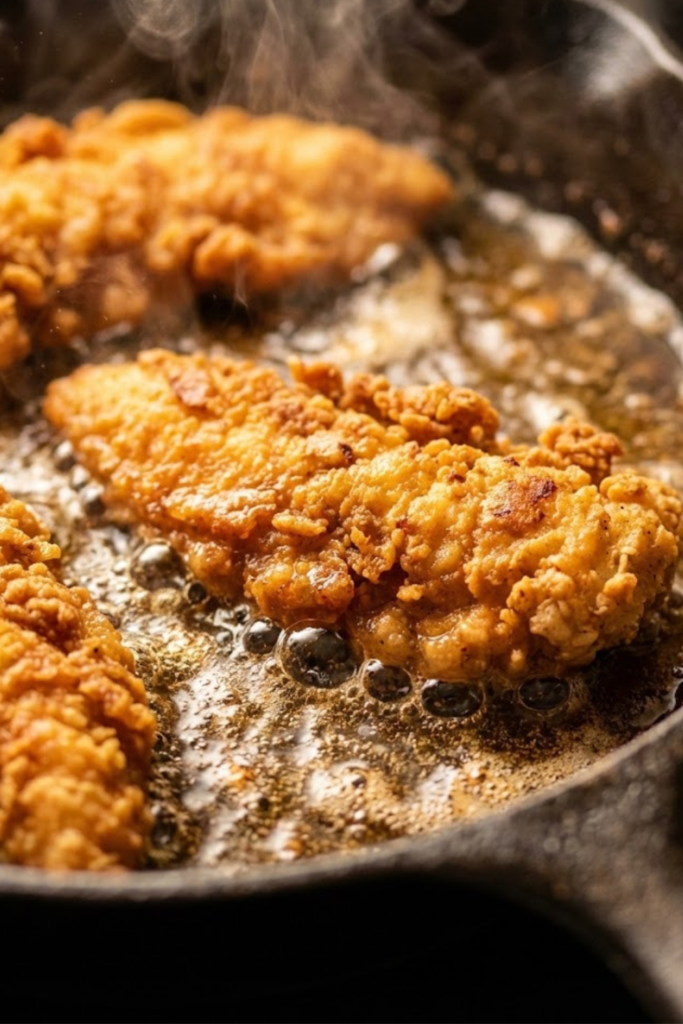
Let’s start with the classic: frying. If you want that restaurant-style crunch that shatters when you bite into it, you have to use oil. I know, I know, it is not the healthiest, but it is the tastiest.
My biggest mistake when I started cooking was not being patient with the oil. I would get hungry, throw the chicken in before the oil was hot enough, and the breading would just soak up the grease like a sponge. It was heavy, oily, and gross.
You need the oil to be around 350°F. If you don’t have a thermometer, stick the end of a wooden spoon in the oil. If bubbles form around it immediately, you are good to go. And please, do not overcrowd the pan! I used to jam as many pieces in as possible to “save time.” All that does is drop the oil temp and give you soggy chicken. Cook in batches. It is worth the wait.
The Oven-Baked Compromise
If the thought of hot oil spitting at you makes you nervous, the oven is your friend. But I have a bone to pick with baked chicken—it often gets soggy on the bottom.
To avoid the dreaded “soggy bottom,” you absolutely need a wire rack. Place the rack on top of your baking sheet and put the chicken on that. This lets the hot air circulate underneath so the bottom gets crispy too. Crank that heat up to 400°F (200°C). We want to blast them, not slow-cook them.
The Air Fryer Revolution
Okay, I admit it. I was late to the air fryer party. I thought it was just another gadget that would collect dust. I was wrong. Air frying is arguably the best way to make sticky chicken tenders if you want them crispy but don’t want to deal with a pot of hot oil.
The trick here is the same as the pan: space. If you stack the tenders on top of each other, they will steam instead of fry. Lay them in a single layer. I usually do 375°F for about 10-12 minutes, flipping halfway through.
One time, I forgot to spray the basket with a little oil, and the breading stuck to the metal mesh. I spent twenty minutes scrubbing it later. So, give the basket a quick spray before you start! It saves so much heartache.
Whichever method you choose, just make sure the chicken hits an internal temp of 165°F. No one wants undercooked chicken to ruin the night.
Mastering the Sticky Sauce Reduction
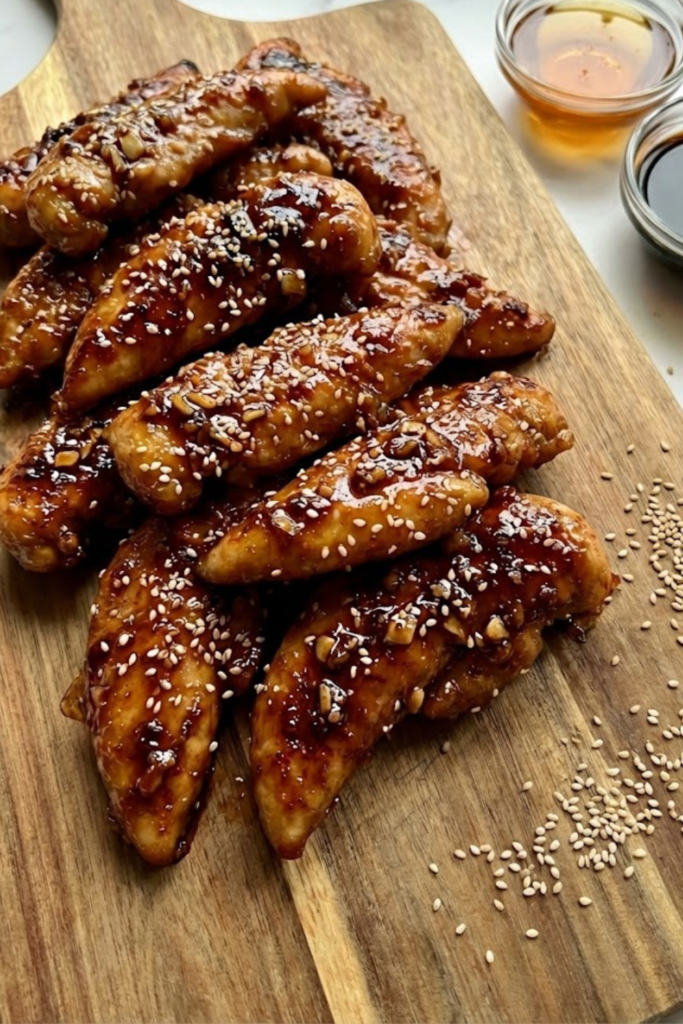
This is it. This is the moment of truth. You can fry the most perfect, golden nuggets of poultry known to man, but if you mess up the sauce, you just have dry chicken. And nobody wants that. The sauce is what turns regular tenders into sticky chicken tenders that make your family think you ordered takeout.
I used to think making a glaze was just “dump everything in a pot and boil it.” Oh boy, was I wrong. I remember the first time I tried to wing it. I cranked the heat up to high and walked away to check my phone. Two minutes later, the smell of burnt sugar filled the kitchen. I had made hard candy, not sauce. It took me three days to scrub that pot clean.
The Simmer Down
The secret to a good sticky sauce is patience and heat control. You want to combine your honey, soy sauce, sweet chili sauce, and aromatics (like fresh ginger and garlic) in a saucepan. But do not boil it like you are making pasta!
You need a gentle simmer. Keep the heat on medium-low. You want to see small bubbles, not a rolling boil. If you boil it too hard, the sugars in the honey will burn before the flavors have a chance to meld.
- The Spoon Test: How do you know it is done? Dip a metal spoon into the sauce.
- The Swipe: Run your finger down the back of the spoon (careful, it is hot!).
- The Result: If the line stays clean and the sauce doesn’t run back together immediately, it is ready.
This usually takes about 5 to 7 minutes of simmering. It should look like warm syrup. If it gets too thick, just add a splash of water to loosen it up. If it is too thin, let it ride a little longer.
The Timing of the Toss
Here is a mistake I see people make all the time. They make the sauce, toss the chicken in it, and then let it sit on the counter for twenty minutes while they finish the sides. By the time they eat, the breading has turned to mush.
The sauce goes on at the very last second. I mean, literally right before you put it on the table.
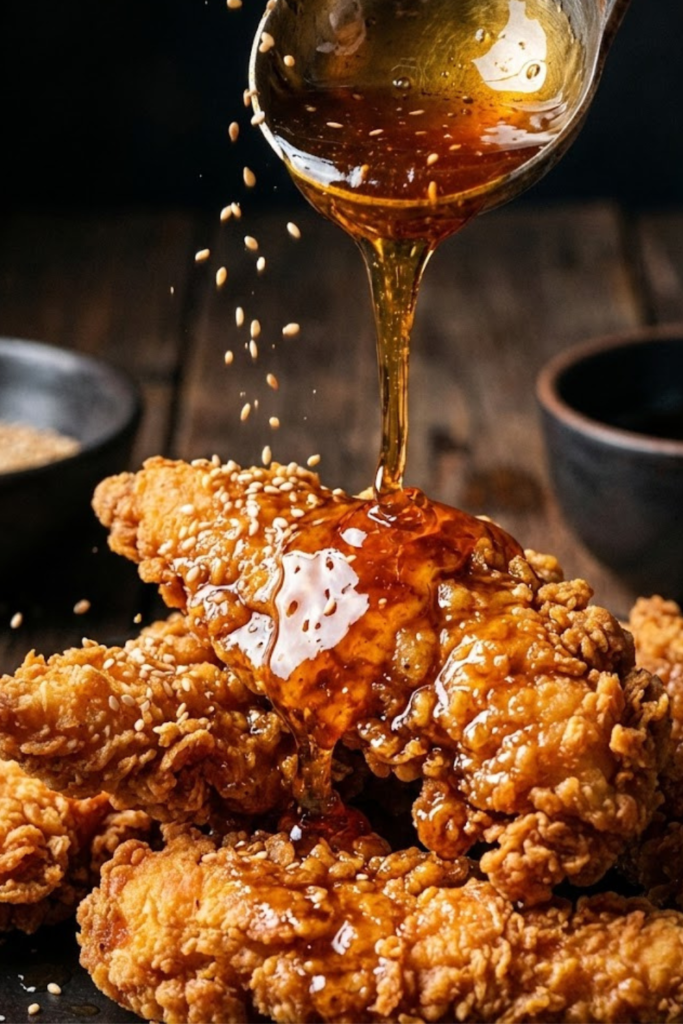
I like to use a big metal bowl for this. Put your hot, crispy chicken in the bowl. Pour that glorious, thick glaze over the top. Now, give it the toss. You want to coat every nook and cranny, but be gentle! You don’t want to knock the crust off.
The Final Flourish
Now, technically, you could eat them just like that. But we eat with our eyes first, right? My kids used to call anything green “poison,” but even they admit that a little garnish makes these look fancy.
While the sticky chicken tenders are still wet and warm, hit them with some toasted sesame seeds. The contrast of the white seeds against the dark, glossy sauce is beautiful. Then, scatter some chopped green onions on top. The fresh onion bite cuts through the sugar and salt perfectly.
Serving Suggestions and Side Dishes
So, you have this mountain of beautiful sticky chicken tenders, and they smell amazing. Now, what in the world do you serve with them? I used to just plop meat on a plate and call it a day. My husband would look at the lonely chicken and ask, “Is the rest of dinner coming?” It was humbling.
We need sides that can stand up to that bold, sweet, and salty flavor without getting lost. But we also don’t want to spend another hour cooking.
The Perfect Match: Rice
You really can’t go wrong with rice. It is the perfect sponge for all that extra sauce. I usually go with jasmine rice because it has that nice floral smell that makes the kitchen feel fancy.
If I am feeling ambitious (or if I have day-old rice in the fridge), I’ll whip up a quick fried rice. Honestly, though, plain white rice works best here because the chicken is so flavorful. You don’t want the side dish fighting for attention. Just cook it, fluff it with a fork, and maybe throw some cilantro on top if you want to look like a pro.
The Cool Down
Since these sticky chicken tenders have a bit of a kick from the sweet chili sauce, you need something fresh to cool things down. I learned this after serving them with spicy roasted potatoes once. We were all chugging milk by the end of the meal.
Now, I almost always serve this with a crisp Asian slaw. I cheat and buy the bag of pre-cut cabbage mix—no shame in that game! I toss it with a little rice vinegar, sesame oil, and lime juice. It is crunchy, cold, and cuts right through the heavy sweetness of the glaze. Sliced cucumbers with a little salt and vinegar work wonders too.
Dealing with Leftovers
Let’s be real, you probably won’t have leftovers. But if you do, do not put them in the microwave! I repeat: step away from the microwave.
I made the mistake of zapping my leftover tenders once. The breading turned into a soggy, gummy mess that slid right off the meat. It was tragic. To bring them back to life, throw them back in the air fryer or oven at 350°F for about 3-4 minutes. They crisp right back up. It is like magic.
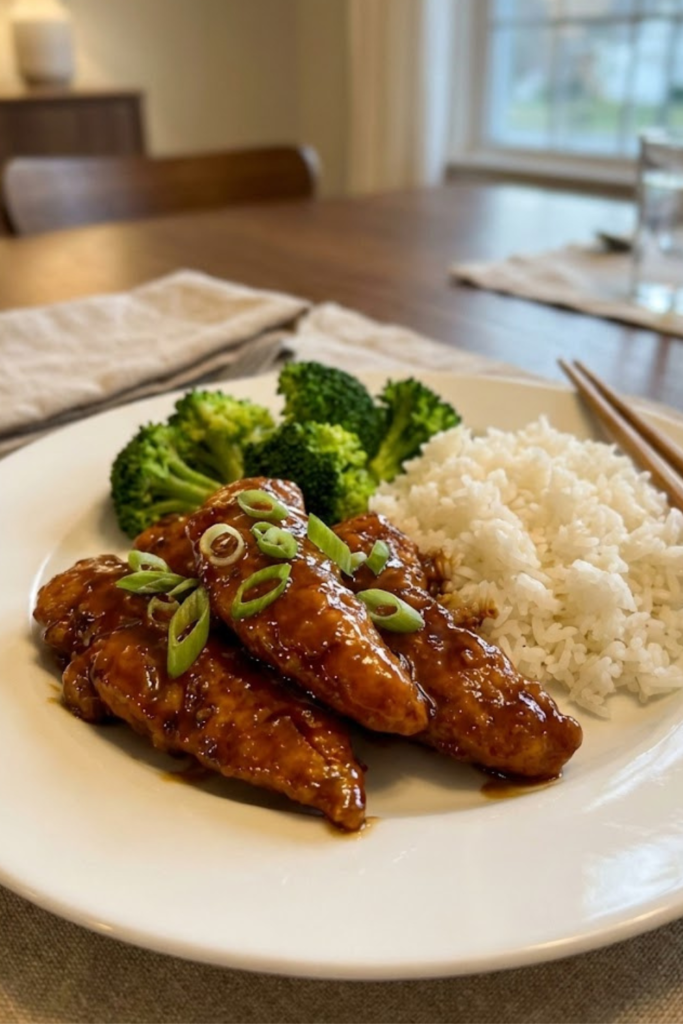
Well, folks, we made it to the finish line. We have battled the flour mess, dodged hot oil splatters, and mastered the art of the glaze. I hope these sticky chicken tenders bring as much joy to your dinner table as they do to mine.
There is something really special about making “takeout” at home. It saves money, sure, but it also just tastes better because you made it with your own two hands. Plus, you know exactly what is in it—no mystery ingredients here!
So, go ahead and give this recipe a shot tonight. Don’t worry if your kitchen gets a little messy; that is just the sign of a good meal. And hey, if you end up with flour in your hair, just wear it like a badge of honor.