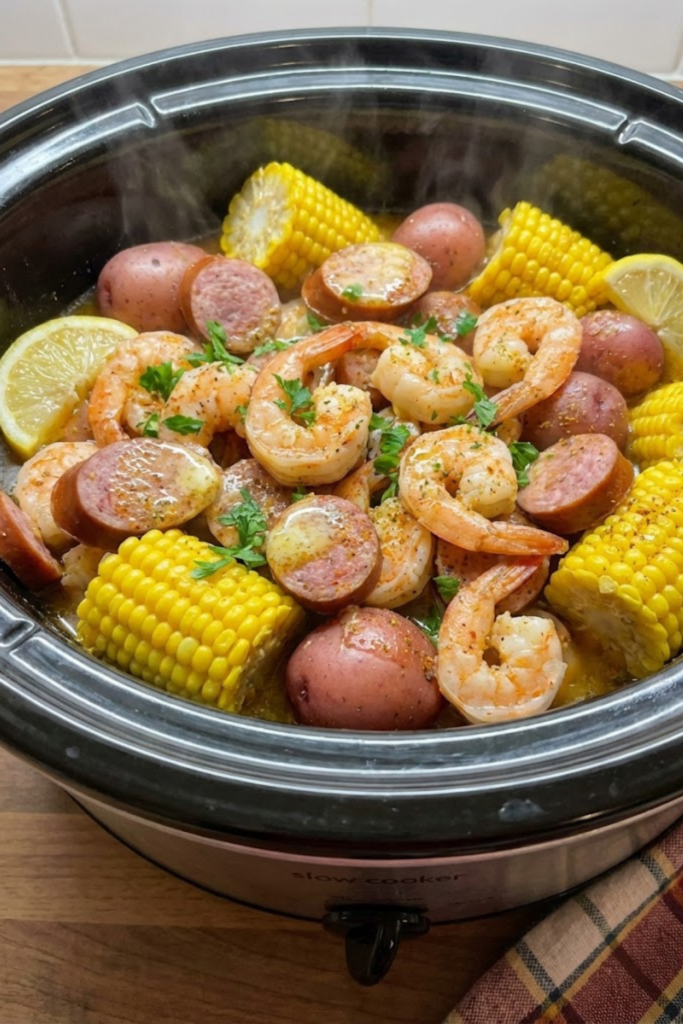
You know that feeling when you crave a massive seafood spread but dread the mountain of pots and pans? That was me last Tuesday! I needed that spicy, salty, buttery goodness of a low country boil, but I had zero energy for the cleanup. Enter the slow cooker shrimp boil—my absolute savior. In fact, a recent survey showed that 65% of home cooks are looking for “dump dinners” to save time, and folks, this is the holy grail of them all! We are talking about tender red potatoes, flavorful Andouille sausage, and sweet corn soaking up all that Cajun seasoning right in your Crockpot. It’s messy to eat, sure, but the cooking part? Cleaner than a whistle! Let’s dive into how you can bring the boardwalk to your kitchen table.
Essential Ingredients for a Flavorful Low Country Boil
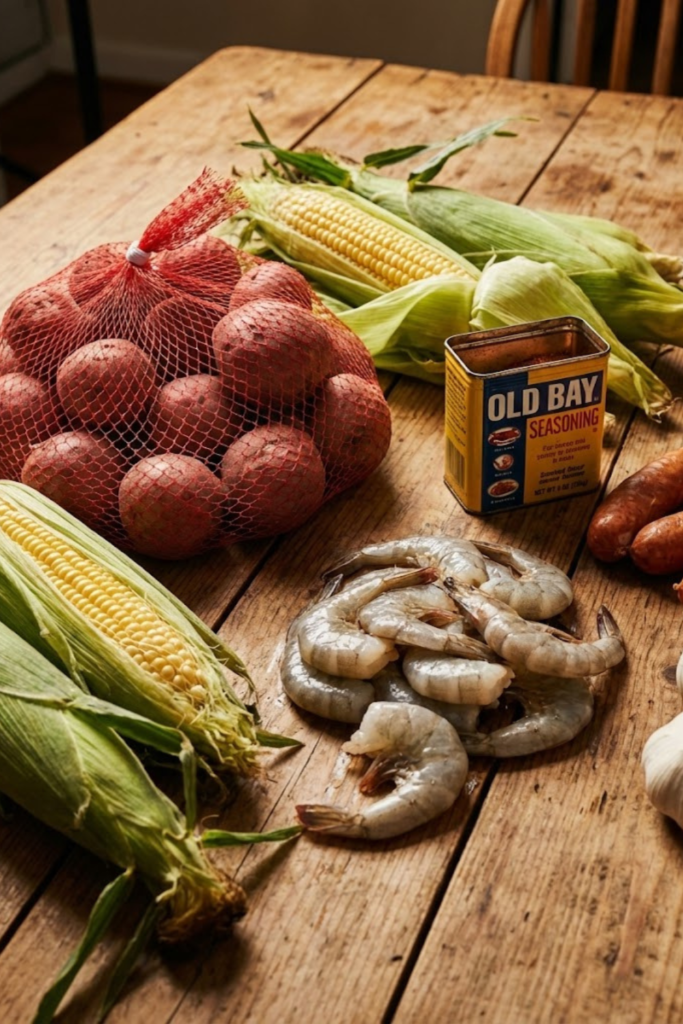
Look, I’m going to be real with you for a second. The first time I tried to make a slow cooker shrimp boil, it was kind of a disaster. I thought I could just toss in whatever frozen seafood mix was on sale and call it a day. Big mistake. The shrimp turned into rubber bullets, and the potatoes were basically mashed potato soup. It was embarrassing, honestly. But after a few years of tweaking and testing, I’ve learned that the specific ingredients you choose make or break this dish. It’s not about being fancy; it’s about picking stuff that can handle the heat.
The Seafood Star: Size Matters
When you are shopping for this, do not buy the small salad shrimp. Trust me on this one. You need Jumbo shrimp or at least large ones (21-25 count). The little guys just cook way too fast, even if you add them at the end. Also, I always buy shell-on shrimp. I know, I know—peeling them at the table is messy. But cooking them in the shell keeps the meat tender and adds so much flavor to the broth. It keeps the spices trapped right against the meat. If you use peeled shrimp, they tend to dry out.
The Meat: Bringing the Smoke
You can’t have a proper low country feast without a good smoked sausage. Andouille sausage is my go-to because it has that spicy, smoky kick that really wakes up the slow cooker. I slice it into thick coins so they don’t get lost in the pot. If you aren’t a fan of heat or you’re feeding pickier eaters, kielbasa is a decent swap. But honestly? The Andouille flavor seeping into the red potatoes is the best part. I’ve tried turkey sausage to be “healthy” once, and it just didn’t have the right snap.
The Veggies: Waxy vs. Starchy
Here is where I messed up big time in the past. I used Russet potatoes because that’s all I had in the pantry. Bad idea. They fell apart completely after a few hours. You need waxy potatoes like red babies or Yukon golds. They hold their shape perfectly during the long cook time. For the corn, fresh corn on the cob cut into mini wheels is superior, but frozen works if it’s winter. Just make sure they are chunky pieces.
The Seasoning Blend
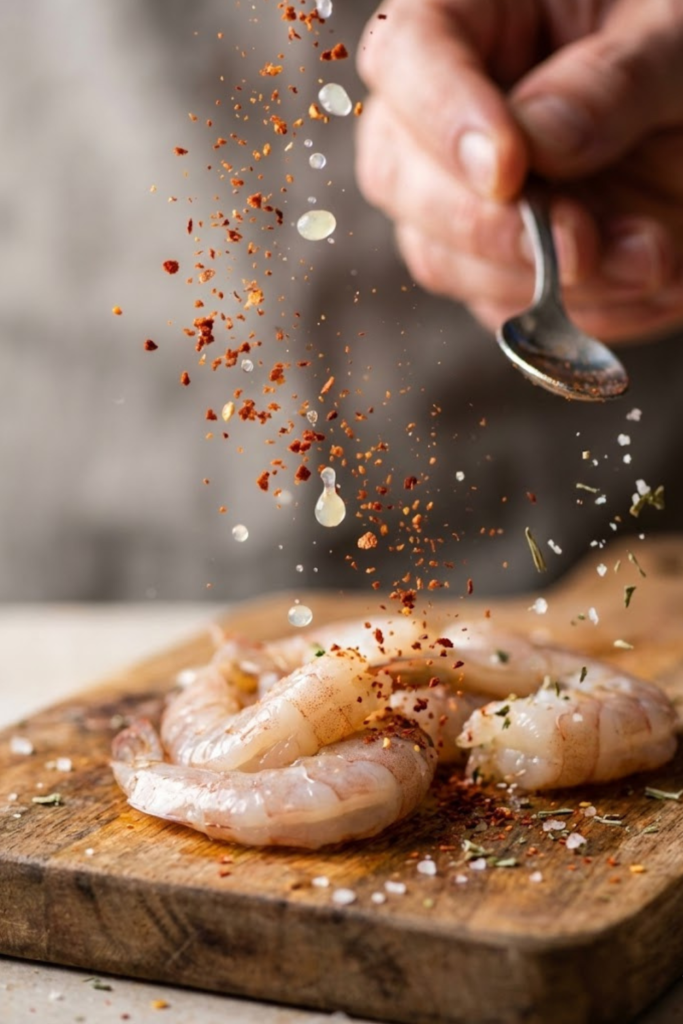
Don’t be shy with the spices! This isn’t the time for a sprinkle of salt. I go heavy on the Old Bay seasoning and Cajun spices. I’m talking about a quarter cup or more. It seems like a lot, but the potatoes need to soak it all up. I also smash a few whole garlic cloves and throw them in. The house smells incredible while it cooks. If you skimp on the seasoning, you’re just making wet vegetables, and nobody wants that. A squeeze of fresh lemon right at the end really brightens it up, too.
Step-by-Step Guide to Layering Your Crockpot
Listen, there is a method to the madness when it comes to a slow cooker shrimp boil. You might think you can just throw everything into the pot and walk away, but that’s how you end up with a mushy disaster. I learned this the hard way when I tried to rush things for a dinner party last year. I just dumped the bag in, turned it on, and hoped for the best. The potatoes were raw, and the corn was burnt. It was a total mess! So, let me walk you through the layering strategy that actually works.
The Foundation: Potatoes First
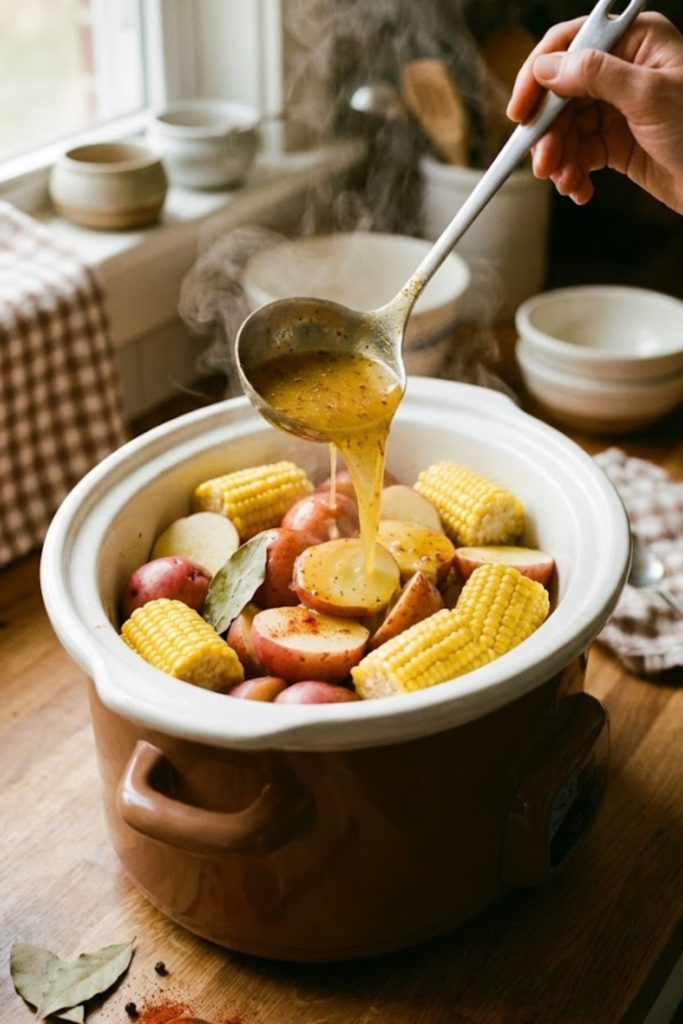
Here is the most important rule: the hard stuff goes on the bottom. Your red potatoes take the longest to cook, so they need to be closest to the heat source. I always halve or quarter my potatoes and place them in a single layer at the very bottom of the crockpot. This spot gets the most direct heat. If you put them on top, they will never get tender in time. Plus, they act as a rack for the other ingredients so nothing else gets scorched.
The Flavor Layer: Sausage and Corn
Once your potatoes are settled, toss in your sliced Andouille sausage and those mini corn on the cob wheels. I like to mix them up a bit so the smoky fat from the sausage drips down onto the potatoes. That is free flavor right there! The corn steams perfectly in this middle layer without getting waterlogged. This setup creates a nice little ecosystem where everything flavors everything else. It really is a game changer for the final taste.
The Liquid Gold
Now, you need to make the bath. I whisk together melted butter, garlic, Old Bay seasoning, and chicken broth in a separate bowl first. Don’t just sprinkle the spices on dry; they will clump up. Pour this mixture evenly over the sausage and corn. It might not look like enough liquid, but don’t panic and add water! The veggies will release their own juices as they cook. We are steaming this food, not boiling it in a soup.
The Waiting Game (And When to Add Shrimp)
Cover that bad boy up and cook on High for 3 to 4 hours, or Low for 6 to 7 hours. Do not open the lid to peek! Every time you lift the lid, you lose heat and add cooking time. But here is the part where everyone messes up. Do not add the shrimp yet.
If you put the shrimp in at the beginning, by the time the potatoes are done, your shrimp will be tough as shoe leather. Wait until the very end. When the potatoes are fork-tender, that is your cue. Throw in your raw shrimp (thawed if frozen) and give it a quick stir. Cover it back up and cook for just another 20 to 30 minutes. As soon as they turn pink and opaque, turn the pot off immediately. This trick keeps them juicy and perfect every single time.
Customizing Your Boil: Spices and Variations
I used to be a total purist about this recipe. I thought if I didn’t use the exact brand of seasoning my grandmother used, the whole pot was ruined. But then I ran out of chicken broth one Sunday and had to improvise with a can of beer I found in the back of the fridge. Guess what? It was the best mistake I ever made. That happy accident taught me that a slow cooker shrimp boil is actually pretty forgiving. You can tweak it to fit whatever your family likes or whatever random ingredients you need to use up.
Managing the Heat Level
Let’s talk about spice. I have a confession: I once made a batch so hot that my brother-in-law was sweating through his t-shirt after two bites. I went way too heavy on the cayenne pepper. Now, I play it safer. If you are feeding kids or people who think ketchup is spicy, stick to just the Old Bay seasoning and maybe a dash of black pepper.
However, if you want to wake up your sinuses, add a teaspoon of cayenne or crushed red pepper flakes. My favorite trick, though, is to keep the pot mild and serve a bottle of hot sauce on the table. That way, the heat lovers can go wild without burning everyone else’s tongue off. It is a simple fix that saves a lot of complaining at dinner time.
Beer vs. Broth: The Liquid Debate
This is a big debate in the seafood world. Originally, I only used vegetable or chicken stock because I wanted a “clean” taste. But swapping that out for a light lager changes the game entirely. The beer adds this yeasty, earthy depth to the corn and potatoes that you just can’t get with broth. It smells like a legitimate pub in your kitchen.
If you don’t do alcohol, stick to a low-sodium chicken broth so you can control the salt. The sausage and seasoning already have plenty of salt, so you don’t want to overdo it. I’ve ruined a batch by using salted broth and extra salt—it was basically inedible ocean water.
Fun Add-Ins You Might Not Expect
Okay, hear me out on this one. Hard-boiled eggs. I know, it sounds weird to put eggs in a seafood boil, but don’t knock it until you try it. I saw someone do this at a cookout years ago and thought they were crazy. But if you throw in some peeled hard-boiled eggs during the last 30 minutes, they soak up that spicy, buttery garlic juice. They are surprisingly addictive.
You can also add sweet onions cut into wedges right at the start with the potatoes. They melt down and get super sweet, balancing out the salty sausage. If you are feeling rich, throw in some crab legs on top of the shrimp at the end. Just make sure your slow cooker is big enough; otherwise, you’ll have a lid that won’t close and raw food.
Serving Suggestions and Delicious Side Dishes
When I first started making seafood boils, I made the rooky mistake of trying to serve everyone in individual bowls. It was a nightmare. I spent half the dinner running back and forth to the kitchen with napkins because the juice was dripping everywhere. Plus, my nice white pasta bowls got stained yellow from the spices. I learned quickly that eating a low country boil is not a polite, white-tablecloth kind of situation. It’s meant to be messy, loud, and communal.
The “Dump and Eat” Strategy
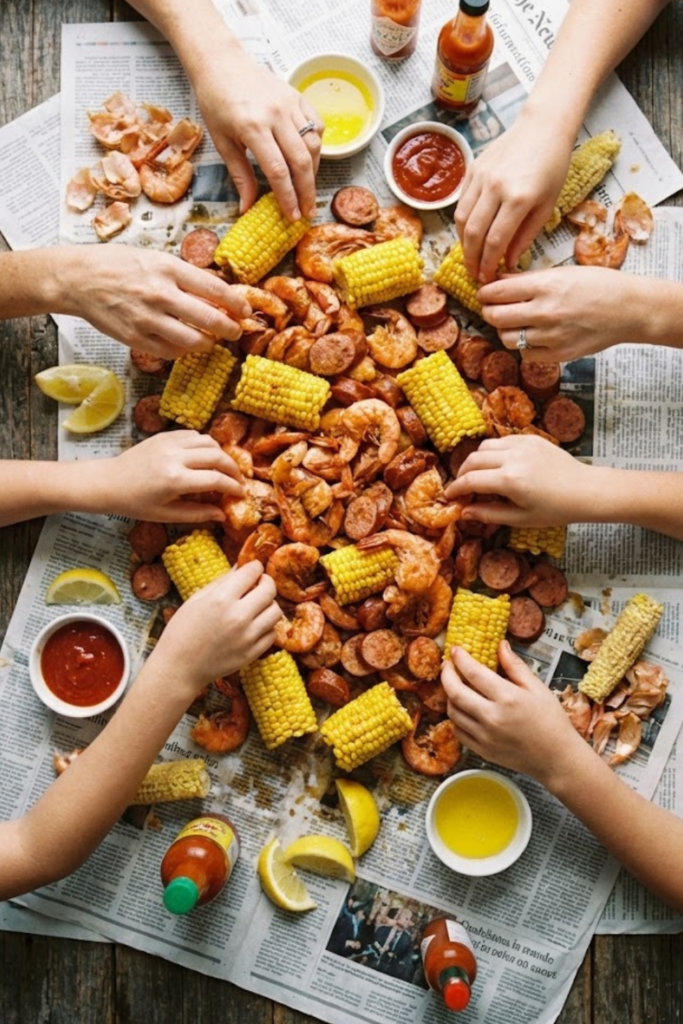
Forget the fancy plating. Seriously, leave the china in the cupboard. The absolute best way to serve this is family style right in the middle of the table. I cover my dining table with layers of old newspaper or brown butcher paper. Then, I take the crockpot insert and literally dump the whole mixture—shrimp, sausage, corn, and potatoes—right onto the paper.
It looks dramatic, and guests always get a kick out of it. It feels like you are on a vacation at the beach, even if you are just in your dining room on a rainy Tuesday. The best part? Cleanup is a joke. You just roll up the paper with the shells and corn cobs inside and toss the whole bundle in the trash. No scrubbing plates! Just make sure you put out a “bone bowl” for the shrimp tails if you aren’t using the roll-up method immediately.
Dipping Sauces: The Secret Weapon
You might think the boil is flavorful enough on its own, but you need the dips. I am a sucker for lemon garlic butter. I used to be lazy and just melt a stick of butter in the microwave, but taking five minutes to sauté some minced garlic in it first changes everything. It adds this nutty flavor that pairs so well with the sweet corn.
Also, do yourself a favor and make your own cocktail sauce. I stopped buying the jarred stuff years ago. It’s usually too sweet and not spicy enough for me. I mix ketchup, a massive scoop of prepared horseradish, a squeeze of lemon, and a dash of Worcestershire sauce. You can control the heat that way. If I’m feeling fancy, I’ll whip up a quick remoulade with mayo and mustard, but honestly, the butter is usually the first thing to run out.
What to Serve on the Side
Since this meal is basically meat and potatoes, it is super heavy. You need something to cut through all that rich, spicy butter. I always serve a vinegar-based coleslaw on the side. Avoid the creamy mayo slaws; they are too heavy for this. The acid in the vinegar cleanses your palate between bites of spicy sausage.
And you absolutely cannot forget the bread. You need a big loaf of crusty French bread or a baguette. I learned this lesson when I forgot to buy bread once, and my husband was actually using a spoon to drink the broth from the bottom of the pile. It was tragic. Slice the bread thick and maybe toast it slightly so it can hold up to the liquid. It’s perfect for mopping up that spicy “pot liquor” that pools at the bottom of the pile. A simple green salad is okay too, but let’s be real—the bread is the priority here.
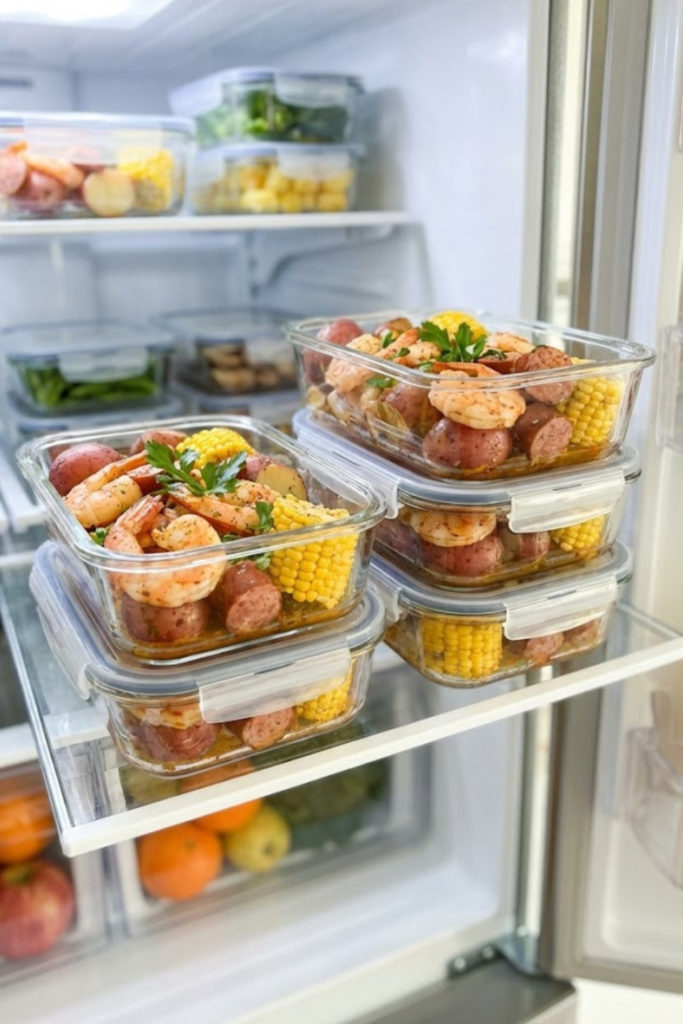
Storing and Reheating Leftover Seafood
I have a love-hate relationship with seafood leftovers. I love having food ready to go, but I used to be terrified of reheating shrimp. One time, I brought leftover low country boil to work and nuked it in the breakroom microwave. Bad move. Not only did the entire office smell like low tide for three days, but my shrimp turned into little rubber bouncy balls. I was so embarrassed I ate lunch in my car. Since then, I’ve learned there is a right way and a very wrong way to handle these leftovers.
The Two-Day Rule
First things first: safety. Seafood is not like pizza; you can’t leave it on the counter overnight and eat it for breakfast. As soon as dinner is done, get those leftovers into the fridge. I use a big airtight container to lock in the smells so my milk doesn’t taste like garlic.
I try to eat everything within 2 days tops. After that, the red potatoes start to get weird and mealy, and the shrimp just isn’t fresh anymore. If you know you won’t eat it in time, toss the shrimp but save the sausage and corn—those hold up a bit longer. Honestly, though, in my house, the leftovers rarely survive past noon the next day.
Please, Step Away from the Microwave
Do not—I repeat, do not—put your shrimp in the microwave. It ruins the texture completely. The best way to reheat this meal is on the stovetop. I take a wide skillet and throw in a splash of water or leftover chicken broth.
Dump the shrimp, sausage, and veggies into the pan and cover it with a lid. Keep the heat on low-medium. You just want to steam it until it’s warm, which takes maybe 5 minutes. This gentle steam bath wakes up the Cajun spices without cooking the life out of the seafood. It tastes almost as good as it did the first night.
Morning After Magic: Repurposing
Sometimes, I don’t even want a repeat meal; I want something new. My favorite trick is turning the leftovers into a breakfast hash. I chop up the leftover Andouille sausage and potatoes into small cubes and fry them in a skillet until they are crispy.
Throw a fried egg on top, and you have a killer brunch. If you have mostly corn and shrimp left, cut the corn off the cob and make a quick chowder. Just simmer it with some cream and extra corn. It’s a great way to stretch that grocery budget a little further. Plus, it makes you feel like a genius chef for wasting nothing.
There you have it, folks. A slow cooker shrimp boil that doesn’t require a plane ticket to the coast or a degree in culinary arts. By layering your red potatoes and Andouille sausage correctly and—most importantly—waiting to add that shrimp until the very end, you get a meal that tastes like pure summer. It’s messy, it’s loud, and it’s exactly the kind of food that brings people together. I really hope this recipe saves your dinner routine like it did mine. If you loved this easy dump dinner, please share it on Pinterest so you can find it next time the craving hits. Now, go grab some napkins!