You know that sound—the aggressive hiss when the cold dough hits the hot oil? That’s the sound of magic happening!
I remember the first time I tried to make dumplings; I ended up with a sticky, exploded mess that tasted good but looked like a disaster. But after years of tweaking (and eating way too many test batches), I’ve finally cracked the code to the perfect pan fried pork dumplings. Whether you call them potstickers or gyoza, there is nothing quite like biting into that crispy golden bottom and having the savory juice explode in your mouth! In this guide, we aren’t just making dinner; we are creating a delicious experience right in your kitchen.
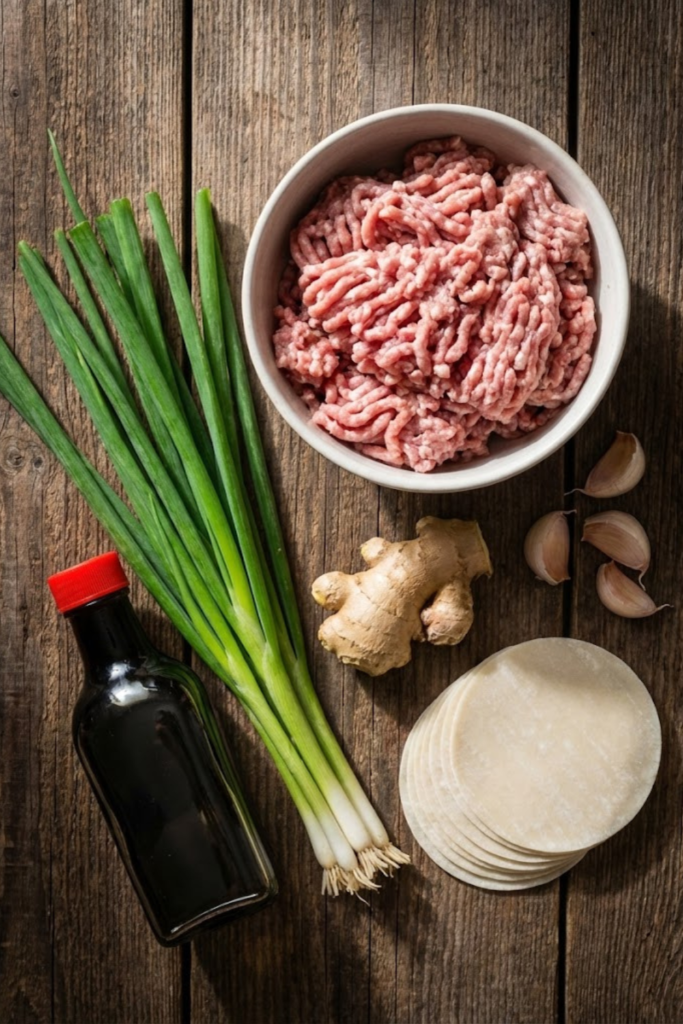
Selecting the Best Ingredients for Juicy Filling
You know, the first time I tried to make pan fried pork dumplings, I thought I could outsmart the system. I walked into the grocery store and bought the leanest ground pork I could find—like, 95% lean—because I wanted to be “healthy” and maybe cut a few calories. Big mistake. Huge.
The result was basically rubber pellets wrapped in dough. My family ate them because they love me, but the silence at the dinner table was loud. I learned the hard way that when it comes to dumplings, fat is not the enemy; fat is the juice.
The Meat: Don’t Fear the Fat
If you want that restaurant-style explosion of flavor, you have to look for ground pork that is at least 30% fat. Sometimes you will see it labeled as “pork belly ground” or just standard ground pork, but stay far away from anything labeled “lean.”
The fat melts while the dumplings cook, creating that soup-like texture inside the wrapper. If your local store only sells lean stuff, I’ve actually chopped up bacon ends and mixed them in to save the day. It sounds crazy, but it works!
The Wrapper Situation
Let’s be real for a second. I wish I was the type of person who made homemade dumpling dough every single Tuesday, but I have a job and kids. Most of the time, I use store-bought wrappers, and that is totally fine.
However, don’t just grab the first pack you see.
- Wonton wrappers are usually square and way too thin; they turn into mush in the pan.
- Gyoza wrappers are round and a bit thicker, which is exactly what you want for that “fry-steam-fry” method.
I usually look for the “Twin Marquis” brand if I can find it, specifically the “Northern Style” wrappers if they have them. They have a bit more chew. Just make sure you keep them covered with a damp paper towel while you work, or they turn into dry crackers in about five minutes.
Fresh vs. Powdered
Here is where I get a little bossy. Please, for the love of food, do not use garlic powder or ground ginger here. I tried it once when I was out of fresh groceries, and the dumplings tasted like cardboard.
You need fresh aromatics. I grab a spoon to peel the ginger (it’s safer than a knife) and grate it right into the bowl. For the scallions, I use both the white and green parts. The white part has that strong onion punch, and the green looks pretty.
The Seasoning “Trinity”
Finally, you need the right liquids. I always have a bottle of Shaoxing wine in my pantry. It adds that distinct “Chinese restaurant” smell that you just can’t get from water. If you can’t find it, dry sherry works in a pinch, but the real stuff is cheap at Asian markets.
Mix that with some light soy sauce and toasted sesame oil, and you are halfway to heaven. I’ve wasted so much time trying fancy ingredients, but simple is usually better here. Stick to the basics, get the fatty pork, and your pan fried pork dumplings will be better than takeout.
Mastering the Pork Dumpling Mixture
I used to treat dumpling filling exactly like meatloaf. I would just dump the ground pork, veggies, and spices into a bowl and mash it all together with my hands until it looked mixed. And guess what? My dumplings were always dry and tough.
I remember serving a batch to a friend who grew up making these with her grandma. She took one bite, looked at me politely, and asked, “Did you beat the meat?” I laughed because I thought she was joking. She wasn’t.
It turns out, the texture of the filling is just as important as the flavor. If you want that springy, restaurant-quality bite, you can’t just mix; you have to engineer the meat.
The “One Direction” Rule
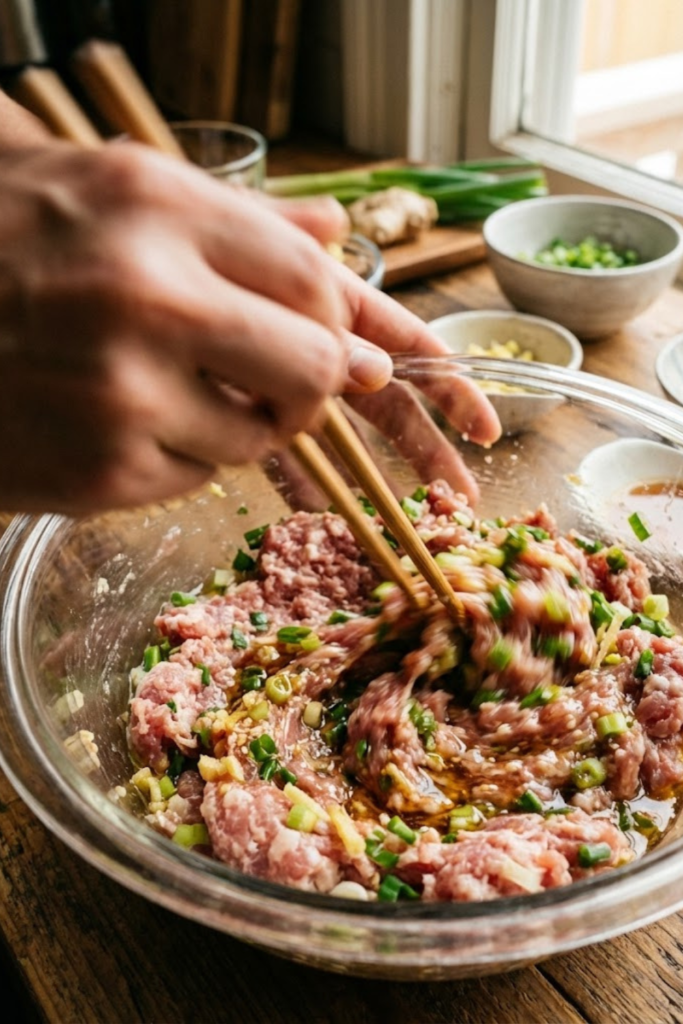
This is the golden rule I broke for years. When you mix your pork and seasonings (soy sauce, sesame oil, etc.), you must stir in one direction only. Clockwise or counter-clockwise, it doesn’t matter, just pick a lane and stay in it!
Stirring in circles creates protein strands in the meat. It gives the filling that “bouncy” texture we all love. If you stir back and forth, you break those strands, and the texture gets crumbly. I usually stir vigorously with chopsticks for about 5 minutes until the meat looks sticky and pale. My arm feels like it’s going to fall off by the end, but the results are worth the burn.
The Secret Water Technique
This part freaked me out the first time I did it. To get a truly juicy filling, you have to add liquid directly into the raw meat. I’m talking about beating water or chicken stock right into the pork.
I usually add about 3 tablespoons of cold water for every pound of pork. At first, it looks like a slushy, unappetizing mess. You’ll think you ruined it. But keep stirring (in one direction!), and the meat will absorb the liquid like a sponge. This trapped liquid is what releases when you bite into the cooked dumpling. It’s a total game changer.
dealing with the Veggies
If you are adding cabbage—which you should for crunch—you have to be careful. Cabbage is full of water, and water is the enemy of a tight wrapper.
I chop my cabbage super fine and toss it with a teaspoon of salt. Let it sit for 15 minutes. The salt pulls the moisture out. Then, I grab handfuls of the cabbage and squeeze it over the sink like I’m wringing out a wet towel. You will be shocked at how much liquid comes out. If you skip this, your pan fried pork dumplings will turn into a soggy disaster in the pan.
The Marinating Time
Finally, if you have the patience, let the finished mixture sit in the fridge for 30 minutes before you start wrapping. It firms up the fat, making it easier to spoon into the wrappers, and lets the flavors meld. I’m usually too hungry to wait, but when I do, I notice the difference.
Step-by-Step Folding Techniques for Beginners
Okay, I have a confession. The first time I tried to fold dumplings, I ended up crying in my kitchen. I had watched all these videos of grandmas doing it in two seconds flat, making it look effortless. Meanwhile, my kitchen looked like a flour bomb went off, and my dumplings looked like deformed pierogies.
It was humble pie, served warm. But here is the thing: ugly dumplings still taste amazing. Once I accepted that, I actually started having fun. You don’t need to be a master chef to get this right; you just need patience and dry hands.
The “Taco” Hold
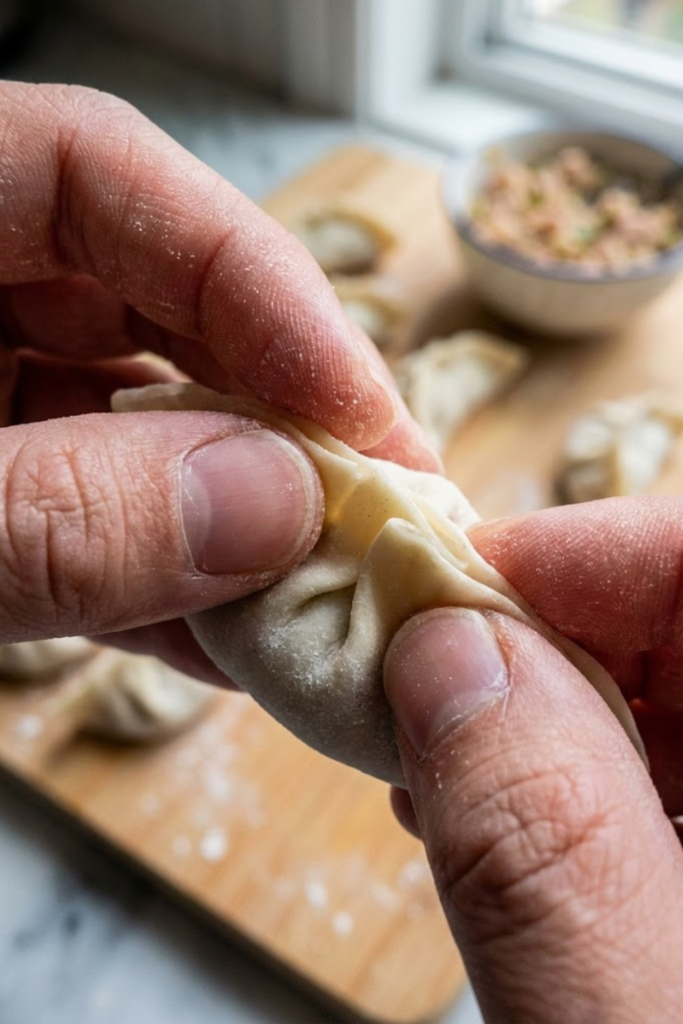
Before you even think about pleating, you have to master the hold. I put a wrapper in my non-dominant hand (my left hand) and curve it slightly like a taco shell.
The biggest mistake I made early on was greed. I would try to stuff a huge spoonful of meat in there because I wanted a juicy dumpling filling. Don’t do it! Use about a tablespoon of filling, max. If you overstuff, the wrapper will tear, or the filling will squirt out the sides when you try to seal it. It’s messy and frustrating.
The Water Seal Is Key
You need glue to hold these bad boys together, and that glue is just water. I keep a small bowl of water next to my station. Dip your finger in and run it along the edge of half the wrapper.
You don’t need a lot! I used to soak the edges, and the dough would just disintegrate and get slimy. Just a light tap is enough to make the wonton wrappers sticky. If the dough feels dry or is cracking, cover the stack with a damp towel immediately.
The “Good Enough” Pleat
If you are stressing about the fancy restaurant pleats, stop. My go-to move for a quick dinner is the “pinch and pray.” I fold the wrapper in half over the filling and pinch the top center together. Then, I make two small folds on the right side towards the middle, and two on the left.
It’s not perfect. Sometimes the pleats are uneven. Sometimes I just squash the edges together flat without pleating at all (the fold-over method). Honest truth? When you cook them with the crispy dumpling skirt, nobody looks at the pleats. They are too busy eating.
Troubleshooting the Rips
If you rip a wrapper, don’t throw it away. I used to toss them, and it was such a waste. Now, I just take a tiny scrap of dough from another wrapper, wet it, and patch the hole like a tire.
It looks a bit Frankestein-ish, but it holds the juices in. And that is the goal. We want the delicious soup to stay inside the pan fried pork dumplings, not all over the pan. So, take a deep breath, put on some music, and just fold. It gets easier after the tenth one, I promise.
The “Fry-Steam-Fry” Cooking Method
If there is one part of this process that used to give me anxiety, it was the cooking. I have ruined more batches than I can count. My early attempts usually resulted in one of two things: dumplings that were burnt charcoal on the bottom but raw pork in the middle, or soggy, pale blobs that fell apart.
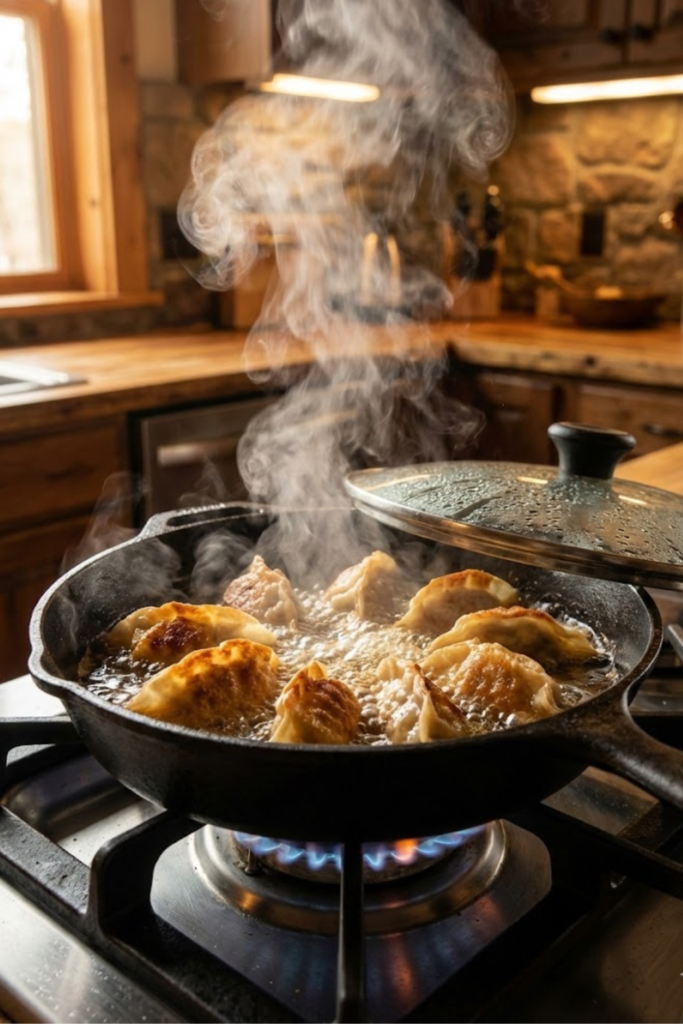
I finally realized I was trying to cook them like a steak—just frying them. But pan fried pork dumplings need a specific three-step dance: fry, steam, fry. It sounds complicated, but once you get the rhythm, it is actually pretty relaxing.
Choosing Your Weapon (The Pan)
Let’s talk hardware. I went through a phase where I swore by my cast iron skillet for everything. And yes, cast iron gives an amazing crust. But for dumplings? It can be a heartbreaker.
If you are a beginner, do yourself a massive favor and use a non-stick skillet. There is nothing more demoralizing than spending an hour folding beautiful dumplings only to have the skins fused to the pan. I’ve scraped off too many mangled wrappers in frustration. A good non-stick pan is forgiving and guarantees you keep that beautiful shape intact.
Step 1: The Initial Sear
Heat up your oil—I use a mix of neutral oil and a tiny splash of sesame oil—over medium-high heat. You want the oil to shimmy.
Place the dumplings in the pan, flat side down. Do not crowd them! They need personal space. I usually do a circle pattern because it looks cool and fits more in. Let them sit there for about 2 to 3 minutes. Don’t touch them. I know you want to peek, but resist the urge. You are looking for a light golden color on the bottom. If you move them too much, you ruin the crust formation.
Step 2: The Scary Steam
Here is the dramatic part. Once the bottoms are golden, you need to add water. I usually pour in about a ¼ cup of water. It will hiss, splatter, and sound angry.
Immediately slam a lid on the pan to trap that steam. This is crucial. The steam cooks the raw pork filling and the dough wrappers. Turn the heat down to medium and let them hang out for about 6 to 8 minutes. This was my mistake for years—I rushed this part. If you rush, you get raw pork. Nobody wants food poisoning for dinner.
Step 3: The Final Crisp
When the water is mostly gone, take the lid off. The dumplings will look soft and wet. This is where the magic happens.
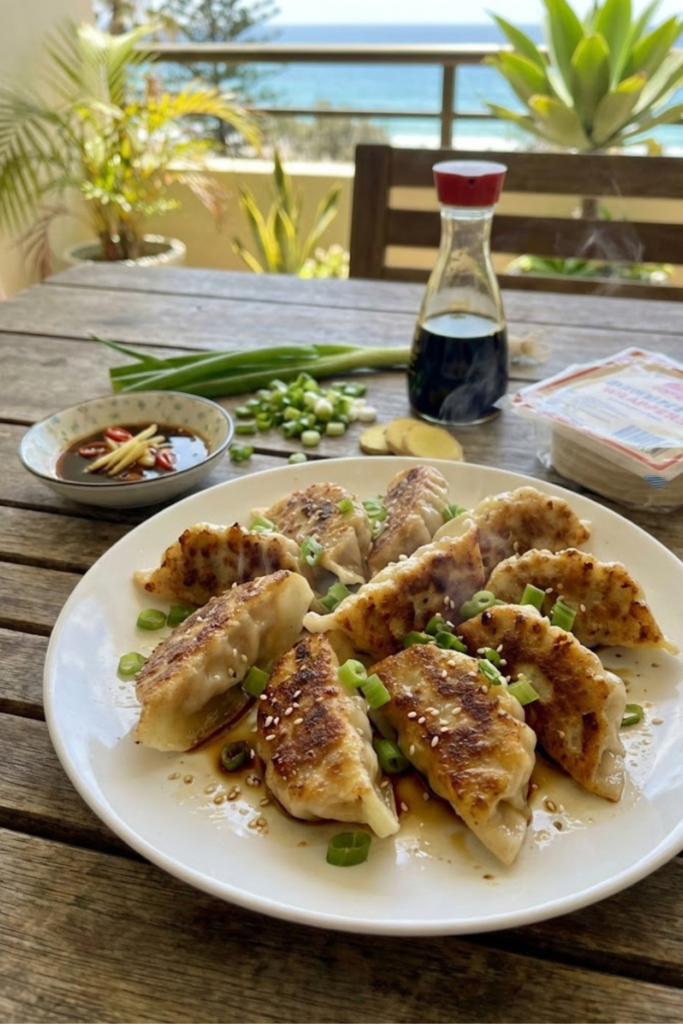
Let the remaining water evaporate completely. You will hear the sound change from a boiling bubbling noise to a frying sizzle. That is the sound of the crispy dumpling skirt coming back to life. I let them go for another minute or two to get that deep, dark brown crunch.
When you shake the pan, they should slide around freely. Flip them onto a plate, crust side up, and try not to burn your mouth eating the first one (I always do).
Perfect Dipping Sauces to Pair
I used to be the person who would spend two hours making pan fried pork dumplings from scratch, only to dip them in straight soy sauce. It was fine, I guess. But honestly? It was kind of boring. I felt like I was missing something, like wearing a tuxedo with flip-flops.
It wasn’t until I went to a hole-in-the-wall spot in the city and tasted their house sauce that my brain actually exploded. It was tangy, spicy, and savory all at once. I realized that the sauce isn’t just a sidekick; it’s half the battle. If you serve these juicy pockets of joy with plain soy sauce, you are robbing yourself of the full experience.
The Black Vinegar Revelation
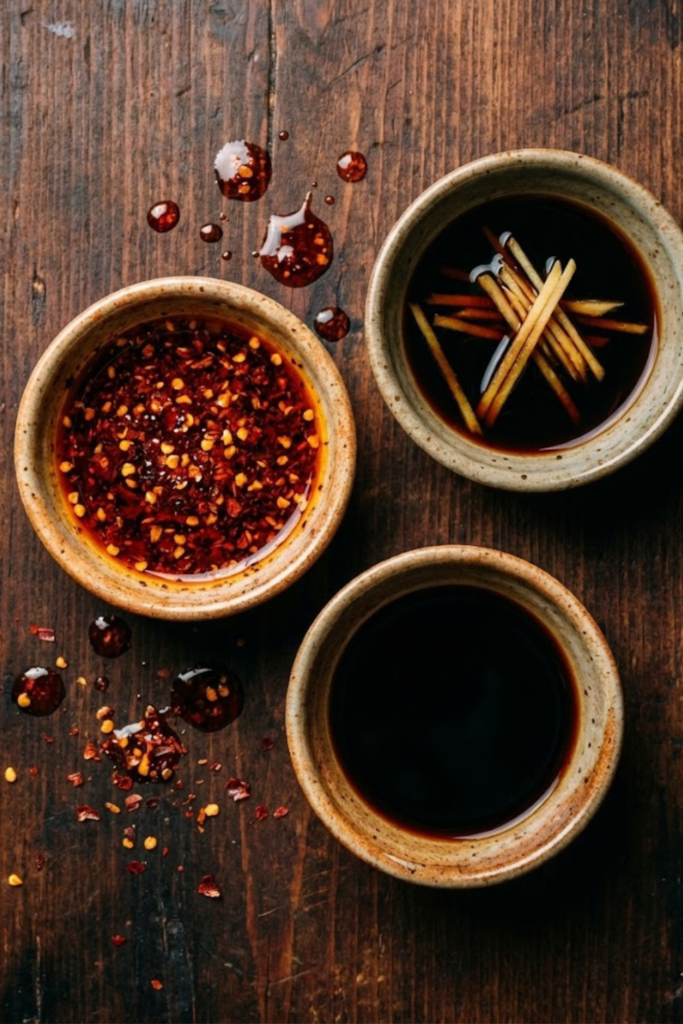
If you buy one thing for this recipe, make it Chinkiang vinegar. I know, it sounds specific, and you probably don’t have it in your pantry right now. But regular white vinegar or balsamic won’t cut it here.
Chinkiang vinegar (or black vinegar) has this malty, slightly sweet funk to it. It cuts right through the fatty grease of the pork. My go-to mix is simple:
- 2 tablespoons of Chinkiang vinegar
- 1 tablespoon of soy sauce
- A few slivers of fresh ginger
The ginger adds a fresh bite that wakes up your palate. I used to chop the ginger into chunks, and biting into a big piece was nasty. Now, I slice it into tiny, hair-thin strips. It takes a minute, but it makes the sauce look pro.
The Spicy Kick
Some days, I need to feel the heat. A good chili oil dip is non-negotiable for me on Friday nights. I’ve made the mistake of using just cayenne powder or hot sauce, and it was just… hot. It didn’t have flavor.
You want a chili oil with the crunchy bits (often called chili crisp). I mix a big spoonful of that sludge into my vinegar sauce. The oil coats your lips, and the crunch adds texture to the soft dumpling. Just be careful—I once added way too much ghost pepper oil and couldn’t taste anything for a week. Start small.
The Sweet & Salty (Kid Friendly)
My kids won’t touch the vinegar stuff. They think it smells like “old feet” (their words, not mine). So for them, and for anyone who likes things a bit sweeter, I make a sesame blend.
I mix soy sauce with a tiny splash of water (to dilute the salt), a drizzle of sesame oil, and a pinch of sugar. The sugar balances out the saltiness of the soy. It’s simple, but it works. Sometimes I toss in some toasted sesame seeds if I’m feeling fancy. It’s a crowd-pleaser that doesn’t require a trip to a specialty market.
Ultimately, the best sauce is the one you like. But seriously, try the black vinegar. It changes everything.
Storing and Reheating Your Potstickers
I am physically incapable of making a small batch of dumplings. Once I get the assembly line going—flour on the counter, music blasting—I always end up with about 50 more than we can eat. It used to stress me out, but now I look at it as a gift to my future self.
However, saving them isn’t as simple as tossing them in a bag. I learned this the hard way. I once threw two dozen raw dumplings into a Ziploc bag and chucked them in the freezer, thinking I was a genius meal prepper. When I went to cook them a week later, they had fused into a single, solid “dumpling iceberg.” It was a tragedy.
The Flash Freeze Method
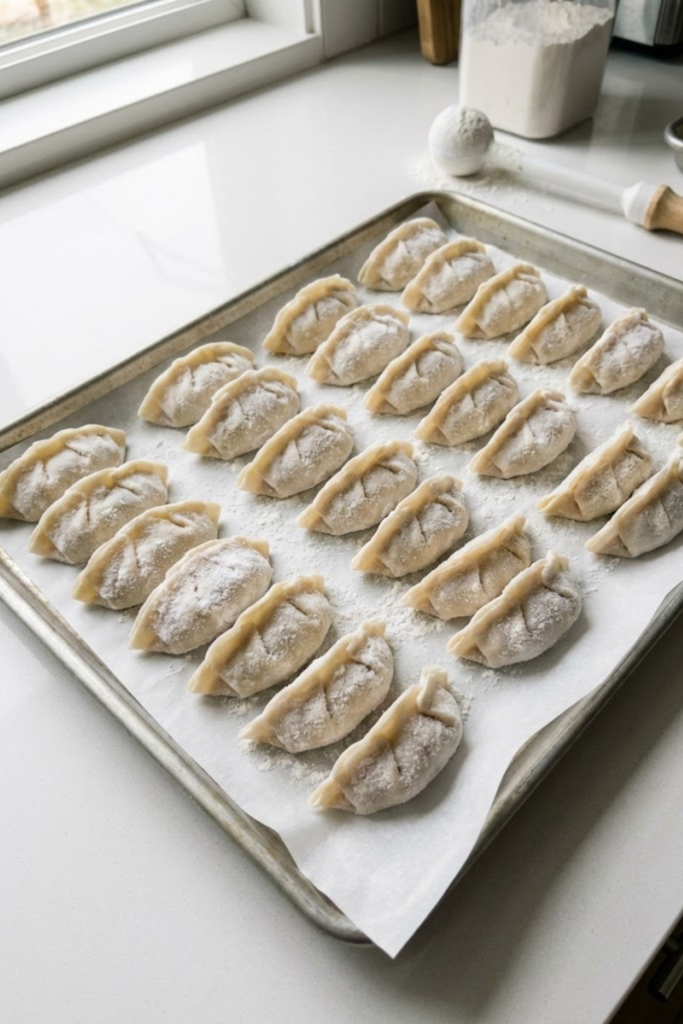
To avoid the “dumpling iceberg” disaster, you have to flash freeze them. It sounds fancy, but it just means patience. Line a baking sheet with parchment paper and lay the freezing dumplings out so they aren’t touching.
Pop the whole tray in the freezer for about an hour until they are rock hard. Once they are frozen solid, then you can put them in a freezer bag. They will rattle around like marbles instead of sticking together. I usually label the bag with the date because, let’s be honest, I will forget what they are in a month.
Cooking from Frozen
Here is the best news: you do not need to thaw them. In fact, please don’t! If you let frozen dumplings thaw on the counter, the dough gets gummy and gross.
Cooking from frozen is almost exactly the same as cooking fresh. You do the fry step, then the steam step. The only difference is that I let them steam for an extra 2 or 3 minutes to make sure the pork is cooked all the way through. It is the ultimate lazy weeknight dinner. I keep a stash in the freezer for nights when I just can’t deal with cooking.
Resurrecting Leftovers (No Microwaves!)
If you have cooked leftovers, you have to treat them with respect. The microwave is where crispy dumplings go to die. If you zap them, the beautiful crispy bottoms turn into rubber, and the wrapper gets chewy in a bad way.
To bring them back to life, I just throw them back in a pan with a tiny bit of oil for a minute to re-crisp the bottom. Or, if I’m feeling really lazy, I toss them in the air fryer for 3 minutes. Reheating potstickers this way keeps the crunch intact. It’s worth the extra dirty pan, I promise.
Well, there you have it. We have officially made it down the messy, flour-covered road to authentic pan fried pork dumplings. It is a lot of information, I know. But remember, the journey from that first mixing bowl to the final crispy dumpling skirt is supposed to be fun, not perfect.
Whether you used store-bought wrappers or went rogue with homemade dough, the result is the same: hot, juicy comfort food made with your own hands. Don’t stress if your pleats look a little wonky or if you burned the first batch—we have all been there. The flavor is what counts.
So, go grab that Chinkiang vinegar, call some friends over, and get folding. And hey, if you found this guide helpful and want to save it for your next craving, please pin this recipe to your favorite board on Pinterest. It helps me out and ensures you never lose the secret to the perfect crunch!