Ever had one of those days where you just cannot decide between a greasy slice of pepperoni pie and a buttery, crunchy grilled cheese? I have definitely been there! In fact, studies (and my stomach) suggest that combining comfort foods increases happiness by at least 100%. This recipe isn’t just a sandwich; it is a delicious collision of two culinary titans. We are talking golden-brown bread, a “cheese pull” that stretches for days, and that perfect spicy kick of pepperoni. Let’s stop dreaming and start cooking!
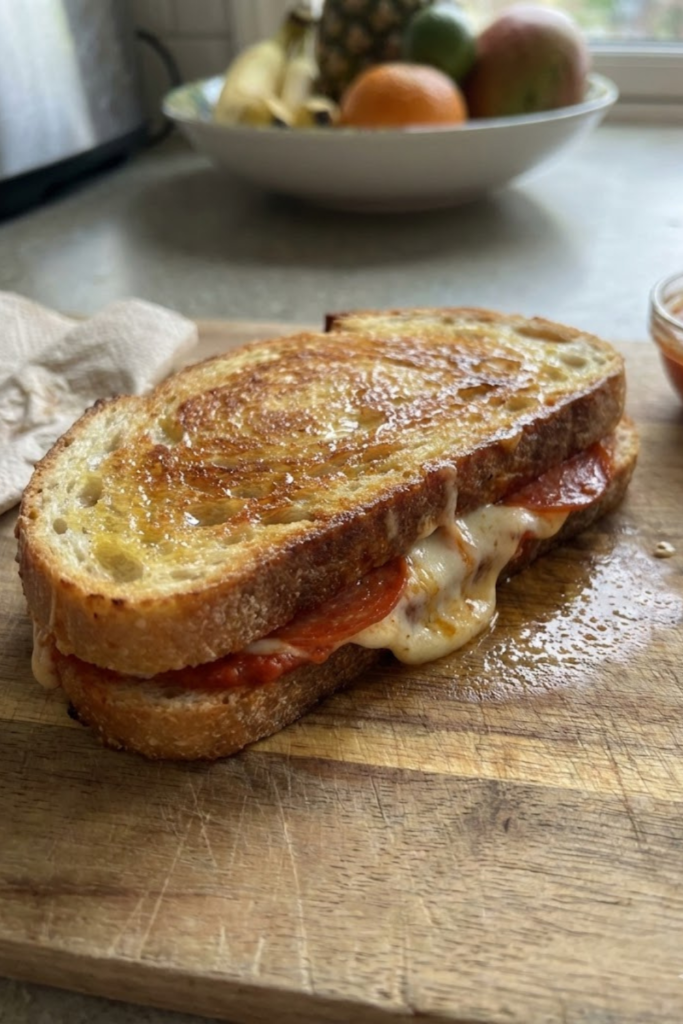
Choosing the Best Bread for Your Pizza Sandwich
Listen, I have made a lot of mistakes in the kitchen, but none were as heartbreaking as the Great Soggy Sandwich Incident of 2018. I had all these beautiful ingredients lined up for a pepperoni pizza grilled cheese, but I grabbed the cheapest, thinnest white bread from the pantry. It was a disaster. The moment the sauce hit the bread, it turned into mush, and the whole thing fell apart in the pan. I was so mad I almost cried over spilled marinara.
That taught me a valuable lesson: the bread is the foundation, and you can’t build a house on a swamp. If you want a pizza sandwich that actually holds up, you have to be picky about your carbs.
Go For Sourdough or Texas Toast
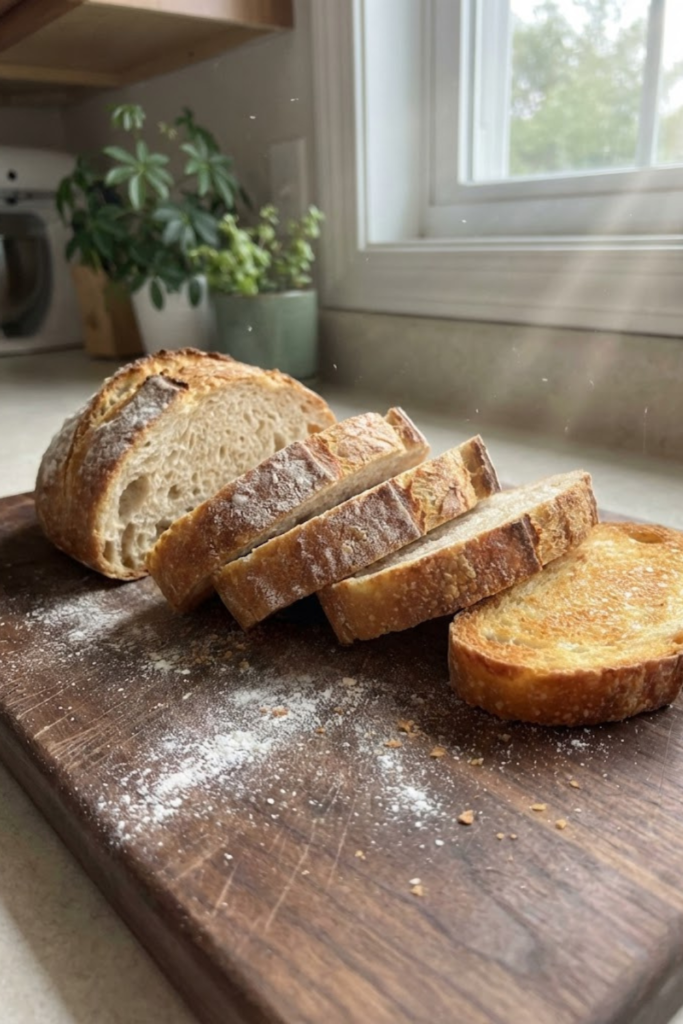
Standard sandwich bread just isn’t built for this kind of heavy lifting. It’s fine for peanut butter, but when you introduce wet ingredients like pizza sauce and greasy pepperoni slices, you need something with a backbone.
I always tell people to grab a loaf of sturdy sourdough. The texture is dense enough to handle the moisture, and the tangy flavor really cuts through the richness of the cheese. Honestly, sourdough sandwich ideas are my go-to for almost any melt. If sourdough isn’t your jam, try Texas Toast. It’s thick, fluffy, and toasts up incredibly well.
I once used a fancy brioche, and while it tasted good, it was too soft and sweet. Stick to the savory, crusty loaves. You want a bread that fights back a little when you bite into it.
Thickness Actually Matters
Here is where I see people mess up all the time. If you slice your own bread, don’t go too thin, but don’t go doorstop-thick either. If the slice is too thin, the marinara sauce will soak right through before the cheese melts.
If it’s too thick, the outside will burn before the middle gets hot. I aim for slices that are about 3/4 of an inch thick. This seems to be the sweet spot where the bread gets golden and crunchy, but the heat still penetrates to melt that mozzarella cheese.
The Crust Factor
We aren’t cutting the crusts off like we’re making lunch for kids (unless you really want to, I guess). The crust on an artisan bread helps keep the sauce contained. When I use a round loaf, I try to use the middle slices so I get maximum surface area for my fillings.
Also, stale bread isn’t always bad here. If your loaf is a day or two old, it’s actually better for grilled cheese recipes because it absorbs less liquid. It sounds weird, but trust me on this one. It crisps up better in the pan.
So, next time you are shopping, walk right past that squishy white loaf. Grab something that feels heavy in your hand. Your pepperoni pizza grilled cheese depends on it!
The Secret to Melty Mozzarella and Provolone
I have to admit something embarrassing. For years, I thought the pre-shredded cheese in the bag was the exact same stuff as the block. I mean, it’s all cheese, right? Wrong. I would make a pepperoni pizza grilled cheese, and the cheese wouldn’t fully melt. It just kind of sat there, sweating oil but staying in its little individual shred shapes. It was tragic. I wanted that Instagram-worthy cheese pull, but I was getting a sad, rubbery mess.
After a few tantrums and some serious Googling, I figured out the problem. Now, I am a bit of a cheese snob, but only because I want you to have the best sandwich possible.
Put Down the Bagged Cheese
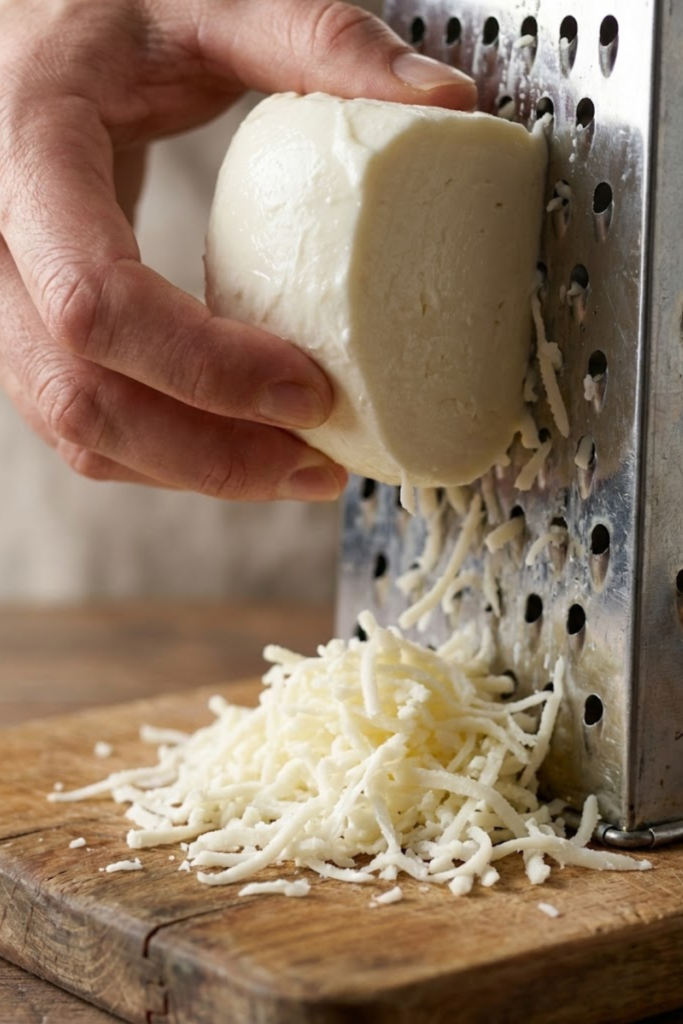
Here is the deal with those convenient bags of shredded cheese. They are coated in anti-caking agents, usually something like potato starch or cellulose. This keeps the shreds from clumping together in the bag, which is great for storage but terrible for melting.
That coating literally blocks the proteins from merging together. When you are craving gooey cheese, that powder is your enemy. I learned this the hard way when my “quick dinner” turned into a gritty disaster.
Now, I always buy the block. Yes, it takes a few extra minutes to grate it yourself. But the difference is night and day. Freshly grated mozzarella cheese melts into a smooth, creamy pool of happiness. It is absolutely worth the elbow grease.
The Perfect Cheese Blend
Mozzarella is obviously the king of pizza cheeses. It gives you that stretch we all love. But let’s be real—mozzarella can be a little bland on its own. It is a mild cheese. To really make the flavors pop in your pepperoni pizza grilled cheese, you need a wingman.
I started experimenting with blends a few years ago. My favorite combo? Low-moisture mozzarella mixed with sharp provolone cheese. Provolone adds that salty, sharp kick that cuts through the rich butter and meat.
If you are feeling fancy, sprinkle in a little parmesan too. Just don’t use the green can stuff! Real parmesan adds a savory depth that makes this taste like a gourmet meal. Trust me, mixing cheeses is the best cheese for melting and flavor combined.
The Cheese Barrier Technique
This might sound a bit technical, but hang in there with me. It is super simple. One big mistake I see people make is putting the sauce directly on the bread. Don’t do that!
If you put the sauce on the bread, it gets soggy fast. Instead, I use the cheese as a shield. I put a layer of cheese on the bottom slice of bread, then the pepperoni and sauce, and then another layer of cheese on top.
This traps the sauce in the middle. The cheese melts into the bread, creating a crispy seal. The sauce stays hot and delicious in the center without ruining your crust. It was a game-changer for me. No more soggy sandwiches, just perfect, crispy bliss.
Don’t Skimp on the Volume
Finally, don’t be shy with the cheese. We aren’t making a salad here. This is comfort food! You want enough cheese to hold everything together.
If you use too little, the pepperoni slices will slide right out when you take a bite. The cheese is the glue. I usually do about a cup of cheese per sandwich. It seems like a lot, but once it melts down, it is the perfect amount to balance the bread and toppings.
Layering Techniques for Maximum Flavor
I used to think that making a sandwich was just about throwing things between two slices of bread and hoping for the best. Boy, was I wrong. I remember making a pepperoni pizza grilled cheese for a date once (bold move, I know). I just piled everything on there willy-nilly. When she took a bite, the whole middle slid out onto her plate like a hot, cheesy avalanche. It was mortifying. We didn’t have a second date.
That awkward dinner taught me that the architecture of a sandwich is just as important as the ingredients. You have to build it right if you want it to stay together and taste amazing.
The Sauce Trap
Here is where 90% of people mess up. I certainly did. When we see pizza sauce or marinara sauce, our instinct is to ladle it on like we are dressing a 12-inch pie. But bread isn’t pizza dough. It is a sponge.
If you use too much sauce, it leaks out the sides and burns in the pan. Or worse, it turns your bread into a soggy mess that falls apart in your hands. I learned to treat the sauce like a condiment, not a main ingredient.
I use about one tablespoon per sandwich. That’s it. I spread it thin, almost like I’m buttering toast. You get all that zesty tomato flavor without the structural failure. It keeps the pizza sandwich crispy and manageable. Trust me, you don’t need a pool of sauce to get the point across.
Pre-Cook Your Meat
Okay, this is my top-secret sandwich hacks tip. If you just pull pepperoni slices out of the bag and throw them on the bread, they get warm, but they don’t get good. They stay kind of soft and greasy.
I like my pepperoni to have a little bite to it. So, before I assemble anything, I throw the slices into a hot pan for about 30 seconds on each side. You want them to start curling up and getting those little crispy edges.
This does two things. First, it gets rid of some of the excess grease so your sandwich isn’t dripping oil. Second, it wakes up the spices. The heat releases the paprika and garlic flavors. Crispy pepperoni adds a texture that completely changes the sandwich. It goes from “meh” to “wow” instantly.
The Definitive Assembly Order
I have spent way too much time thinking about the physics of a grilled cheese. But hear me out. The order you stack things matters.
Think of the cheese as the glue. If you put pepperoni slices directly against the bread, the bread might slide around. If you put sauce against the bread, it gets wet. You need a buffer.
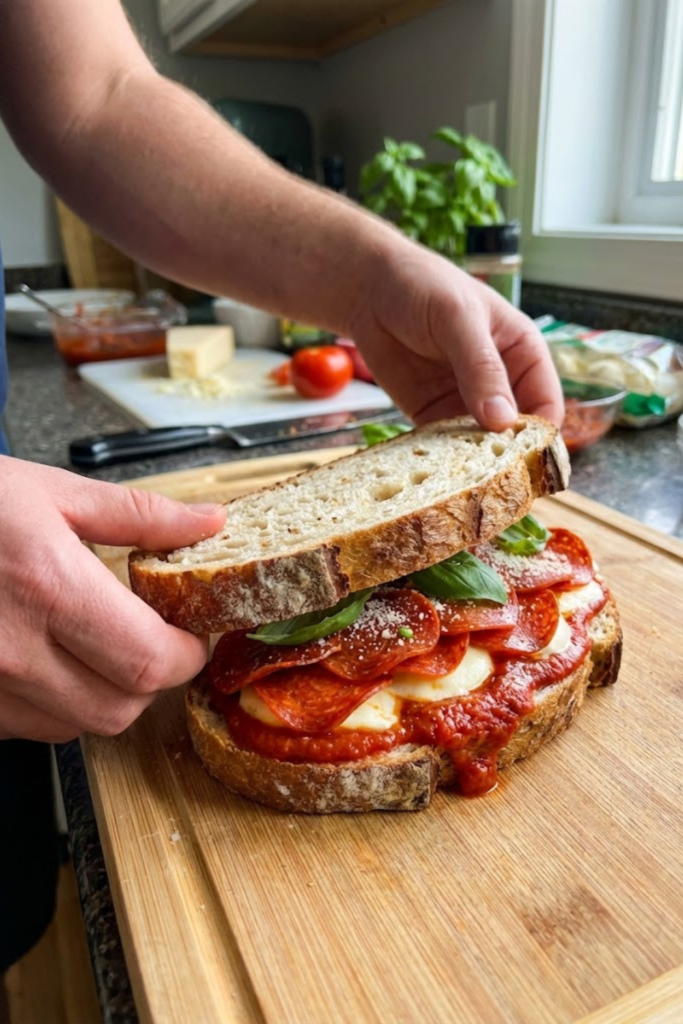
Here is the exact order I use for the perfect cheese pull and stability:
- Bottom slice of bread (buttered on the outside, obviously).
- First layer of mozzarella cheese.
- The pre-cooked pepperoni.
- Your thin layer of sauce (dabbed on the pepperoni).
- Second layer of cheese.
- Top slice of bread.
See what happened there? The cheese is touching both slices of bread. When it melts, it fuses everything together. The sauce is trapped safely in the middle.
This creates a self-contained pocket of flavor. You get the crunch, the melted cheese, and the spicy meat in every single bite without wearing your dinner. It works every time.
Cooking Method: Pan Frying vs. Air Fryer
Cooking a sandwich seems like it should be the easiest thing in the world, right? It’s just heat and bread. But I cannot tell you how many times I have messed this up. I used to crank the stove up to “high” because I was starving and wanted my food now.
The result was always the same: a sandwich that looked like a charcoal briquette on the outside but had cold, solid cheese in the middle. It was heartbreaking. I’d try to scrape the burnt parts off over the sink like a raccoon, hoping nobody saw my shame.
I eventually learned that great food takes a little patience. Whether you are using a skillet or a fancy gadget, the method matters just as much as the ingredients.
The Great Mayo vs. Butter Debate
I was raised in a house where butter was the only option for grilled cheese. If you suggested mayonnaise, my grandmother probably would have chased you out of the kitchen. So, I was skeptical when I first heard about the “mayo trick.” It sounded greasy and weird.
But one day, I ran out of soft butter and didn’t want to tear my bread to shreds with a cold stick. I grabbed the mayo jar. I spread a thin layer on the outside of the bread and threw it in the pan.
I hate to admit it, but it was better. Mayonnaise is basically oil and egg, so it browns up beautifully. It has a higher smoke point than butter, so it doesn’t burn as quickly. This gives you a more forgiving window to get that perfect buttery crust (ironic, I know). It also adds a tiny bit of tang that works really well with the pepperoni. If you are a purist, stick to butter, but don’t knock the mayo until you try it.
Mastering the Pan Fry
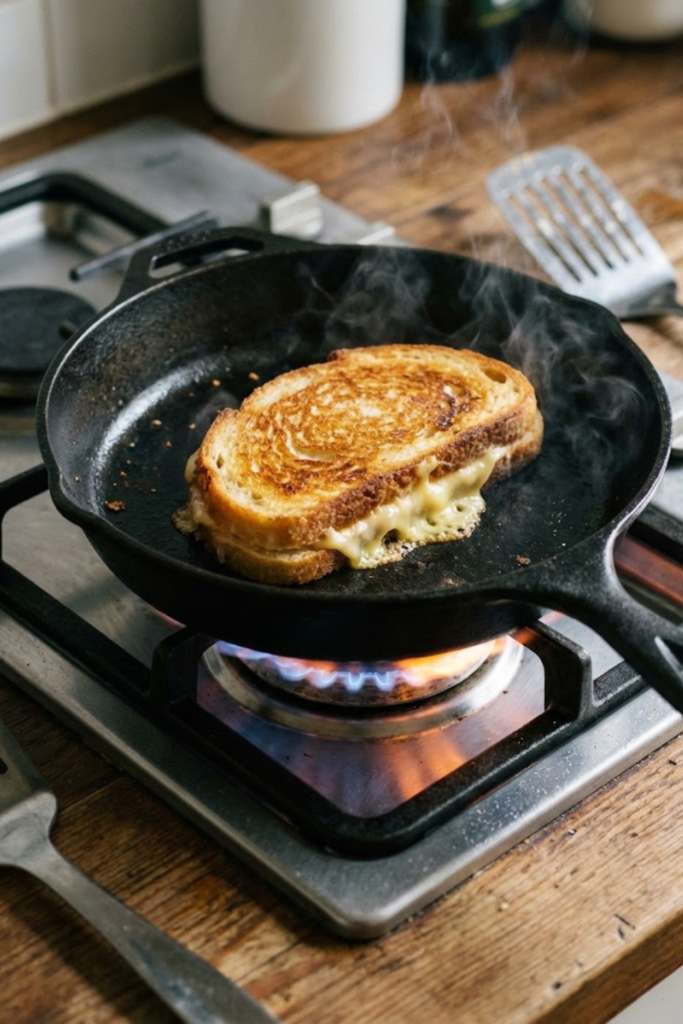
If you are a traditionalist making a pan fried sandwich, cast iron cooking is the way to go. The heavy pan holds heat evenly. But you have to respect the heat.
My rule is low and slow. I keep the burner on medium-low. If the pan smokes, it’s too hot. I place the sandwich in and—here is the trick—I cover the pan with a lid or a sheet of foil.
This traps the steam and heat, melting the mozzarella cheese faster. It creates a little oven environment. After about 3 or 4 minutes, I check the bottom. If it’s golden, I flip it. The lid comes off for the second side so the bread stays crisp. It takes patience, but biting into that fully melted, gooey center is a triumph every single time.
The Air Fryer Revolution
I resisted buying an air fryer for years. I didn’t want another gadget cluttering my counter. But once I got one, I realized it is a cheat code for kitchen hacks. Making an air fryer grilled cheese changes the texture completely.
It makes the entire surface of the bread crunch, not just the parts touching the pan. Here is my go-to method: Pre-heat to 375°F. I cook it for 4 minutes, flip, and do another 3 to 4 minutes.
One warning though: the fan in these things is strong. The first time I tried this, the fan blew the top slice of bread right off the sandwich. It flew up into the heating element and started smoking. I panicked and had to unplug everything. Now, I stick a toothpick through the sandwich to hold it together. It works like a charm.
Look, we have covered a lot of ground here. We went from talking about soggy disasters to achieving crispy, golden perfection. Making a pepperoni pizza grilled cheese isn’t rocket science, but paying attention to those little details makes it taste like a restaurant meal.
I really hope you give this a shot the next time you are staring into the fridge, wondering what to eat. It is honestly one of those easy lunch ideas that feels like a cheat day treat. Just remember to be patient with the heat. Don’t crank the burner up to high just because you are hungry; you will regret it when the bread burns and the cheese is still cold.
Also, don’t be afraid to get creative with it. I have added jalapeños, olives, and even a little bit of pineapple (don’t yell at me!) to this sandwich. It is your lunch, so make it how you like it. This is one of those comfort food recipes that is impossible to mess up once you know the basics.
If this guide made your stomach rumble, do me a huge favor. Hover over that mouthwatering photo and pin this recipe to your “Lunch Ideas” or “family favorite meals” board on Pinterest. It helps me out a ton and keeps this cheesy goodness safe for when the craving hits. Now, go forth and melt some cheese!