Did you know that the secret to the most incredible soup isn’t just the broth, but the patience you put into it? I honestly believe that good food takes time, and this French onion beef short rib soup is the definition of “worth the wait.” Imagine the savory depth of traditional French onion soup, but upgraded with fall-off-the-bone beef short ribs. It is pure magic in a bowl!
In this guide, I’m going to walk you through exactly how to achieve that restaurant-quality richness right in your own kitchen. Whether you are looking for a Sunday dinner idea or just need a warm hug in a bowl, this recipe is going to blow your mind. Let’s get cooking!
Selecting the Best Beef Short Ribs for Braising
I have to be honest with you guys, I used to be terrified of the butcher counter. I’d just grab whatever package of meat was right in front of me and run for the checkout line. Big mistake. I remember one time I tried to make a fancy dinner using lean stew meat because I thought I was being “healthy.” Let’s just say it tasted like old shoe leather floating in salty water. It was a total disaster, and my family still teases me about it!
When it comes to French onion beef short rib soup, the meat you choose is literally the most important thing. You can’t skimp here. If you want that melt-in-your-mouth texture, you have to know what to look for.
Go for the Bones
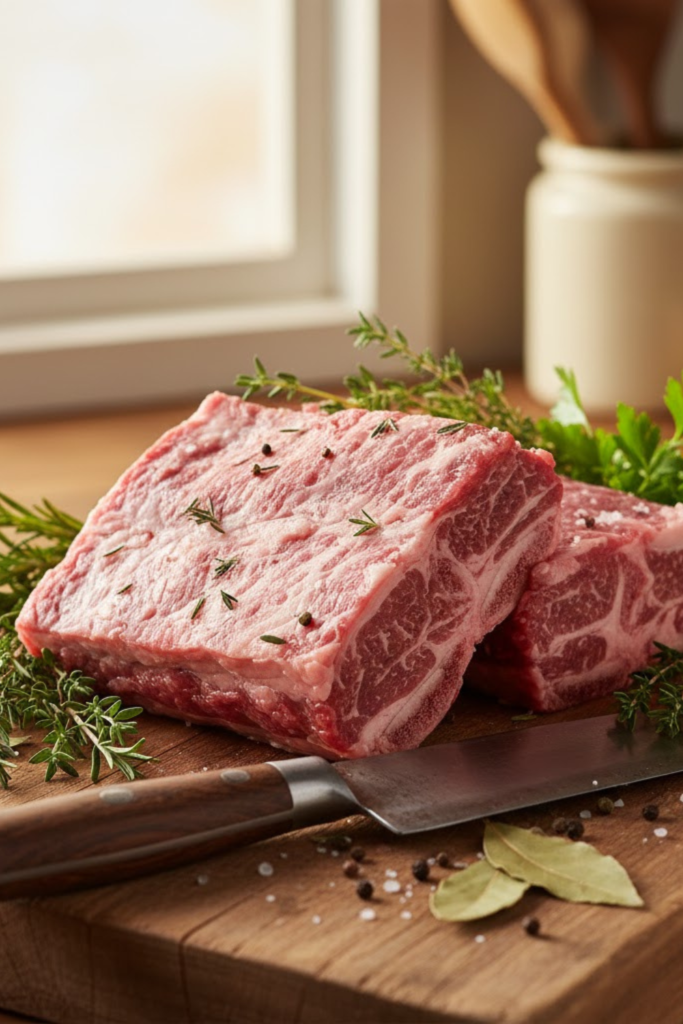
First things first: buy the bone-in short ribs. I know, I know, boneless seems easier to eat. But here is the secret I learned after many failed pots of soup: the bone is where the flavor lives. As the ribs cook, the marrow and collagen seep out into the broth.
This creates that sticky, rich mouthfeel that you get at high-end restaurants. If you use boneless, the soup will still be okay, but it won’t have that “wow” factor we are aiming for. Plus, the meat tends to hold its shape better on the bone during a long braise.
Marbling is Everything
Don’t be afraid of the fat! When you are looking at the ribs in the package, you want to see a lot of white specks and streaks running through the red meat. We call this marbling.
Here is a specific tip:
- Avoid ribs that have a huge, thick layer of solid fat on top but lean meat underneath.
- Look for the “English style” cut. These are cut parallel to the bone and are usually chunkier.
- Stay away from “Flanken style” (the thin strips usually used for Korean BBQ) for this specific recipe.
I once bought ribs that were way too lean because they looked “cleaner.” After three hours of cooking, they were tough and dry. I was so frustrated I almost ordered pizza instead. The fat renders down and bastes the meat from the inside out, keeping it juicy.
Prep Like a Pro
Before you even think about heating up your pot, take the ribs out of the fridge. Let them sit on the counter for about 30 minutes to hit room temperature. If you throw cold meat into a hot pan, it seizes up and cooks unevenly.
Also, if there is a massive chunk of hard fat on the outside, you can trim a little bit of it off. But don’t go crazy! You need that fat for the flavor profile. Just trust the process. It’s going to turn out amazing.
Mastering the Art of Caramelized Onions
I have a confession to make: I am a naturally impatient person. When I first started cooking, I thought “caramelized” just meant “cooked until brown.” So, I would crank the stove up to high, throw the onions in, and pray for the best. Big mistake. I usually ended up with a pan full of blackened, bitter strips that tasted like charcoal. It was so frustrating I wanted to scream!
But over time, I learned that real flavor takes patience. You cannot rush this part of the French onion beef short rib soup. It is the soul of the whole dish. If you mess this up, the whole soup falls flat.
The Perfect Onion Blend
Most people just grab a bag of yellow onions and call it a day. That works, but if you want to level up, mix it up. I’ve found that using a combination of yellow onions and red onions creates a way better flavor profile.
Yellow onions bring that classic sweetness we all love. Red onions add a little bit of deep, savory complexity. When they cook down together, they turn into this jammy, sweet-and-savory mixture that is honestly good enough to eat with a spoon.
Low and Slow is the Only Way
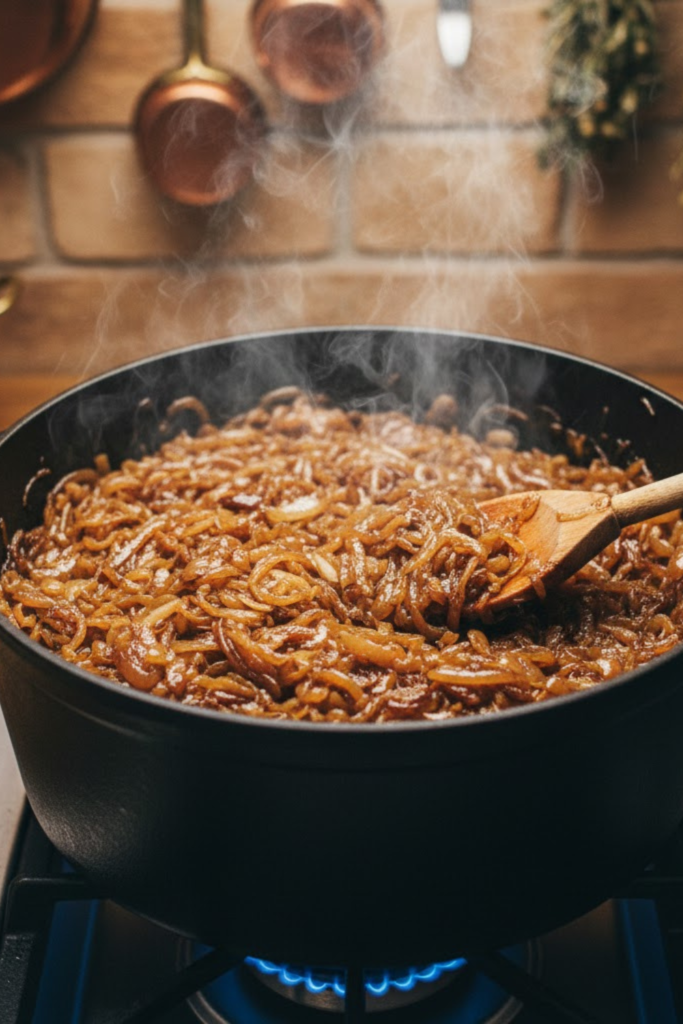
Here is where you have to fight the urge to speed things up. You need to cook these bad boys on low heat. I’m talking low. It should take at least 45 to 60 minutes to get them right.
If you try to do it in 20 minutes, you’re just sautéing them. You aren’t caramelizing them. I usually put on a podcast or pour a glass of wine while I stand there and stir. It’s kinda therapeutic once you get into the rhythm. You want them to turn a deep, rich amber color. If they start to stick too much, add a splash of water.
Scrape Up the Good Stuff
Towards the end, you’re going to see brown stuff stuck to the bottom of the pot. Don’t panic! That is not burnt food; that is what chefs call “fond,” and it is pure flavor gold.
This is when you deglaze. Pour in a little bit of dry sherry or white wine. As the liquid hits the hot pan, use a wooden spoon to scrape up all those brown bits. The smell that hits your nose right then? It is absolutely incredible. It transforms the onions from greasy veggies into a rich, flavor-packed base for your soup.
Trust me, that hour of standing by the stove is worth it. When you take that first bite, you’ll know exactly why we took the long road.
Building the Rich Beef Broth Foundation
I still cringe when I think about the first time I tried to make beef soup. I was in college, broke, and clueless. I thought I could just throw raw ribs into a pot of tap water and boil them until they were done. Spoiler alert: I ended up with grey, rubbery meat floating in what looked like dirty dishwater. It was honestly heartbreaking. I sat there eating it out of stubbornness, but I wanted to cry.
That disaster taught me a huge lesson. The broth isn’t just the liquid the meat floats in; it is the flavor engine of the entire homemade beef soup. If you want that deep, restaurant-quality taste, you have to build it layer by layer.
Searing is Non-Negotiable
Please, whatever you do, do not skip searing the meat. I know it adds an extra step and creates a bit of a splatter mess on the stove, but it is vital. You need to get your Dutch oven or heavy pot ripping hot. Add a little oil and drop those short ribs in.
You aren’t just cooking them; you are creating a crust. This is where the magic happens. Let them sit undisturbed for a few minutes on each side until they are dark brown. That browning creates a complex, savory depth that you just can’t get any other way. If you crowd the pan, they will steam instead of sear, so work in batches if you have to. I learned that the hard way when I tried to jam everything in at once and lost all my crust.
Turning Liquid into Gold
Once the meat is seared and set aside, and your onions are caramelized, it is time to build the liquid. Do not use plain water! I swear by using a high-quality beef bone broth. If you have time to make beef stock from scratch, you are a hero, but a good store-bought carton works fine too.
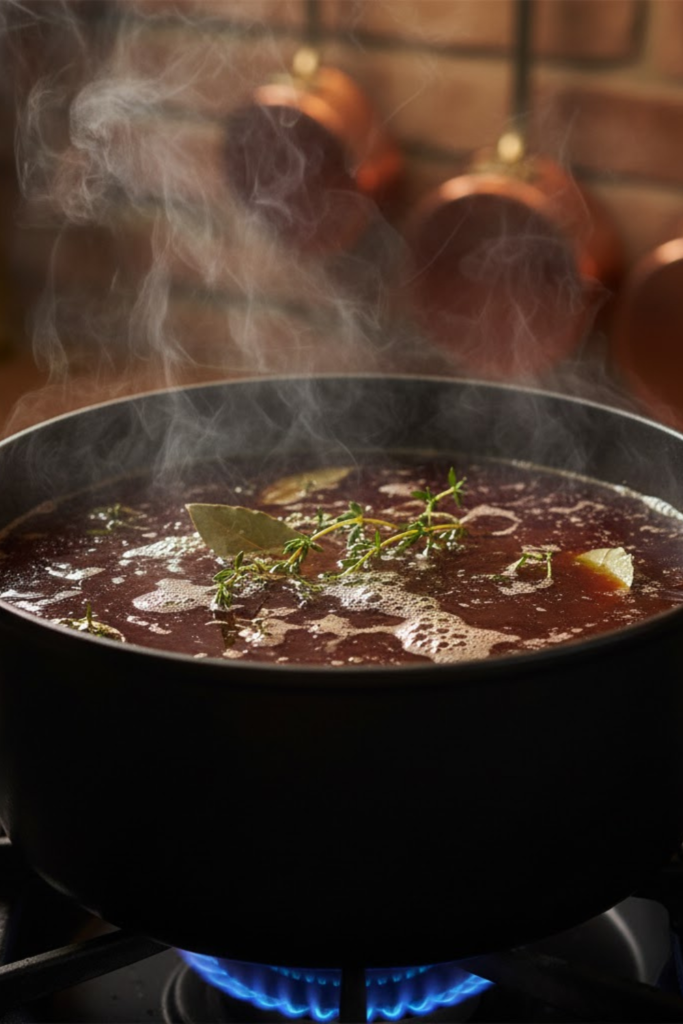
Pour the broth over the onions and nestle the ribs back in. Now, add your aromatics. I always toss in a few sprigs of fresh thyme and a couple of dried bay leaves. And here is my secret weapon: a healthy splash of Worcestershire sauce. It adds a salty, umami kick that wakes up the whole pot. It sounds weird, but it makes the beef taste “beefier.”
The Patience Game
Now comes the hardest part: waiting. Bring the pot to a boil, then immediately drop it to a simmer. You want tiny bubbles, not a rolling boil. Cover it up and walk away.
This needs to cook for at least 2 to 3 hours. I usually check it at the 2-hour mark. You are looking for fork tender beef. If you poke the meat and it feels tight, it needs more time. I’ve pulled it too early before because I was hungry, and the meat was tough and stringy. Huge regret.
Let it go until the meat literally falls off the bone with zero resistance. That is when you know the collagen has melted down into the soup, making the broth thick and sticky on your lips. That texture is what separates a sad soup from a glorious one.
Assembling the Ultimate Cheesy Toast Topping
You know what ruins a perfect bowl of soup? Soggy bread. I remember the first time I served this to my friends, I used cheap, soft white sandwich bread because I forgot to buy a baguette. I toasted it, threw it on top, and by the time I walked from the kitchen to the table, it had dissolved into a sad, mushy paste. It was gross. I was so embarrassed I just scooped it out and pretended it never happened.
The topping isn’t just a garnish; it’s half the experience. If you want that satisfying crunch followed by the gooey cheese pull, you have to treat the toast with respect.
The Bread Makes or Breaks It
You need structural integrity here, folks. Go buy a real French baguette or a loaf of crusty sourdough. The bread needs to be able to stand up to the hot liquid without falling apart immediately.
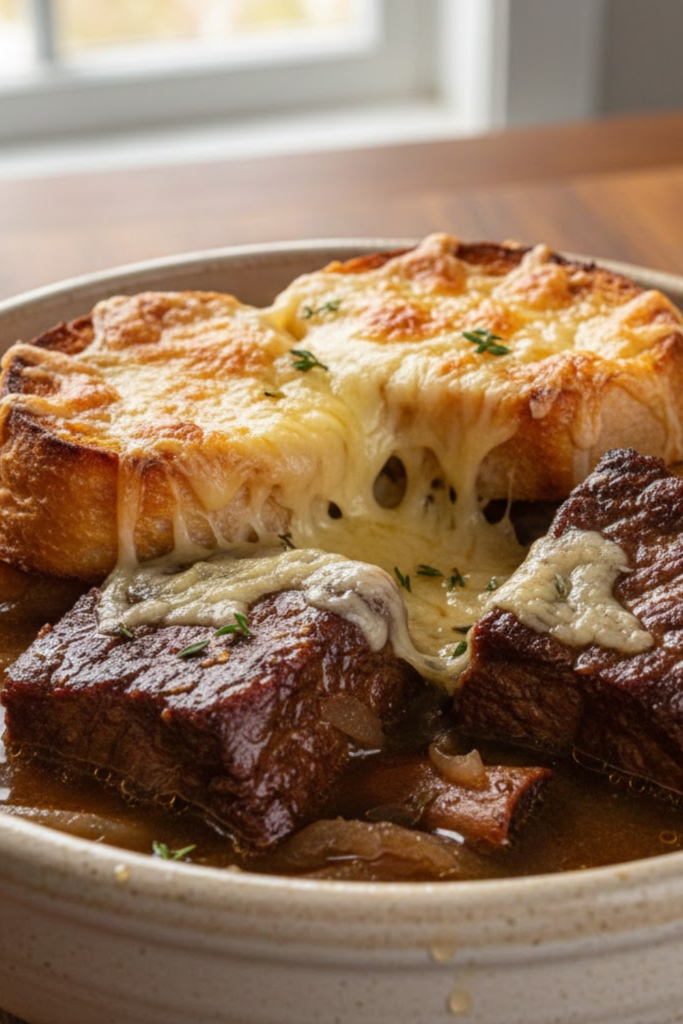
I like to slice my cheesy baguette pieces pretty thick, like an inch or so. Then—and this is crucial—toast them in the oven before you put them on the soup. If you skip this, the bread soaks up the broth too fast. You want it to be basically a crouton before it hits the liquid. That way, the bottom gets soft and flavorful while the top stays crunchy.
Why Gruyère is King
Let’s talk cheese. I’ve tried them all. Cheddar gets too oily and separates. Mozzarella is okay, but it doesn’t have much flavor. If you want the real deal, you have to use Gruyère.
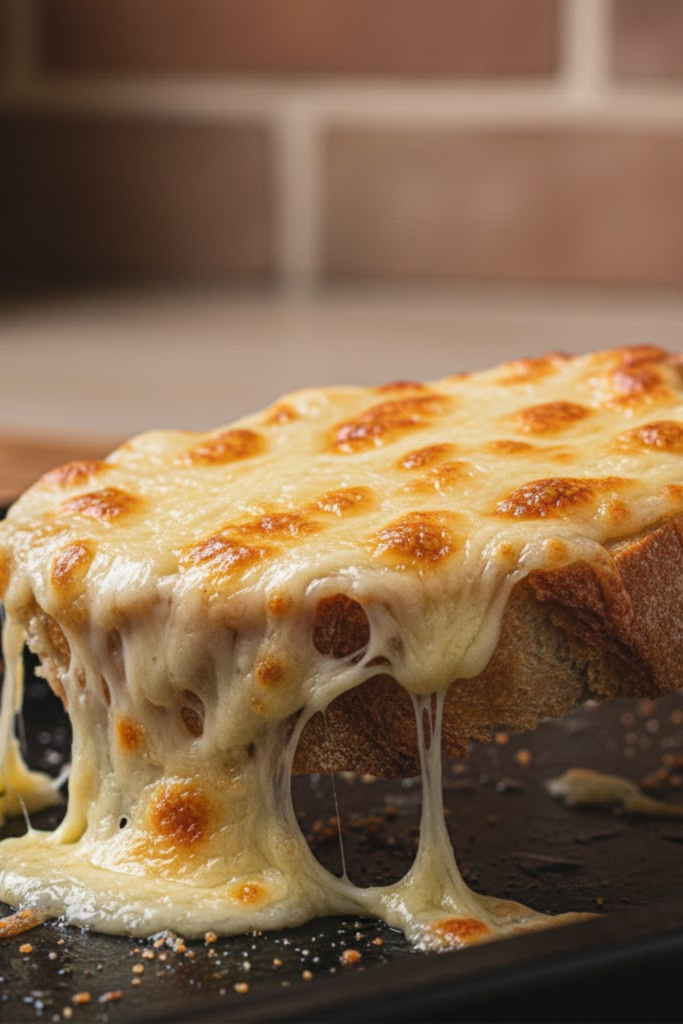
Gruyère cheese melting is just superior. It gets bubbly and brown without turning into a rubber sheet. It has this nutty, salty funk that cuts through the richness of the beef. It’s expensive, I know. But do not swap it for the cheap stuff in the green can. If you really can’t find it, a good Swiss cheese is a decent backup, but Gruyère is the goat.
The Danger Zone: Broiling
Here is where I have ruined dinner more times than I can count. You ladle the hot soup into oven-safe bowls, place your toasted bread for soup on top, and pile on the cheese. Then you slide it under the broiler.
DO NOT WALK AWAY. I repeat, do not check your phone. Do not go to the bathroom. The difference between “perfectly golden” and “charred black hockey puck” is about 30 seconds.
I stand there and watch it like a hawk. You want the cheese to bubble vigorously and get those little brown spots. As soon as you see that deep golden color, yank them out. It’s stressful, but when you pull that spoon up and the cheese stretches for a mile? Pure victory.
Look, I am not going to lie to you guys, this French onion beef short rib soup was not a quick thirty-minute meal, and your kitchen might look like a disaster zone right now, but when you pull that bubbling, heaven-smelling bowl out of the oven, you will agree it is worth every single minute . There is something so satisfying about tackling weekend dinner projects like this to create the ultimate comfort food, and the best part is that it tastes even better the next day, making it a perfect candidate for freezing and reheating for a busy weeknight family favorite . I really hope you give this recipe a shot because it has become a staple in my house, so don’t forget to save this to your “Best Soups of 2026” board on Pinterest so you can find it whenever the craving strikes !