Hear me out! Most people think minestrone is reserved for those gloomy, shivering winter days where you just want to hibernate. But they are missing out on one of the culinary world’s best-kept secrets: summer soup. It’s lighter, it’s brighter, and it uses that explosion of produce that’s overflowing from your garden right now. This isn’t your heavy, stew-like winter recipe; it’s a vibrant celebration of the season!
Did you know that in Italy, minestrone is actually eaten year-round, often served warm or even at room temperature during the hotter months?. It’s true! This summer minestrone with turkey meatballs brings together the zest of fresh herbs, the crunch of summer squash, and lean, juicy protein that won’t weigh you down. I used to be a skeptic, but after one bowl on a patio evening with a glass of crisp white wine, I was a total convert. Let’s get cooking!
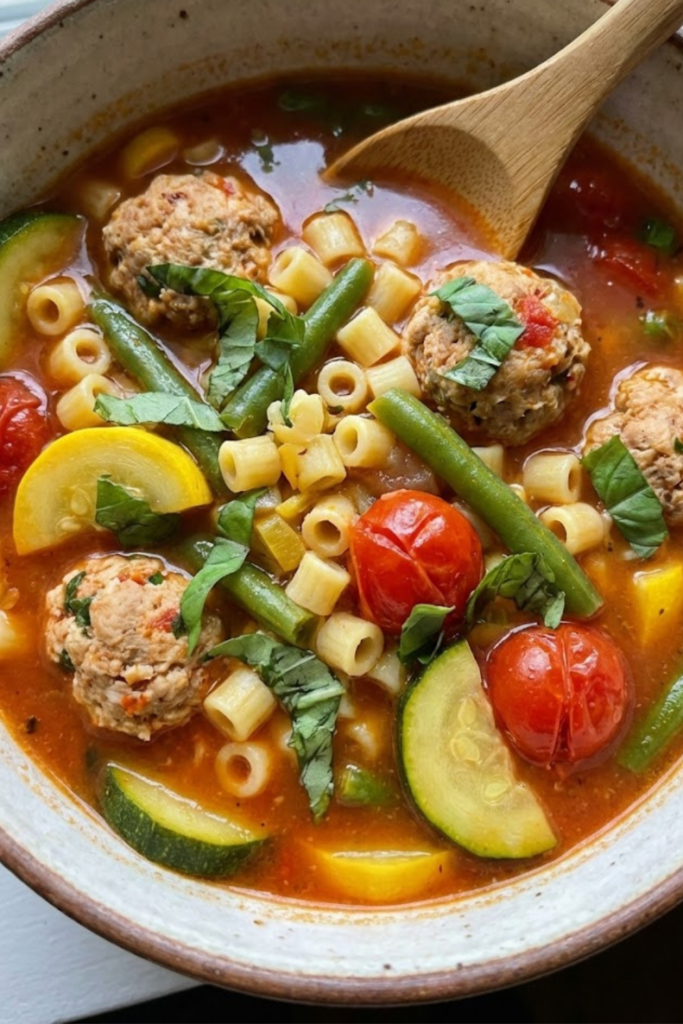
Why Turkey Meatballs Are the Star of Summer Soup
Look, I have to confess something embarrassing. A few years ago, I tried to serve my family a classic beef minestrone in the middle of a July heatwave. It was a total disaster. Everyone was sweating, the broth felt way too heavy, and I ended up with a massive pot of leftovers that nobody touched.
That’s when I learned the hard way that you can’t just copy-paste winter recipes into summer. You have to lighten things up.
For this summer minestrone with turkey meatballs, swapping out the beef isn’t just a health choice; it’s a survival tactic. Beef brings a heaviness that sits in your stomach like a rock when it’s 85 degrees out. Turkey, on the other hand, gives you that satisfying “meaty” bite without the resulting food coma.
The “Flavor Sponge” Effect
Here is the thing about turkey that people often complain about: it can be kind of bland on its own. I used to think that was a bad thing, but for soup, it is actually perfect. Because turkey is so mild, it acts like a total flavor sponge.
When I mix up these meatballs, I go heavy on the aromatics. I’m talking about lots of garlic, fresh chopped basil, and even a little lemon zest. Beef would overpower those delicate summer flavors, but the lean ground turkey lets them shine through. It’s like the difference between wearing a heavy wool coat and a light linen shirt.
Save Your Sweat: Bake, Don’t Fry
Another lesson I learned after setting off my smoke detector one too many times: do not pan-fry meatballs in the summer. Searing meatballs in a skillet creates a ton of smoke and heats up the kitchen instantly.
- My rule: Always use the oven for this recipe.
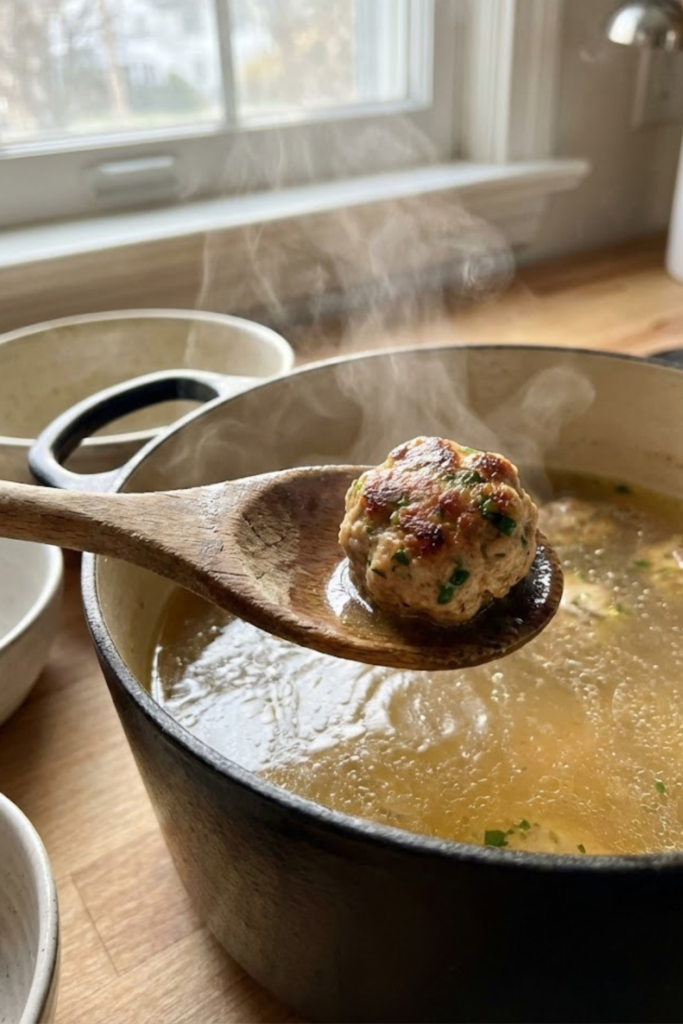
I line a baking sheet with parchment paper and pop the meatballs in at 400°F for about 15 minutes. It keeps the grease contained and, more importantly, keeps my kitchen from turning into a sauna. Plus, baked turkey meatballs hold their shape better when you drop them into the simmering broth later.
Texture That Works
There is also a texture thing happening here. Since we are using fragile veggies like zucchini and fresh corn, you don’t want a tough, dense meatball wrecking the party. Turkey stays tender and soft.
When you get a spoon that has a little bit of ditalini pasta, a piece of yellow squash, and a quarter of a turkey meatball, the balance is just right. This summer minestrone with turkey meatballs relies on that harmony. If you used beef, the meat would be the bully in the bowl, pushing the veggies around. We want everyone playing nice together.
So, don’t be afraid of the bird. Once you try it this way, you might find yourself ignoring ground beef until the first snow falls.
Selecting the Best Garden Vegetables
I have a love-hate relationship with my garden in July. I love the idea of it, but honestly, it gets a little scary. You turn your back on a zucchini plant for two days, and suddenly you’re staring at a vegetable the size of a baseball bat.
We have all been there. You plant two squash seeds thinking, “Oh, this won’t be enough,” and by August you are leaving bags of produce on your neighbor’s porch in the middle of the night just to get rid of it.
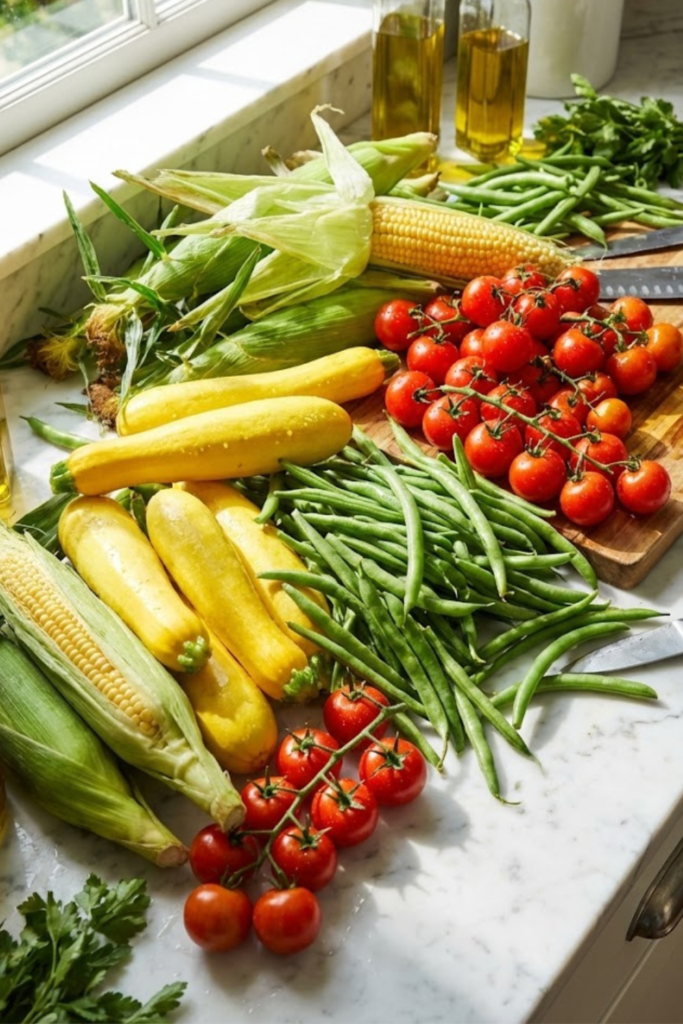
But here is the silver lining. This summer minestrone with turkey meatballs was practically invented to handle that overflow. It’s basically a garden cleanup crew in a bowl. However, just because you have a ton of veggies doesn’t mean you should throw just anything in the pot. I’ve made some pretty mushy, sad soups by not being picky enough.
The Zucchini Rule
Here is a mistake I made for years. I used to think I should use those giant, monster zucchinis for soup to “hide” them. Big mistake.
Those huge squash are watery, spongy, and filled with bitter seeds. They turn to mush the second they hit hot broth. For this recipe, you want the small, firm guys. I’m talking about zucchini and yellow squash that are no bigger than a cucumber. They hold their crunch and actually taste like something other than water.
- Tip: Cut your squash into half-moons that are about a half-inch thick. If they are too thin, they dissolve. We want texture here!
Fresh vs. Canned: The Tomato Debate
In the winter, I am the first person to grab a can of crushed San Marzano tomatoes. But for a light summer soup, canned tomatoes feel way too heavy and acidic. They drag the whole vibe down.
Instead, I use fresh cherry tomatoes or chopped heirloom tomatoes. I toss them in whole or halved. When they burst in the hot broth, they release this sweet, light acidity that tastes like sunshine. It’s completely different from the stew-like consistency of a winter minestrone. It keeps the broth clear and golden rather than turning it into a red sauce.
Don’t Skip the Corn Milk
If you use frozen corn in this recipe, I’m not gonna judge you (we’re all busy), but you are missing out on the magic.
When I make this, I buy fresh corn on the cob. Here is the trick that changed my life: after I slice the kernels off, I take the back of my knife and scrape the naked cob over the pot. This releases the “corn milk,” which is this starchy, sweet liquid. It adds a natural creaminess to the broth without adding a drop of dairy. It is a game-changer for healthy summer dinner ideas.
The Green Bean Snap
Finally, let’s talk about green beans. Please, I beg you, do not use the ones from a can. They taste like metal and sadness.
You want fresh green beans that actually snap when you break them. I cut them into one-inch pieces so they fit on the spoon. They need to go in towards the end of cooking. I usually toss them in about 5 minutes before the pasta is done. You want them to be bright green and have a little bite, not army green and floppy.
Getting the veggies right is 90% of the battle here. If you treat them right, this summer minestrone with turkey meatballs transforms from a “clean out the fridge” meal into something you’d actually pay for at a restaurant.
Crafting the Perfect Light Broth
I used to think broth was just the “wet stuff” you added to make soup, well, soup. I would grab whatever carton was on sale or, heaven forbid, just use tap water and a bouillon cube. I know, I know. I cringe thinking about it now.
The result was always salty, flat, and disappointing.
For this summer minestrone with turkey meatballs, the broth is literally the foundation of the house. If the foundation is weak, the whole thing crumbles. Since we aren’t using heavy cream or cheese to mask flavors, the liquid needs to stand on its own.
The Parmesan Rind Hack
If you look in my freezer right now, you will see a Ziploc bag full of hard, waxy cheese rinds. My husband thinks I’m hoarding trash, but I’m actually hoarding liquid gold.
Adding a parmesan rind to your simmering soup is the oldest Italian trick in the book, and it works. As the soup cooks, the rind softens and releases this nutty, salty richness into the liquid. It gives you that savory depth—what the fancy chefs call umami—without making the soup heavy or greasy.
- Tip: Just fish the rind out before serving. It gets gummy and weird to eat, but it leaves all its flavor behind.
Chicken vs. Veggie Stock
I have tried this recipe with both vegetable stock and chicken stock. Here is my honest take: use the chicken stock if you can.
Vegetable stock is great, but store-bought versions often taste like carrot juice or celery water. Homemade chicken stock or a high-quality bone broth provides a collagen-rich mouthfeel that mimics a slow-cooked winter stew, but keeps it light enough for July. It bridges the gap between the turkey meatballs and the delicate veggies.
If you do go store-bought, buy the low-sodium kind. You can always add salt, but you can’t take it out once it concentrates.
The Lemon Juice Secret
Here is the step you absolutely cannot skip. I mean it. If you skip this, we can’t be friends.
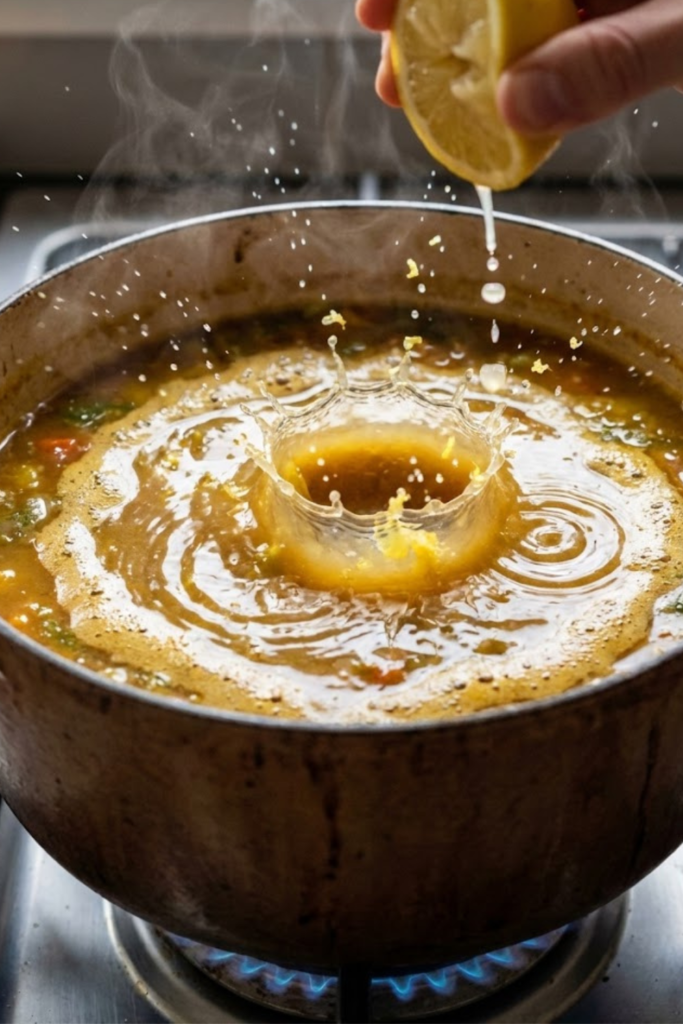
Right before I ladle the soup into bowls, I stir in a tablespoon of fresh lemon juice or a splash of white wine vinegar. I learned this after eating a bowl of soup that just tasted… muddy. The acid wakes everything up.
It cuts through the richness of the turkey and the starch of the pasta. It makes the lemon infused broth taste bright and clean. It’s the difference between a soup that puts you to sleep and a soup that energizes you.
Don’t Over-Boil the Herbs
I used to toss my fresh herbs in at the beginning and let them boil for an hour. By dinner time, they were gray slime.
For a true summer minestrone, treat your herbs like delicate flowers. I throw in a bundle of thyme sprigs while it simmers, but the basil? That doesn’t go in until the heat is off. The residual heat releases the oils without killing the flavor. It smells like a garden when you bring the pot to the table.
Pasta, Pesto, and Finishing Touches
Okay, we are in the home stretch now. This is the part where things can go really right, or really, really wrong. I have ruined more than one pot of perfectly good soup by getting lazy with the pasta.
You know what I’m talking about. You throw the raw pasta directly into the big pot of soup, thinking you are saving time on dishes. Then you get distracted by the kids or a phone call. Twenty minutes later, you come back to find that the pasta has drunk all your expensive broth and swollen up to three times its size.
It’s not soup anymore; it’s a soggy casserole. Hard pass.
The “Separate Pot” Rule
I hate washing extra dishes just as much as you do. But for this summer minestrone with turkey meatballs, you have to cook the pasta separately. It is the only way to keep the broth clear and light.
I boil my pasta in a small pot of salted water until it is al dente—maybe even a little undercooked. Then, I drain it and toss it with a tiny bit of olive oil so it doesn’t stick. I only add the pasta to the bowl right when I am serving. This keeps the leftovers from turning into a mushy paste in the fridge the next day.
Picking the Right Shape
Size matters here. You don’t want long noodles splashing broth on your shirt, and you don’t want giant rigatoni that crowd out the meatballs.
My go-to is ditalini pasta, those little short tubes. They are cute, and they nestle perfectly onto the spoon with a chickpea or a piece of corn. If I can’t find ditalini, I’ll use orzo or small shells. The goal is to get a little bit of everything—meatball, veggie, pasta, broth—in one perfect bite.
The Pesto Swirl
Here is the secret weapon that takes this from “mom’s soup” to “restaurant quality.”
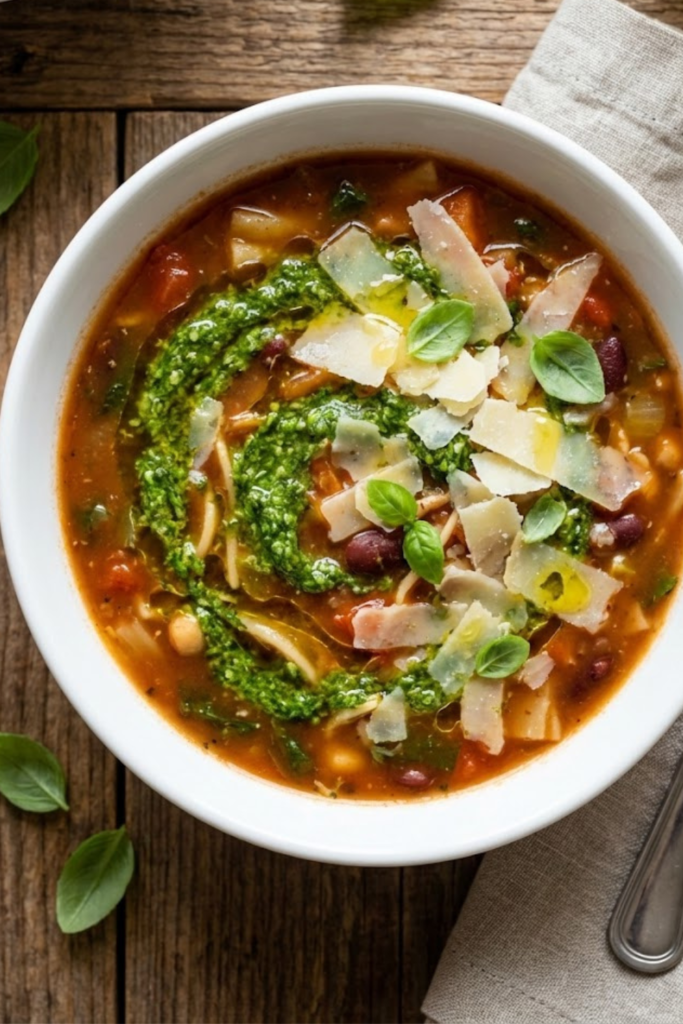
Just before I eat, I drop a big spoonful of fresh basil pesto topping right on top of the hot soup. I don’t stir it in immediately. I let it sit there and slowly melt into the broth.
The garlic and oil from the pesto swirl out and create this incredible aroma that hits you right in the face. It adds a richness that the lean turkey meatballs don’t have on their own. You can make your own pesto if you are feeling ambitious, but honestly? The refrigerated stuff from the store works just fine.
The Final Dusting
Finally, don’t be stingy with the cheese. I grate fresh parmesan over the bowl until it looks like it snowed. The salty cheese mixed with the pesto and the lemon-spiked broth is just… chef’s kiss.
It wraps everything up. It’s light, it’s fresh, and it’s satisfying without making you need a nap afterwards. And that, my friends, is how you win summer dinner.
So, there you have it. We have officially debunked the myth that soup is only for snowstorms.
This summer minestrone with turkey meatballs is really the best of both worlds. You get that cozy, comforting feeling of a home-cooked meal, but you aren’t weighed down by heavy fats or red meat. It’s light, it’s vibrant, and it is the absolute best way to respect that garden produce you worked so hard to grow.
Whether you are enjoying this on a patio with a glass of Pinot Grigio or packing it for a healthy work lunch, I promise it will hit the spot. Give the grill a break tonight. Your spoon is waiting.
If you loved this recipe, please share it! Hover over the image below to pin this Summer Minestrone to your “Healthy Dinner Ideas” board on Pinterest so you can find it when the zucchini harvest hits!