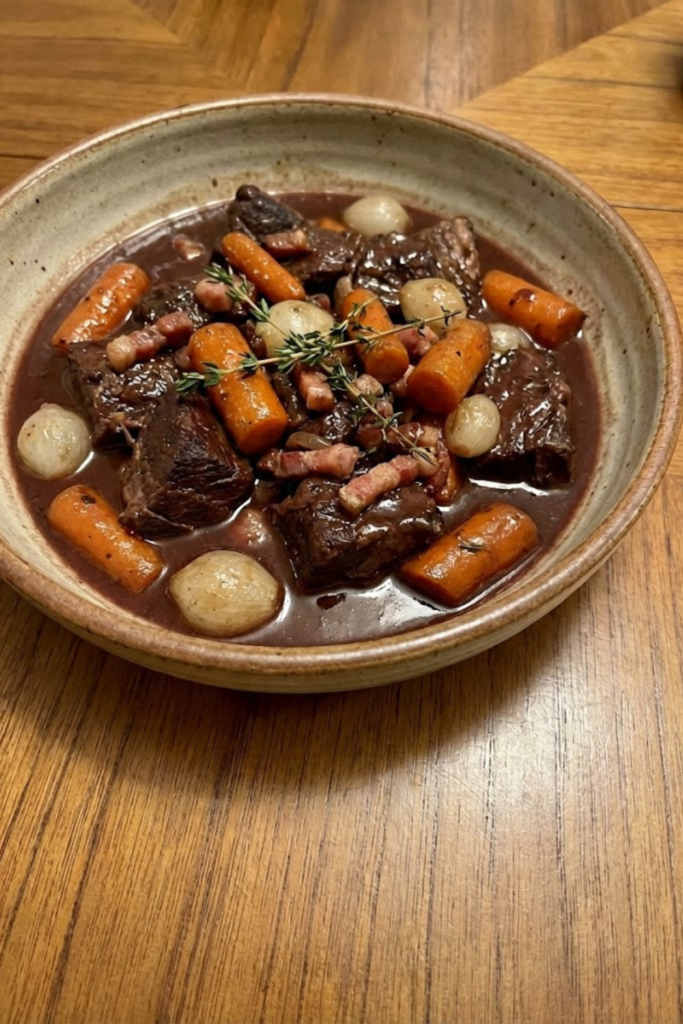
You know, there’s something almost spiritual about the smell of red wine and beef simmering on a stove for hours—it just hits different! I still remember reading Kitchen Confidential and realizing that great food isn’t just about fancy plating; it’s about soul. Anthony Bourdain’s Beef Bourguignon is exactly that: a warm, unpretentious hug in a bowl that demands patience but rewards you with flavor bombs in every bite. Whether you’re a seasoned home cook or just trying to impress a date, this dish is a rite of passage. “Context and memory play powerful roles in all the truly great meals in one’s life,” Bourdain once said, and he was absolutely right. Let’s dive into the rich world of French cooking and honor the legend himself by making a stew that actually tastes like it came from a bistro in Les Halles!
Why Anthony Bourdain’s Recipe Stands the Test of Time
I still remember the first time I cracked open Kitchen Confidential. I was sitting on my beat-up couch, eating instant noodles, and suddenly I felt like I was being let in on a dirty little secret. Cooking wasn’t just about perfect tablecloths; it was about sweat, fire, and really good ingredients. That’s exactly why Anthony Bourdain’s Beef Bourguignon hits different than the stuff you get at a stuffy restaurant. It feels real.
When I first tried to make a classic French comfort food, I was terrified I’d mess it up. I thought French cooking meant tiny portions and tweezers. But Tony—yeah, I call him Tony in my head—showed us that rustic French cooking is actually about soul, not perfection. This recipe has stuck around because it doesn’t ask you to be a Michelin-star chef. It just asks you to care.
The “Les Halles” Connection
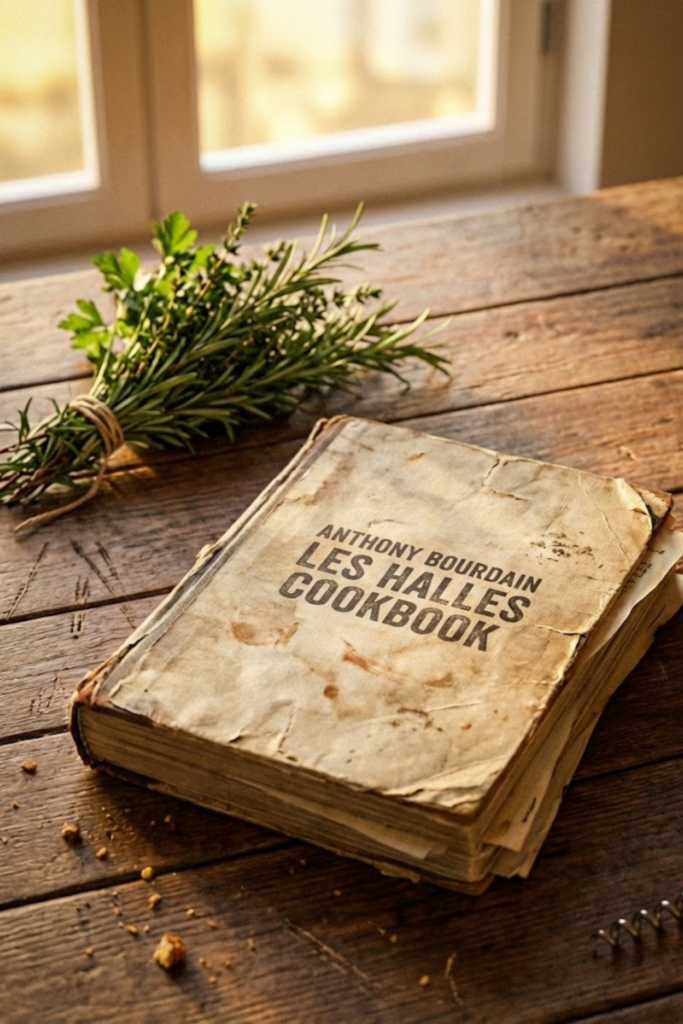
You have to understand where this comes from. This is the Les Halles cookbook standard. It’s bistro style food meant to feed hungry people, not impress food critics. I remember reading that the goal of bistro cooking is to hug you from the inside out.
And honestly? That is the vibe we are going for here.
There was this one time I tried to make a different version of beef stew using a pressure cooker to save time. Big mistake. The meat was tough, and the sauce lacked that deep, glossy richness you only get from time. Bourdain’s method forces you to slow down. It was learned by me the hard way that shortcuts usually lead to disappointment in the kitchen.
Simplicity Meets Depth
The beauty of this dish is how humble the ingredients are. You take cheap cuts of meat and turn them into gold. It’s magic, basically. But don’t get it twisted; simple doesn’t mean easy. You gotta pay attention.
I used to think that adding more spices made food better. I was wrong. The Anthony Bourdain recipes usually rely on salt, pepper, and fresh herbs like thyme. That’s it. When you let the beef and wine do the talking, you don’t need to shout with a dozen other flavors.
Learning From My Failures
Let me be real with you for a sec. The first time I made this, I crowded the pan when searing the beef. I was impatient. Instead of a nice brown crust, I got gray, steamed meat. It was tragic.
The flavor was totally off because I missed out on the “fond”—those sticky brown bits on the bottom of the pot. Anthony Bourdain’s Beef Bourguignon relies on that fond for the sauce. If you don’t sear it right, you’re basically making beef soup.
Another thing? Don’t cheap out on the wine. I once used a $5 bottle of “cooking wine” I found at the back of the pantry. The whole pot tasted like metallic grape juice. Use a decent Burgundy or Pinot Noir. If you wouldn’t drink a glass of it while you cook, don’t put it in the pot.
This recipe has stood the test of time because it works. It’s forgiving if you give it time, and it rewards you with a depth of flavor that feels like an accomplishment. It’s classic French comfort food at its absolute best.
Gathering the Essential Ingredients for Success
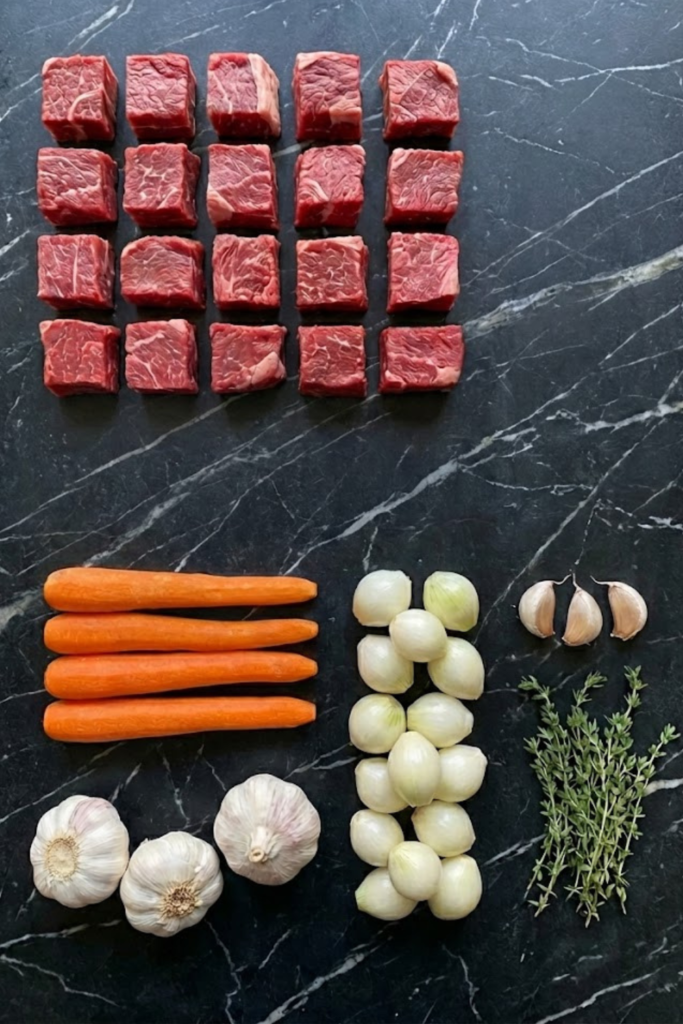
Shopping for Anthony Bourdain’s Beef Bourguignon isn’t just a grocery run; it’s a mission. I remember wandering the aisles of my local market with a scribbled list, feeling totally overwhelmed. I grabbed whatever looked okay. That was my first mistake. If you want this French beef stew to taste like the real deal, you can’t just phone it in with the ingredients.
The Beef: Step Away From the Pre-Cut Cubes
Okay, listen to me closely. Do not buy those packages labeled “stew meat.” Just don’t. I did this for years thinking I was saving time. Spoiler: I wasn’t. Those cubes are usually scraps from lean cuts that turn into rubber bullets when cooked.
You want a chuck roast. It has that beautiful marbling and fat that breaks down over hours. The connective tissue breakdown is what gives the sauce that sticky, lip-smacking texture. I usually grab a 3-pound roast and cut it myself into big, 2-inch chunks. It’s messy, yeah, but totally worth it. It was realized by me that the extra five minutes of cutting makes a massive difference in the final dish.
The Wine: If You Won’t Drink It, Don’t Cook It
I’ve had arguments with friends about this. They say, “It’s just cooking, use the cheap stuff!” No. The wine is the sauce. If it tastes like vinegar in the glass, your stew will taste like vinegar.
Bourdain suggests a red Burgundy, but let’s be real, that can get pricey. A solid Pinot Noir for cooking is a great alternative. It has enough acidity to cut through the rich beef fat without being too heavy. I usually buy a bottle I like, pour a glass for myself (chef’s tax, right?), and dump the rest in the pot.
Bacon and Aromatics: The Flavor Builders
You can’t have classic French comfort food without bacon. But not the thin, crispy breakfast stuff. You want bacon lardons. I buy a slab of bacon and cut it into little batons. They render out this amazing fat that you’ll use to sear the beef. It adds a smoky depth you just can’t fake.
And please, use fresh thyme and bay leaves. Dried herbs are okay in a pinch, but fresh herbs bring a brightness that wakes the whole dish up. I once tried using old, gray dried thyme from the back of my cabinet. It added literally zero flavor. Total waste.
Get these basics right, and you’re already halfway to victory.
Step-by-Step: Searing, Braising, and Simmering
Okay, this is where the magic happens. Or, if you’re like I was a few years ago, this is where the panic sets in. But take a deep breath. We are just cooking meat in a pot. It’s not rocket science, though it does require a bit of patience.
The Art of the Sear
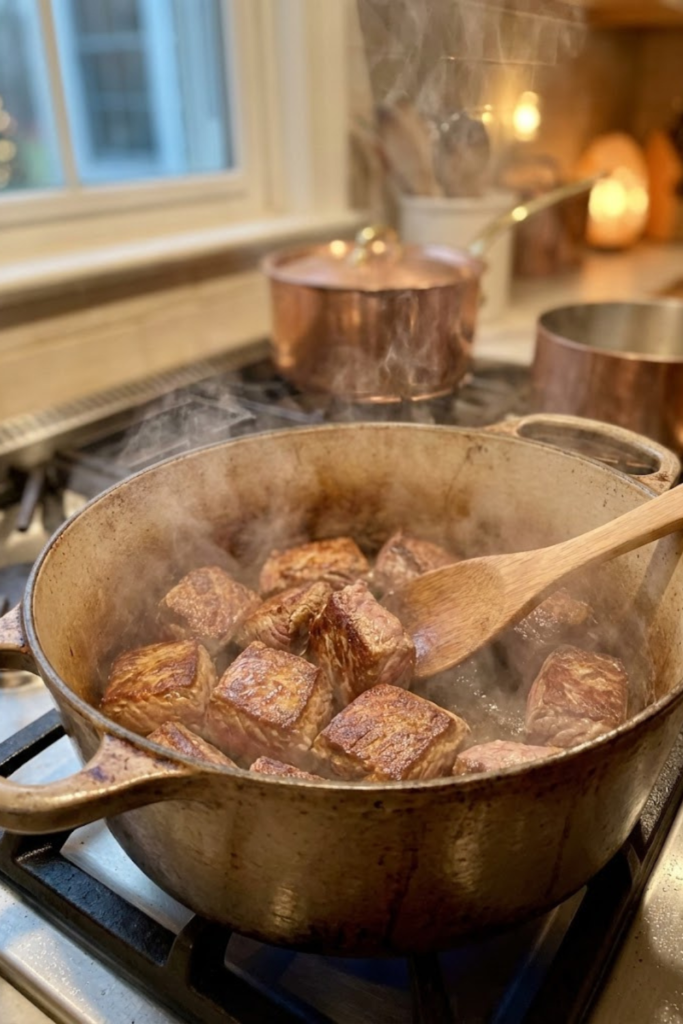
I cannot stress this enough: searing meat tips are the holy grail of this recipe. The first time I tried this, I dumped all the beef chunks into the pot at once. I thought I was being efficient. Nope. Big mistake.
Instead of searing, the meat steamed in its own juices. It turned this sad, gray color that looked totally unappetizing. You want a deep, dark brown crust. That crust equals flavor.
So, here is the rule: do it in batches. Put a few pieces in the hot fat—I use the rendered bacon fat—and leave plenty of space between them. Let them sizzle undisturbed for a few minutes. It might take three or four batches to get through all the meat. Yeah, it takes longer, but trust me on this one.
Deglazing the Pan: The Good Stuff
Once the meat is out, look at the bottom of your Dutch oven. See those brown, sticky bits stuck to the enamel? That is called “fond,” and it is pure gold.
Do not scrub it off! Pour in a little bit of your red wine. The steam will hit you in the face—it smells amazing. Use a wooden spoon to scrape up all those bits. This is deglazing pan 101. It was discovered by me that skipping this step leaves half the flavor stuck to the pot instead of in your sauce.
The Long, Slow Braise
Now, put the meat back in. Add your onions, carrots, and herbs. Pour in the rest of the wine and enough beef stock to just cover the meat. Bring it to a boil, then immediately turn it down to a simmer.
This is where braising techniques come into play. You want the lowest heat possible. Just a gentle bubble. If you boil it hard, the meat will seize up and get tough. We want it to fall apart.
Cover it and walk away. Seriously. Go watch a movie. Fold some laundry. Just let it do its thing for at least two and a half hours.
Adding the Final Layers
A rookie mistake I used to make was throwing everything in at the start. By the time the beef was tender, my pearl onions and mushrooms were total mush. It was a hot mess.
Now, I sauté the pearl onions and mushrooms separately in butter while the stew cooks. I add them to the pot in the last 15 minutes. This keeps their texture perfect. It adds a freshness that cuts through the rich, heavy sauce.
When you lift the lid after three hours, and that steam hits you? Man, there is nothing like it. The meat should yield to a fork with zero resistance. That is when you know you nailed it.
Common Mistakes to Avoid When Making Beef Bourguignon
I have ruined more pots of stew than I care to admit. Seriously, my first few attempts at Anthony Bourdain’s Beef Bourguignon resulted in meat that was tough enough to sole a shoe and a sauce that looked like dishwater. It was embarrassing. But hey, you live and you learn, right?
If you are trying to impress someone with this dish, you want to avoid the pitfalls I fell headfirst into. Real talk: French cooking is forgiving, but only if you respect the rules.
Rushing the Process
This is the biggest one. I used to be so impatient. I’d crank the heat up to “high” hoping to shave off an hour of cooking time. Rushing the process is the death of a good stew.
When you boil the meat hard, the proteins seize up. Instead of breaking down, that connective tissue tightens like a fist. You want a gentle, lazy simmer. If you see violent bubbling, turn it down immediately.
It was learned by me the hard way that you cannot cheat time. The gelatin needs hours to melt into the sauce. If you try to speed run this recipe, you will fail. Just pour another glass of wine and wait.
Skimping on Seasoning
I used to be scared of salt. I thought if I put too much in, I’d ruin it. But here is the thing: potatoes and beef soak up seasoning like a sponge.
One time, I served a pot that smelled incredible but tasted like… hot water. I hadn’t seasoned the layers. You need to salt the meat before you sear it. Salt the veggies when they sweat. And taste the sauce at the end.
If it tastes “flat,” it usually needs more salt or a splash of vinegar. Don’t be shy. Seasoning every layer is the difference between “meh” and “wow.”
Thickening Woes: The Watery Sauce Panic
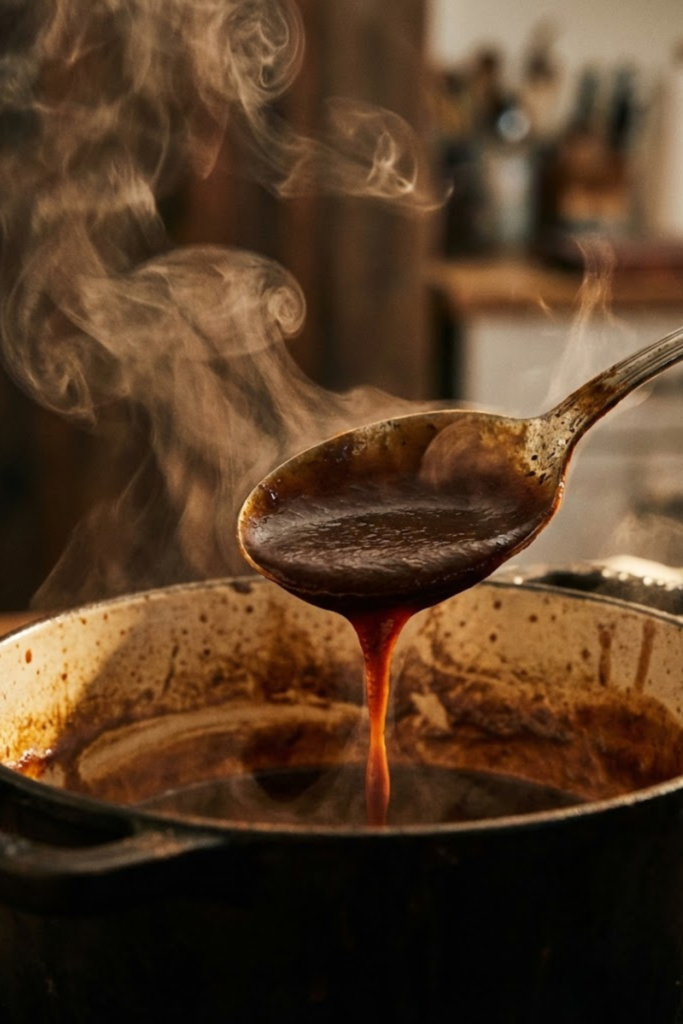
There is nothing sadder than lifting the lid after three hours and seeing a thin, watery soup instead of a rich gravy. I used to panic and just boil the heck out of it to reduce it, which—again—ruined the meat.
Then I discovered the beurre manié. It sounds fancy, but it’s just mushing equal parts soft butter and flour together with a fork. You roll it into little balls and whisk it into the bubbling stew at the very end.
It thickens the sauce instantly without making it lumpy. It was a total game-changer for me. No more cornstarch slurry that makes everything look shiny and weird.
Ignoring the Fat
The first time I made this, I tried to be healthy and skimmed off all the fat. Bad idea. Fat is flavor. While you don’t want an oil slick on top, you need some of that rendered bacon fat and beef tallow to carry the taste of the herbs.
If there is a ton of grease at the end, just use a spoon to gently skim the top layer. But leave some behind. Your tastebuds will thank you.
Serving Suggestions and Wine Pairings
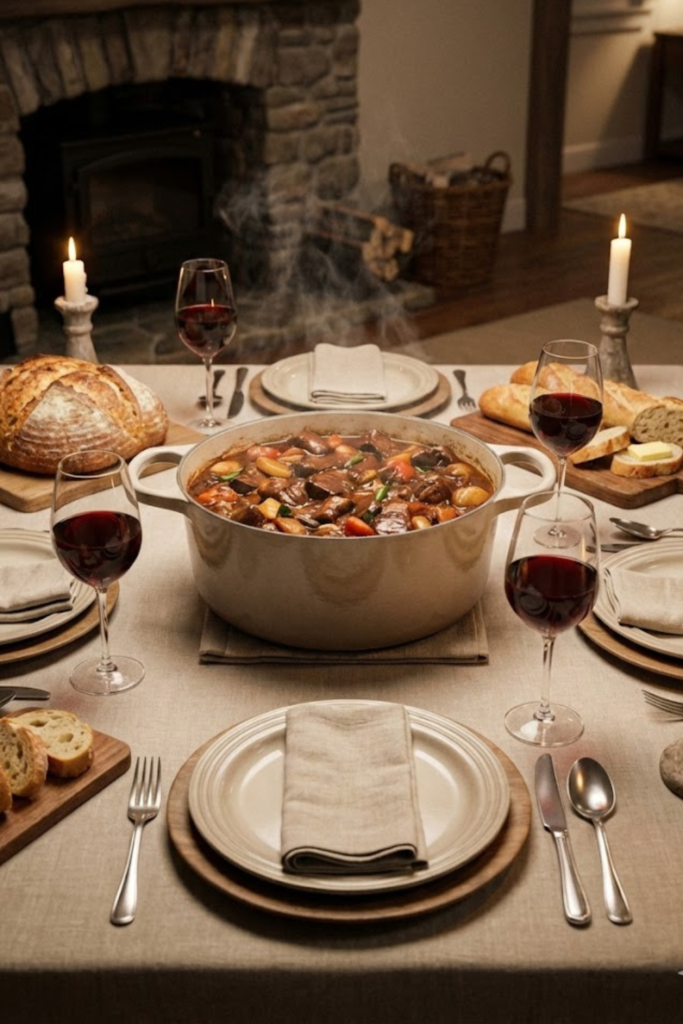
You have spent hours tending to this pot. The kitchen smells like a French bistro, and your stomach is probably growling. Now, don’t fumble the ball at the one-yard line. How you serve Anthony Bourdain’s Beef Bourguignon is just as important as how you cook it.
I remember the first time I made this for a dinner party. I was so focused on the meat that I forgot about the sides. I ended up serving it with plain white rice. It was… okay. But it felt wrong. This dish demands a partner that can handle its intensity.
Choosing the Perfect Starch
In my opinion, there is only one correct answer here: buttered egg noodles.
Broad, flat egg noodles tossed with a little parsley and way too much butter are the perfect vehicle for that rich, wine-heavy sauce. They don’t fight the flavor; they just carry it to your mouth. It’s a match made in heaven.
If noodles aren’t your vibe, mashed potatoes are a solid runner-up. Just make sure they are creamy. You want something that will soak up every drop of that red wine sauce.
And listen, you absolutely need a crusty baguette on the table. I don’t care if you are watching your carbs. This is not the time for that. You will want to wipe your bowl clean. I have seen grown men fight over the last piece of bread to get the last bit of gravy.
What to Drink With It
I used to get super stressed about food and wine pairing. I thought there were strict rules I had to follow or the wine police would come for me.
Here is the simple truth: drink what you like, but make sure it can stand up to the beef. You are eating heavy, rich meat. If you drink a light, fruity white wine, it’s going to taste like water.
You want a big, bold red. A Côte de Nuits or a robust Cabernet Sauvignon works wonders. The tannins in the wine cut through the fat of the beef. It cleans your palate so every bite tastes as good as the first one.
My rule of thumb? Buy two bottles of the same wine. Use one for cooking and drink the other one with dinner. It ties the flavors together perfectly. Plus, it’s one less decision you have to make.
Presentation and The Next Day
When you plate this, don’t try to be too fancy. This is rustic French cooking. It should look messy and delicious. I like to sprinkle a ton of fresh chopped parsley on top just to add a pop of green. It makes the dark brown stew look alive.
Also, a little secret? This dish is actually better the next day. Seriously. If you can make it a day ahead, the flavors have time to get to know each other. It was noticed by me that the sauce gets silkier and the meat somehow gets even more tender after a night in the fridge.
So, if you are planning a dinner party, do yourself a favor and make this on Saturday for a Sunday meal. You’ll be less stressed, and the food will taste better. That is a win-win in my book.
We made it to the end. If you have been following along, your kitchen probably smells like a legit French restaurant right now. Making Anthony Bourdain’s Beef Bourguignon isn’t just about getting dinner on the table; it is a labor of love.
I used to think that “gourmet” meant complicated. But after spending hours watching that pot simmer, it was realized by me that the best food is actually just patience and good ingredients. Tony taught us that. He didn’t care about fancy foams or gels. He cared about food that makes you feel something.
This classic French comfort food is a reminder to slow down. In a world where everything is instant, there is something rebellious about waiting three hours for a stew. And let me tell you, that first bite of tender beef and red wine sauce? It’s worth every single second.
Don’t be intimidated by the fancy name or the long cooking time. You got this. Just respect the process, don’t skimp on the butter, and pour yourself a glass of wine while you wait.
If you loved this recipe—and I know you will—do me a solid. Pin this recipe to your “French Classics” or “Comfort Food” board on Pinterest. It helps other home cooks find this guide, and honestly, it saves you from frantically searching for it next time the craving hits!
Bon appétit, my friends. Now go eat.