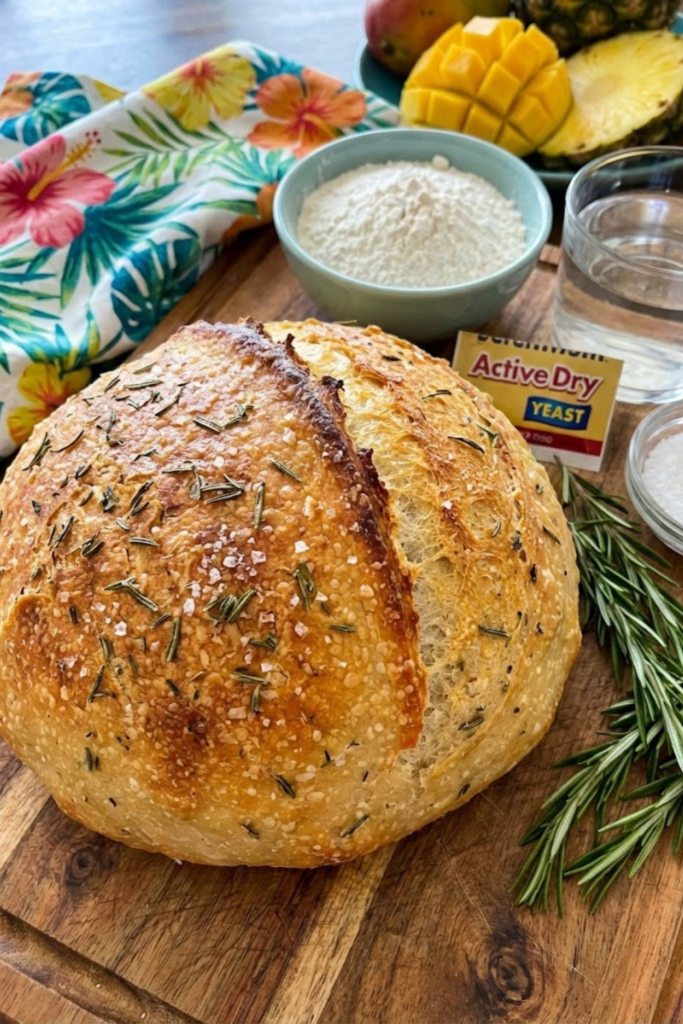
I’ll be honest with you—I used to be terrified of yeast. I thought making artisan bread required a culinary degree or at least the biceps of a gym rat for all that kneading. I was wrong! I remember the first time I pulled a Dutch oven out of the stove, the smell of toasted rosemary filling my tiny kitchen. I felt like a magician.
If you have flour, water, and a bit of patience, you can do this. Seriously. This isn’t just about making bread; it’s about slowing down and creating something delicious from scratch. Did you know that long fermentation actually breaks down gluten, making it easier to digest? It’s true! We are going to make a loaf that looks like it came from a fancy bakery, but costs pennies to make. Let’s get baking!
Why The No Knead Method Actually Works
I gotta be real with you—I used to think making artisan bread was reserved for people with fancy mixers or way too much time on their hands. I remember trying to make a rosemary loaf years ago, kneading until my arms felt like jelly. The result? A rock-hard puck that could’ve been used as a doorstop. It was embarrassing, and I swore I’d never bake bread again.
But then I discovered the no knead method, and it honestly felt like I was cheating.
Let Time Do The Work
The secret here is actually pretty simple. Instead of beating the dough up to develop gluten (which makes bread chewy), we let time do it for us. When you mix flour, water, and yeast and let it sit for 12 to 18 hours, the gluten strands align themselves naturally.
It happens while you sleep! This long fermentation is crucial for the texture. I was skeptical at first, thinking, “How can this messy blob turn into a structured loaf?”
But it does. The yeast eats the sugars in the flour slowly, releasing gas that gets trapped in the dough. This creates those beautiful air pockets you see in bakery bread.
Why High Hydration Matters
You might notice this no knead rosemary bread recipe uses quite a bit of water. We call this high hydration in the baking world. It makes the dough sticky and a bit tricky to handle, but please, don’t add more flour.
I’ve made that mistake, adding cup after cup of flour until the dough wasn’t sticky, and I ended up with a dry, dense loaf. The water creates steam inside the Dutch oven, which pushes the dough up, giving you a massive oven spring.
If you dry out the dough, you lose those airy pockets and the signature crackly crust. Just wet your hands when handling it; water prevents sticking better than flour does.
Flavor Depth You Can’t Buy
Store-bought bread is often pumped full of sugar to make it taste good because it’s made so fast. By letting this rosemary bread sit, enzymes break down the starch into flavor. You get this complex, almost sourdough-like taste without the hassle of maintaining a starter.
Mistakes were definitely made in my kitchen when I started this journey. I once let the dough rise in a cold spot near a drafty window, and it did absolutely nothing. Make sure your bowl is somewhere cozy!
Also, don’t skip the salt. Salt controls the yeast so it doesn’t go crazy and over-proof. Plus, rosemary bread without enough salt is just sad. Trust the process, even when the dough looks like a disaster in the bowl.
Ingredients and Substitutions for Rosemary Bread
When I first started baking, I thought I had to buy the most expensive stuff to get good results. I’d wander the aisles of the grocery store, staring at twenty different bags of white powder, totally lost. I’ve learned the hard way that while quality matters, you don’t need to break the bank to make amazing no knead rosemary bread.
However, specific substitutions can make or break your loaf. I’ve definitely pulled a flat, sad pancake out of the oven because I swapped things I shouldn’t have. Let’s look at what you actually need to grab from the pantry.
The Great Flour Debate
Can you use All-Purpose flour? Yes, you can. But should you? That depends on what you want.
I remember sticking strictly to the cheapest All-Purpose flour I could find for months . The bread was tasty, sure, but it lacked that chewy texture I loved from the bakery. Then I switched to bread flour. Game changer! Bread flour has a higher protein content (usually 12-14%), which helps develop a stronger gluten network.
If you want that chewy, hole-filled interior (we call it the crumb), go for bread flour. If you only have All-Purpose, your bread will still be delicious, just a bit softer and closer to sandwich bread. Just don’t use cake flour—I did that once by accident, and the structure completely collapsed. It was a mess.
Fresh Rosemary vs. Dried
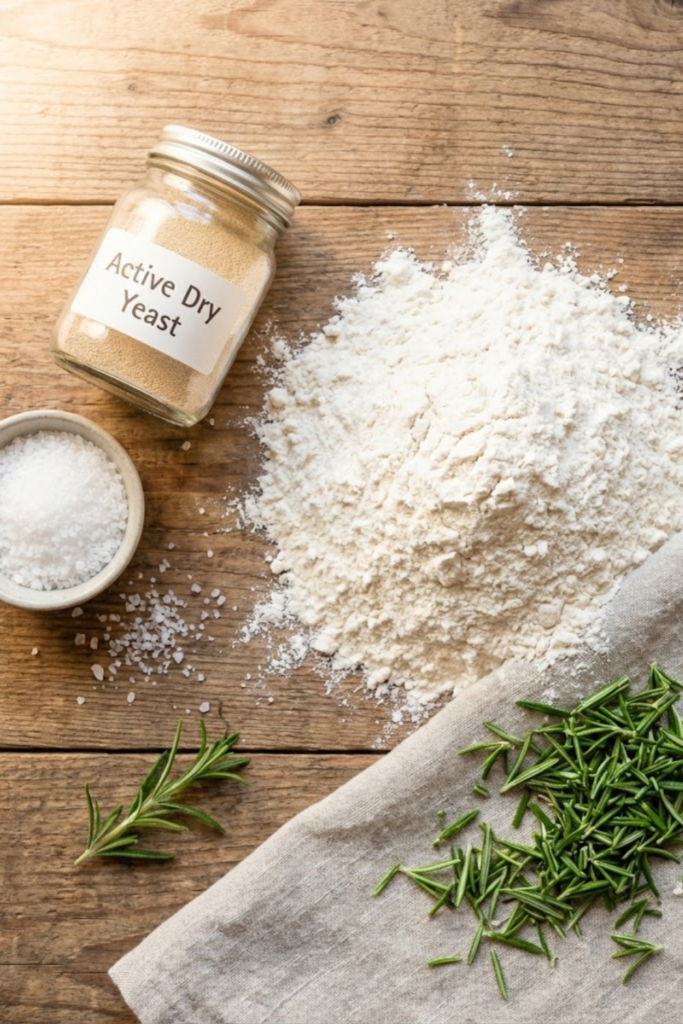
This is where the flavor really lives. I am a huge advocate for using fresh rosemary whenever possible. There is something about the oils in the fresh needles that perfumes the dough in a way dried herbs just can’t.
But hey, I get it. Sometimes it’s winter, and the herb garden is dead, or the store is out. If you have to use dried rosemary, you absolutely need to adjust the amount. Dried herbs are way more potent than fresh ones.
A good rule of thumb I use is 1 teaspoon of dried herbs for every tablespoon of fresh. If you use too much dried rosemary, it can texture the bread like you’re eating pine needles. Not pleasant! I also like to chop my fresh rosemary pretty fine so you don’t get huge woody chunks in a bite.
Yeast: Instant or Active Dry?
This used to confuse the heck out of me. Most no-knead recipes call for Instant Yeast because you can throw it right in with the flour. It’s super easy.
However, I’ve often only had Active Dry Yeast in the fridge. You can use it, but you technically should bloom it in warm water first to wake it up. Honestly? In a long rise recipe like this (12+ hours), I’ve tossed Active Dry straight into the flour without blooming it, and it worked fine. The long fermentation gives it plenty of time to activate.
Just make sure your yeast isn’t expired. I killed a whole batch of dough once because my yeast was three years old. It never rose. It just sat there like a lump of clay .
Water Temperature and Salt
Don’t overthink the water. It doesn’t need to be precise. I aim for lukewarm—basically, if you stick your finger in it, it should feel like nothing. If it’s hot to the touch, you will kill the yeast. If it’s ice cold, the rising time will take forever.
And finally, salt. Use sea salt if you have it. Table salt works, but sea salt has a cleaner flavor. Do not reduce the salt amount! It regulates the yeast and strengthens the gluten. Without it, the bread tastes bland and rises too fast.
Actionable Tip: If you want to get fancy, add a little lemon zest with the rosemary. It brightens the whole thing up!
Essential Equipment for Artisan Loaves
I remember staring at a recipe for artisan loaves years ago and seeing a $300 pot listed as “required.” I laughed and closed the tab immediately. No way was I spending that kind of cash just to bake bread on a Tuesday. I was convinced I could hack it with what I had.
I was wrong, but I learned a lot from the disaster that followed. You don’t need a professional kitchen, but a few specific tools make the difference between a dense brick and a bakery-quality loaf.
The Dutch Oven Magic
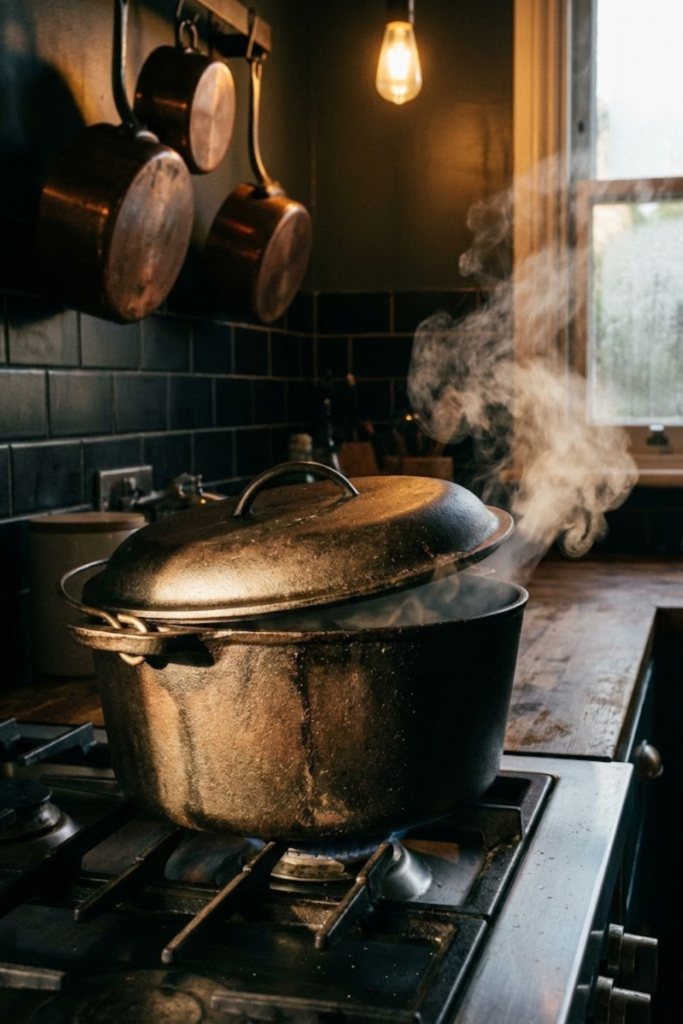
Here is the thing: the cast iron pot (Dutch oven) is actually the secret weapon. It traps the steam released from the dough as it bakes . This keeps the crust soft for the first 20 minutes, allowing the bread to rise massively before the crust hardens and caramelizes.
I tried using a regular cookie sheet once because I was stubborn. The bread spread out flat like a sad pancake, and the crust was dull and tough. It was edible, but it wasn’t great. You don’t need a fancy brand name pot. I found my favorite 6-quart heavy pot at a thrift store for ten bucks . Just make sure it has a lid that fits tight!
Don’t Skip Parchment Paper
This no knead rosemary bread dough is sticky. Like, super glue sticky. If you try to dump it directly into a screaming hot pot, you are gonna have a bad time.
I burned my knuckles on the side of the oven trying to wrestle a raw loaf into a pot once . It hurt like crazy. Now, I put the dough on a sheet of parchment paper and use the paper corners as handles to lower it safely into the pot. It is a total lifesaver and keeps the bread from sticking to the bottom.
A Bowl That’s Big Enough
It sounds silly, but use a big mixing bowl. This dough is alive. It will expand to double or triple its size overnight .
One morning I woke up to dough oozing over the sides of my medium mixing bowl and onto the counter. Cleaning dried, cemented dough off granite is a workout I didn’t ask for. Give the dough plenty of room to grow.
The Cooling Rack
When the bread comes out, it smells intoxicating. It is so tempting to cut it right away. Don’t do it! The bread is actually still cooking inside from the residual heat.
If you leave it in the pot or set it on a flat plate, the steam will condense on the bottom. You end up with a soggy bottom crust, which is a total bummer after waiting 18 hours. Put it on a wire cooling rack so air circulates around the whole thing . A crisp bottom is just as important as a crisp top.
Step-by-Step: Mixing and Proofing the Dough
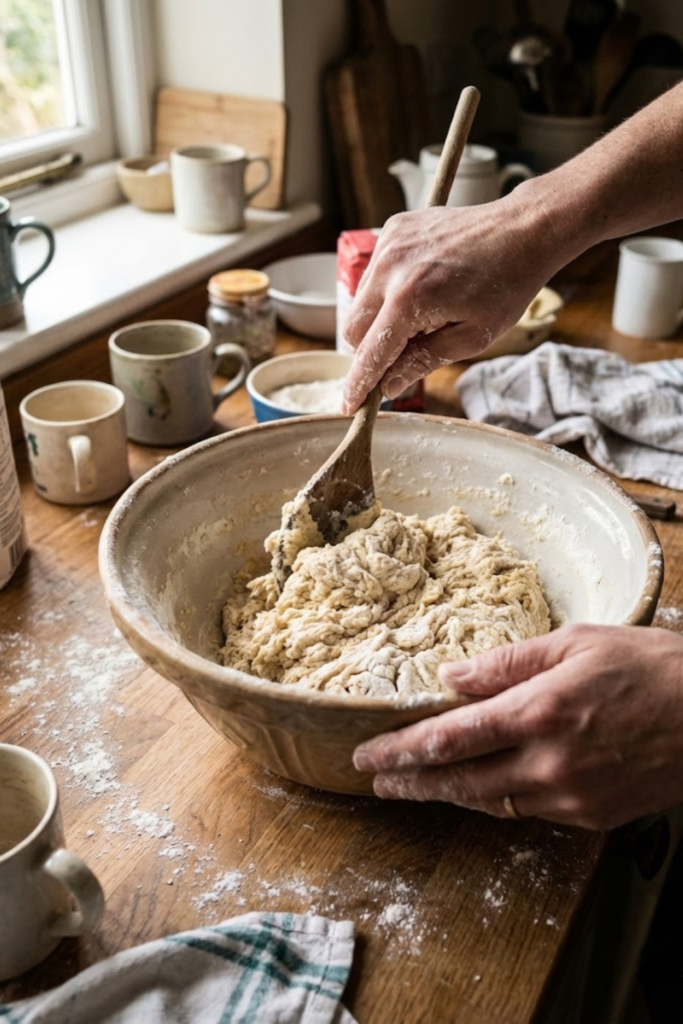
I used to think that bread dough had to be this perfectly smooth, satiny ball right from the start. I’d watch those baking shows where they slap the dough on the counter, and it looks like a baby’s bottom. When I first mixed this no knead rosemary bread, I panicked. It looked like a shaggy, wet disaster .
I almost threw it out. Seriously. I thought I had messed up the measurements. But here is the lesson I learned: ugly dough makes beautiful bread.
Embracing the Shaggy Mess
When you mix the flour, salt, yeast, and water, do not try to make it smooth. You just want to mix it until there are no dry patches of flour left. We call this a shaggy dough in the baking world .
It will stick to your spoon. It will look lumpy. That is exactly what you want. If you over-mix it right now, you’re just making work for yourself. Just stir it for about 30 to 60 seconds until it comes together in a sticky ball, then cover it up. I use plastic wrap, but a damp towel works if you’re trying to be eco-friendly. Just don’t let air get in, or the top will dry out and get crusty .
The Long Sleep (Bulk Fermentation)
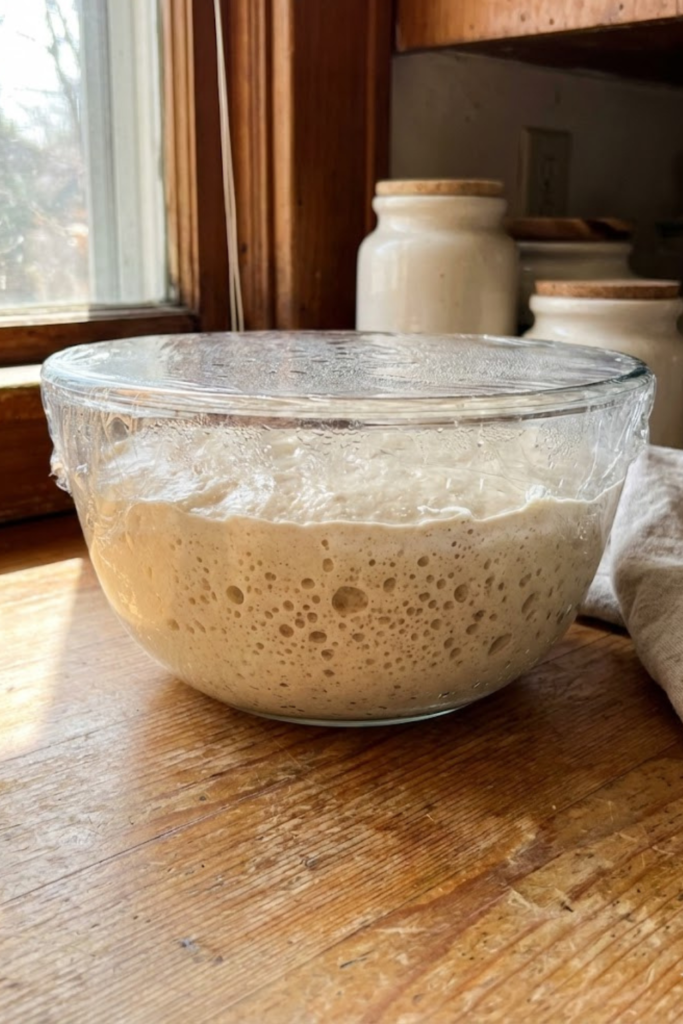
This is the hardest part of the recipe: doing absolutely nothing. You need to let this bowl sit on your counter for 12 to 18 hours . This is called bulk fermentation.
I remember being so impatient the first time. I checked it after 6 hours, poked it, and decided it was “probably ready.” Spoiler: it wasn’t. The bread came out heavy and gummy.
You need that full time for the yeast to do its magic. The dough should double in size and be covered in bubbles that look like little jellyfish. If your kitchen is cold (like mine in the winter), it might need the full 18 hours. If it’s summer and humid, 12 might be plenty. Watch the dough, not the clock .
Folding and Shaping
Once the dough is bubbly and jiggly, dump it onto a floured surface. And when I say floured, I mean it. This stuff is sticky!
Now, we do the “envelope fold.” Imagine the dough is a piece of paper.
- Grab the side closest to you, pull it up, and fold it over to the center.
- Do the same with the right side, then the left, then the top.
This organizes the gluten strands and traps air inside. This is also the perfect moment to make sure your fresh rosemary is distributed well if you didn’t mix it in at the start.
I’ve skipped this folding step before because I was lazy. The bread spread out too much in the pot and didn’t get that nice, tall rise. Giving it a quick fold creates tension on the surface of the dough, which helps it stand up tall while baking. It’s a small step, but it makes a huge difference in the final look of your loaf .
Baking Techniques for the Perfect Crust
I used to think the crust was just the hard part you had to chew through to get to the soft stuff. Then I made this no knead rosemary bread properly for the first time, and the crust shattered when I cut it. It was music to my ears. A good crust isn’t just hard; it’s caramelized, nutty, and protects the soft crumb inside. But getting that bakery-quality exterior took me a few failed attempts to figure out .
The Hot Pot Strategy
Here is the most critical tip I can give you: heat the pot before you bake. I once was in a rush and tossed the dough into a cold Dutch oven, then shoved it in the oven. The bread didn’t rise. It just sort of slumped and baked into a sad, dense disk.
You need to put your empty Dutch oven (lid and all) into the oven while it preheats to 450°F (230°C). Let it sit there for at least 30 minutes. When the dough hits that scorching hot cast iron, the water in the dough instantly turns to steam . That blast of heat is what gives you the massive “oven spring” or rise. Please be careful, though—I’ve singed my eyebrows opening the oven door too fast!
The Lid Game: Steam vs. Color
Baking this bread is a two-part dance.
- Lid On (20-30 minutes): This traps the steam. Steam keeps the crust soft initially, allowing the bread to expand without cracking prematurely.
- Lid Off (10-15 minutes): This is when the magic color happens.
If you leave the lid on the whole time, you’ll get a pale, soft loaf that looks like it needs a tan. I did this once because I forgot to set a timer. The bread was cooked but looked anaemic and unappetizing . Take the lid off to let the direct heat turn the crust a deep, golden brown. That color is flavor!
Scoring the Dough
You might have seen videos of bakers using a razor blade (called a lame) to slash fancy designs into dough. You don’t need to be an artist, but you do need to cut the dough.
Right before you drop the dough into the hot pot, take a sharp knife and slash a line across the top. This is called scoring. It tells the bread where to crack as it expands. Without it, the bread will burst open at its weakest point, which usually results in a weird blowout on the side that looks like a hernia .
The Thump Test
How do you know it’s done? Thermometers are great (aim for an internal temperature of 205°F-210°F), but I prefer the old-school way.
Take the bread out (use oven mitts!) and tap the bottom of the loaf with your knuckles. It should sound hollow, like a drum. If it sounds like a dull thud, it’s still doughy in the middle. Put it back in for five minutes directly on the rack. It’s better to slightly over-bake this bread than under-bake it . Nothing is worse than cutting into a beautiful loaf only to find raw dough in the center. I’ve been there, and it’s heartbreaking.
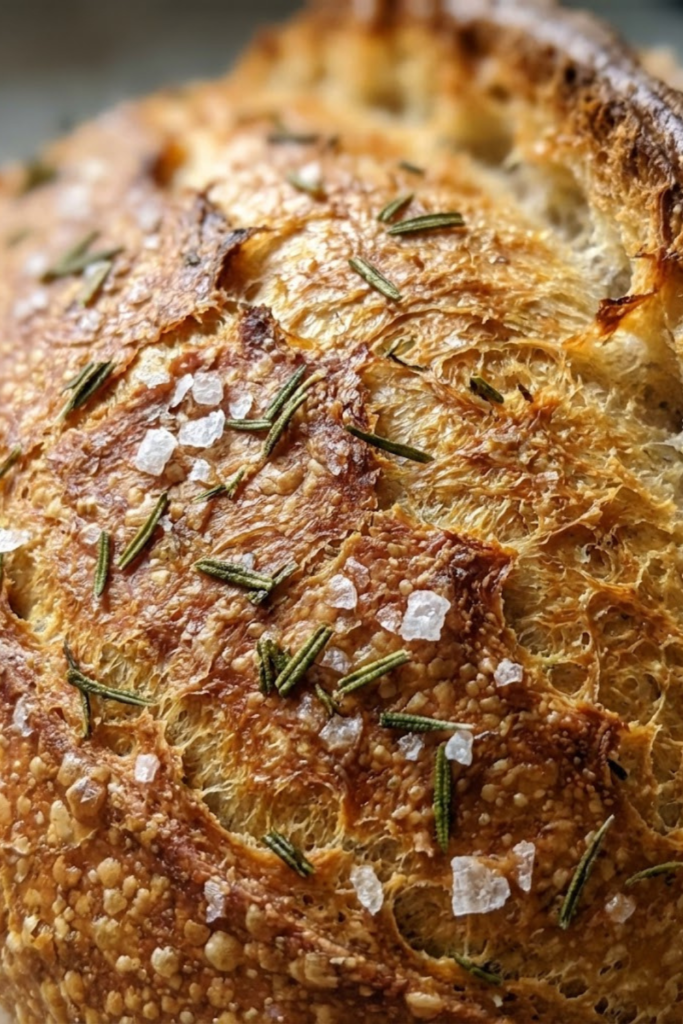
There you have it! You just learned how to make incredible bread without breaking a sweat. It takes some time, sure, but most of that is just sleeping while the yeast does the heavy lifting . I hope you give this no knead rosemary bread a shot this weekend.
The feeling of slicing into a warm, crackling loaf you made yourself? It never gets old. I still do a little happy dance every time I hear that crunch.
If you try this recipe, let me know how it went in the comments! Did you add garlic? Olive oil? I want to hear about it. And hey, if it didn’t come out perfect the first time, don’t sweat it. My first loaf was a disaster, but I kept going. You got this.
Pin this recipe on Pinterest to save it for your next baking day!