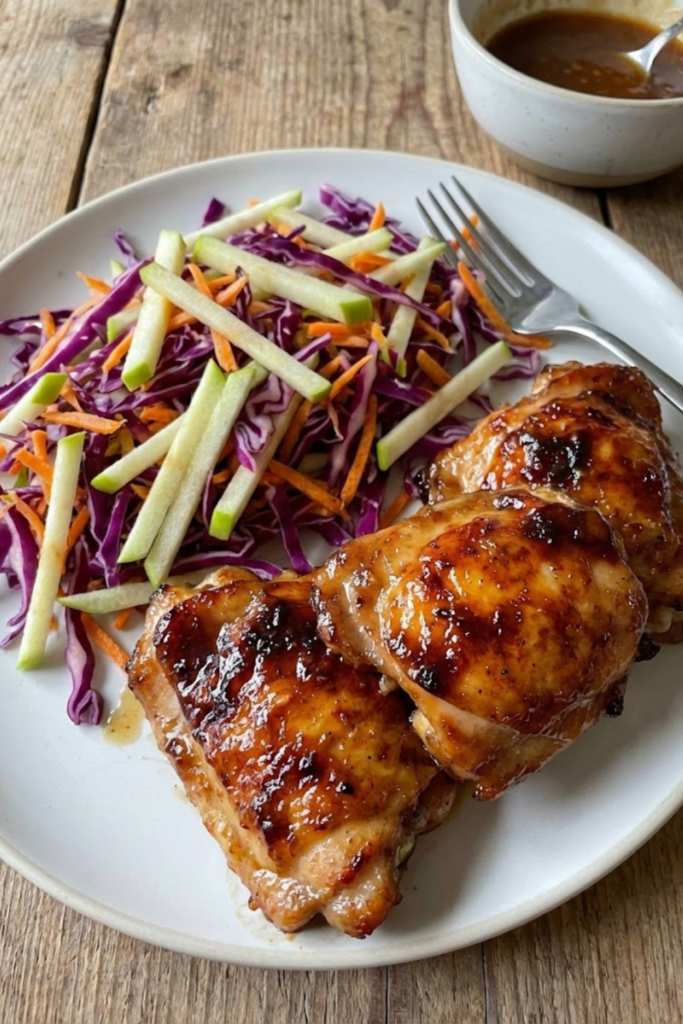
Oh man, can you believe it is already sweater weather? I absolutely love it! There is nothing—and I mean nothing—better than the smell of spiced apples simmering on the stove while the leaves turn orange outside. Did you know that searches for “apple cider dinner recipes” spike by over 300% every single October? It’s true! We all crave that cozy feeling. Today, I am sharing my absolute obsession: sticky apple cider chicken with crisp autumn slaw. It is the perfect balance of sweet, sticky goodness and fresh crunch that you didn’t know you needed until right now! Get your skillet ready, because this one is a total keeper.
Choosing the Right Ingredients for Maximum Flavor
Let’s be real for a second—I have ruined more dinners than I care to admit by just grabbing whatever was on sale at the grocery store. There was this one time I tried to make sticky apple cider chicken with boneless, skinless breasts and a jug of cheap apple juice. It was a disaster. The sauce didn’t stick, the meat was dry as a bone, and my kids just kind of pushed it around their plates. It was embarrassing.
So, I’m going to save you from that heartache. If you want that restaurant-quality meal where the glaze is thick and the autumn slaw stays crunchy, you have to be picky about what goes in your cart.
Why You Need Chicken Thighs
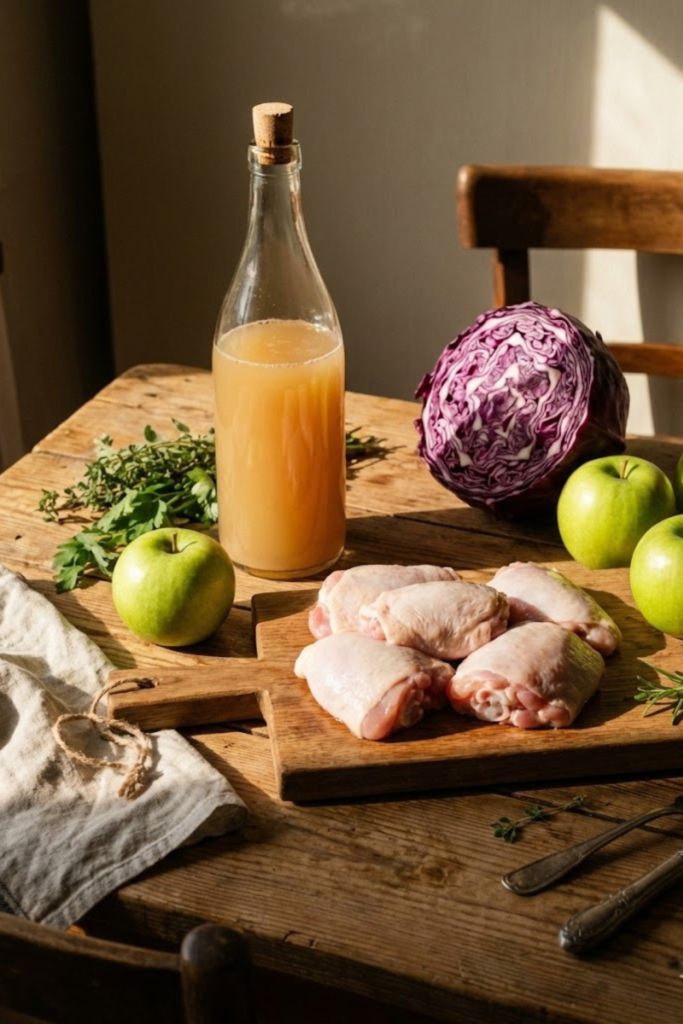
Look, I get it. Chicken breasts are lean and easy. But for this recipe? Put them back. You really need bone-in, skin-on chicken thighs here.
When you are braising meat in a sugary sauce like apple cider, thighs are forgiving. They stay juicy even if you accidentally leave them on the stove a few minutes too long (which I do constantly). Plus, that skin gets crispy and holds onto the glaze way better than smooth meat ever could.
I’ve found that the bone adds a depth of flavor that you just don’t get otherwise. It’s like the difference between homemade stock and a bouillon cube. Trust me on this one.
The Cider Makes or Breaks It
This is where I messed up big time in the past. Do not buy the clear apple juice that comes in a plastic bottle in the soda aisle. That stuff is basically sugar water.
You want the cloudy stuff. Look for “unfiltered apple cider” usually found in the produce section, often refrigerated. Because it still has sediment in it, it thickens up into a rich, velvety sauce when you boil it down.
If you use clear juice, you’ll end up with a runny, sweet soup instead of a sticky apple cider chicken glaze. I learned that the hard way so you don’t have to.
Picking Produce for the Crisp Autumn Slaw
For the slaw, texture is everything. You want a crisp autumn slaw that crunches loud enough to wake the neighbors.
When you are picking out a red cabbage, give it a squeeze. It should feel heavy and solid, like a bowling ball. If it squishes, put it back—it’s old and won’t give you that fresh snap we are looking for.
And for the apples? Granny Smith is the only way to go. You need that sour punch to cut through the sweet honey in the chicken glaze. Red delicious apples turn to mush too fast when tossed in dressing. Nobody likes mushy salad.
Getting these specific ingredients might take an extra five minutes at the store, but it makes the difference between a “meh” dinner and one where everyone asks for seconds.
Mastering the Sticky Apple Cider Glaze
I have a confession to make. The first few times I tried to make a glaze, I nearly set my kitchen on fire. I’m not even joking! I thought I could just crank the heat up to high, walk away to fold a basket of laundry, and come back to a perfect sauce.
Instead, I came back to a smoke-filled kitchen and a pan crusted with black, burnt sugar. It was a hot mess. But, after scrubbing that pan for three days, I learned a valuable lesson: patience is actually an ingredient.
The Art of the Simmer
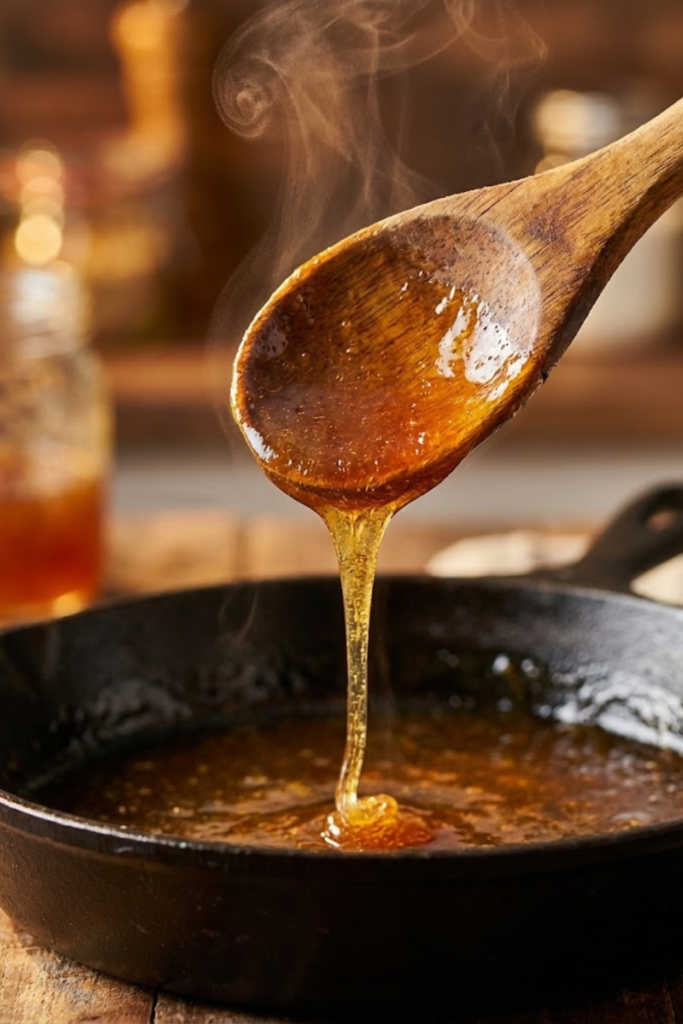
If you want that crave-worthy sticky apple cider chicken, you cannot rush the reduction. The goal here is to take that cloudy cider we talked about and turn it into liquid gold.
You have to let it simmer gently. If it’s boiling like a cauldron, turn it down! You are looking for a gentle bubble, not a violent splash.
I usually let mine go for about 15 to 20 minutes. I know, it feels like forever when you are hungry. But this is how you concentrate the flavor. You’ll know it’s getting close when the bubbles start getting bigger and slower, looking kind of glossy.
Balancing the Sweet and Savory
Here is where a lot of recipes go wrong. They just dump honey and cider in a pan and call it a day. That’s not dinner; that’s dessert on chicken. Yuck.
To get a true homemade glaze that tastes sophisticated (but is secretly easy), you have to cut that sugar. I always add a big dollop of Dijon mustard and a splash of cider vinegar.
The vinegar adds a tang that wakes up your tongue. And the mustard? It doesn’t make it taste like a hot dog, I promise. It just adds this savory depth that makes people go, “What is that secret ingredient?”
Garlic is a must, too. I use fresh minced garlic, but hey, if you only have garlic powder, use it. I won’t tell anyone. We are just trying to get food on the table, right?
When to Cheat with Cornstarch
Okay, let’s be real. Sometimes the cider just doesn’t want to thicken. Maybe the apples were too watery, or maybe it’s humid outside. Who knows?
If you have been simmering for 20 minutes and it still looks like soup, don’t panic. This is where I cheat. I mix a teaspoon of cornstarch with a splash of cold water and whisk it in.
It’s an instant thickener. Some chefs might frown at it, but I’m a busy teacher, not a Michelin star chef. This little trick guarantees that the sauce will coat the back of a spoon perfectly.
Just make sure you whisk it constantly so you don’t get lumps. Lumpy sauce is a texture nightmare. Once it coats the spoon, it’s ready to cling to that crispy chicken skin.
And that, my friends, is how you get that shiny, sticky apple cider chicken that looks like it came out of a magazine.
Preparing the Crisp Autumn Slaw
I used to hate coleslaw. Like, actively avoid it at picnics hate it. It was always this soggy, mayonnaise-drenched mush that tasted like wet cardboard. But then I realized I was just making it wrong. A real crisp autumn slaw should be vibrant and crunchy, not a sad pile of goo.
My biggest mistake was lazy chopping. I used to just hack at the cabbage like I was chopping wood for a fire. I ended up with these massive, thick chunks that were impossible to chew. It was a jaw workout, not a side dish.
So, let’s fix that. Because if you pair that sticky chicken with a bad salad, the whole meal falls flat.
Knife Skills Are Your Best Friend
You don’t need a fancy food processor to get good results, though if you have one, go for it. I just use my chef’s knife. But here is the secret: you have to go slow to go fast.
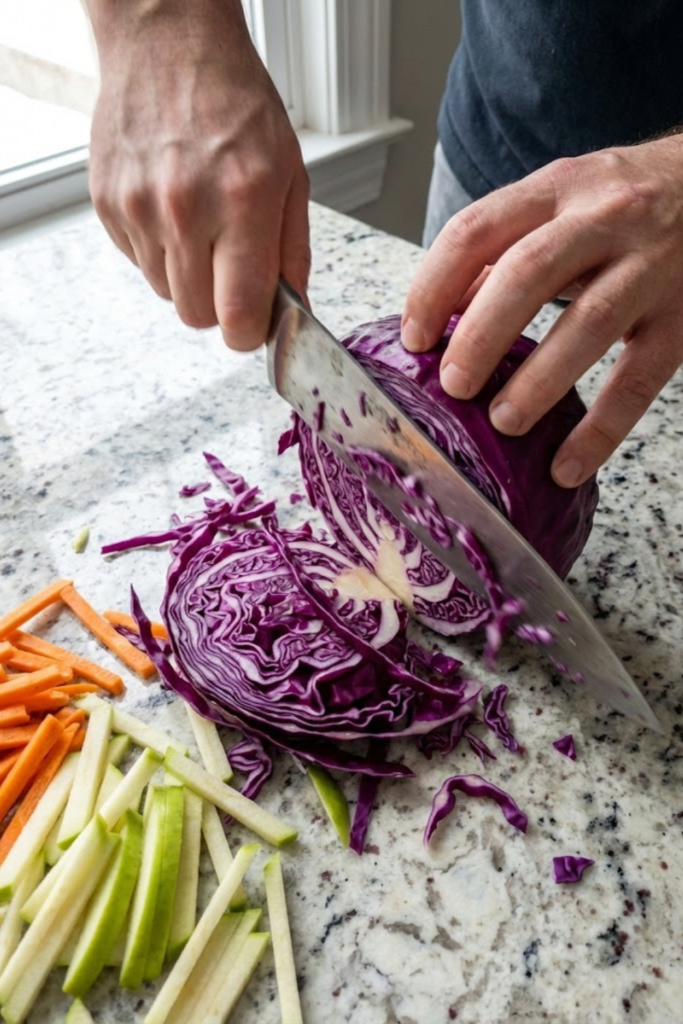
When you are cutting the red cabbage, you want to shave it. I aim for slices that are paper-thin. If you cut them too thick, the cabbage tastes bitter and sulfurous. But when you julienne vegetables super thin, the dressing softens them just enough while keeping that snap.
I learned this the hard way after slicing my finger—always use the “claw” hand. Tuck your fingertips in and use your knuckles to guide the blade. It feels weird at first, but it saves your fingers. I felt so clumsy doing it for the longest time, but now it’s second nature.
Also, don’t ignore the carrots. I used to just buy the pre-shredded bag to save time. Don’t do it! They are dry and taste like nothing. Grating a fresh carrot takes 30 seconds and it is so much sweeter.
Stop the Brown Apple Panic
There is nothing sadder than a brown apple slice in a salad. It just looks unappetizing, right? My kids won’t touch an apple if it has even a tiny brown spot.
Since we are using Granny Smith apples for this red cabbage salad, you have to work fast. The second I slice those apples into matchsticks, I toss them in a bowl of cold water with a squeeze of lemon juice.
I used to think this made the apples taste like lemonade, but it doesn’t. It just seals the surface. I left a bowl of treated apples on the counter for an hour once while I dealt with a laundry crisis, and they were still bright white when I came back. It’s a total lifesaver when you are trying to time dinner.
The Dressing That Ties It Together
Okay, step away from the mayonnaise jar. We aren’t making picnic slaw here. We want a tangy vinaigrette that cuts through the rich, sticky glaze on the chicken.
I keep it stupid simple. Apple cider vinegar, a little olive oil, a pinch of salt, and a dash of celery seed. That celery seed is the secret weapon—it tastes like “slaw” without the heavy creaminess.
One time, I dumped the dressing on the salad way too early. By the time we sat down to eat, the cabbage had released all its water and the bowl was half liquid. It was gross.
The trick I learned is to dress the slaw about 10 minutes before you eat. That is the sweet spot. It gives the flavors time to meld but keeps the crisp autumn slaw actually crisp.
And honestly, tasting as you go is key. Cabbages vary in size. Sometimes you need a little more salt, sometimes a little more vinegar. Trust your tongue, not just the recipe card.
Step-by-Step Cooking Technique for Perfect Chicken
I have a bit of a love-hate relationship with cooking chicken. For years, I was terrified of undercooking it, so I would blast it until it was basically chicken jerky. My poor husband would chew politely, but I knew it was bad. It wasn’t until I learned how to properly handle heat that my sticky apple cider chicken actually started tasting good.
The technique isn’t hard, but you can’t just throw things in the pan and hope for the best. You have to pay attention to the sounds and smells.
Getting the Sear Right
First things first: do not overcrowd the pan. I used to jam as many thighs as I could into my skillet because I was impatient. Big mistake. When you pack them in like sardines, they steam instead of searing.
You want crispy chicken skin, right? That golden-brown crunch is the best part. To get that, you need space. I usually cook in batches now. It takes a few extra minutes, but it is worth it.
Also, pat the chicken dry with a paper towel before it hits the oil. If the skin is wet, it won’t crisp up. It just sizzles sadly and stays gray. I learned that one from a cooking show while folding laundry one Saturday.
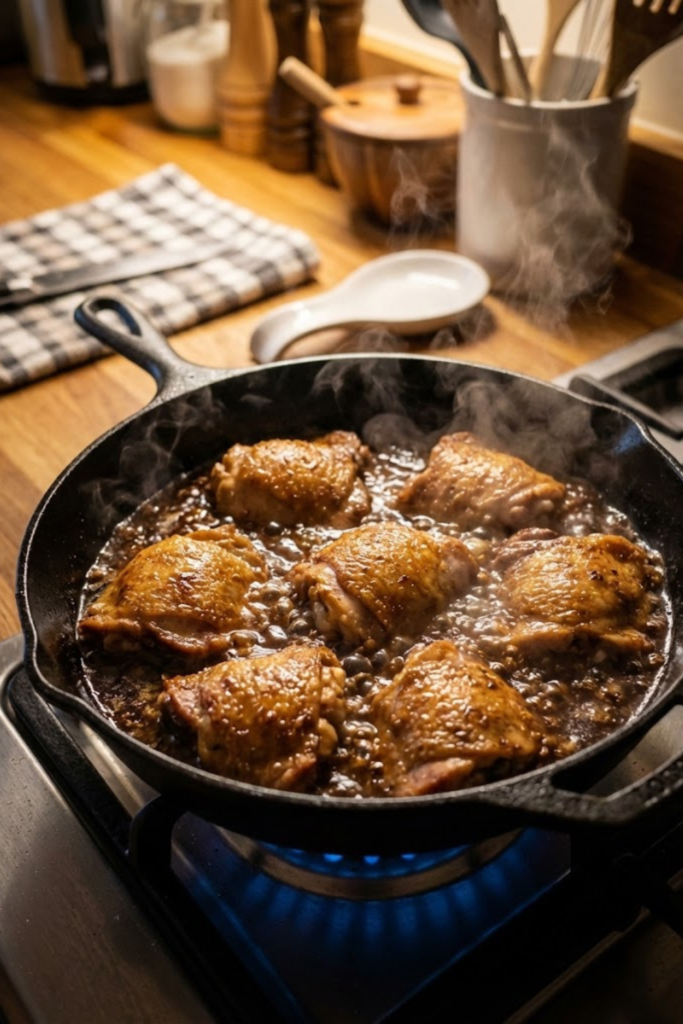
Get your pan nice and hot. When you put the chicken in skin-side down, leave it alone! I used to poke at it constantly. But if you try to flip it too early, the skin rips off and sticks to the pan. That is a tragedy. Let it sear for good 5 to 6 minutes until it releases naturally.
The Braising Basics
Once you have that beautiful color, it’s time for the liquid. This is where cast iron cooking really shines because it holds heat so evenly.
When I pour the cider mixture in, I make sure not to submerge the skin completely. If you drown the chicken, all that work you did to get crispy skin is ruined. You want the meat sitting in the sauce, but the skin staying above it.
This technique is basically a shallow braise. It keeps the meat incredibly moist while the sauce reduces around it. I usually turn the heat down to medium-low here. You want a gentle simmer.
If it’s boiling too hard, the chicken gets tough. I learned that after serving rubbery braised chicken thighs to my in-laws. Talk about stressful!
Trust the Thermometer, Not the Clock
I used to cook chicken by time. “Cook for 20 minutes,” the recipe would say. But my stove is weird, and chicken thighs come in all different sizes. Relying on the clock is a gamble I stopped taking.
Please, go buy a digital meat thermometer. It doesn’t have to be expensive. It is the only way to know for sure if your dinner is safe to eat.
You are looking for exactly 165°F (74°C). I used to cut into the chicken to check the color, but that lets all the juices run out. Dry chicken is the worst.
Now, I poke the thickest part of the thigh. When it hits that number, I pull it off the heat immediately. The residual heat will keep cooking it a little bit. This simple tool changed my life. No more guessing, and no more dry, sad dinners.
Just perfectly juicy, one pan meals that make you look like a pro.
Serving Suggestions and Pairings
I used to be the kind of cook who just slapped food on a plate and called it a day. As long as it tasted good, who cared what it looked like? Well, turns out, my family cared. I remember serving this sticky apple cider chicken for the first time, and because I rushed it, the whole plate was just different shades of brown. It looked like cafeteria mush.
My kids were skeptical, and honestly, I didn’t blame them. We eat with our eyes first, right? Over the years, I’ve learned that taking thirty extra seconds to plate things properly makes a huge difference. It turns a frantic Wednesday night dinner into something that feels like a real meal.
Plating the Dish Without the Mess
Here is a mistake I made so you don’t have to: do not pile the hot chicken directly on top of the cold slaw. I did this thinking it would look fancy, like a restaurant stack.
Spoiler alert: it ruined the salad. The heat from the chicken wilted the cabbage instantly, and the warm dressing got runny and weird. It was a texture nightmare.
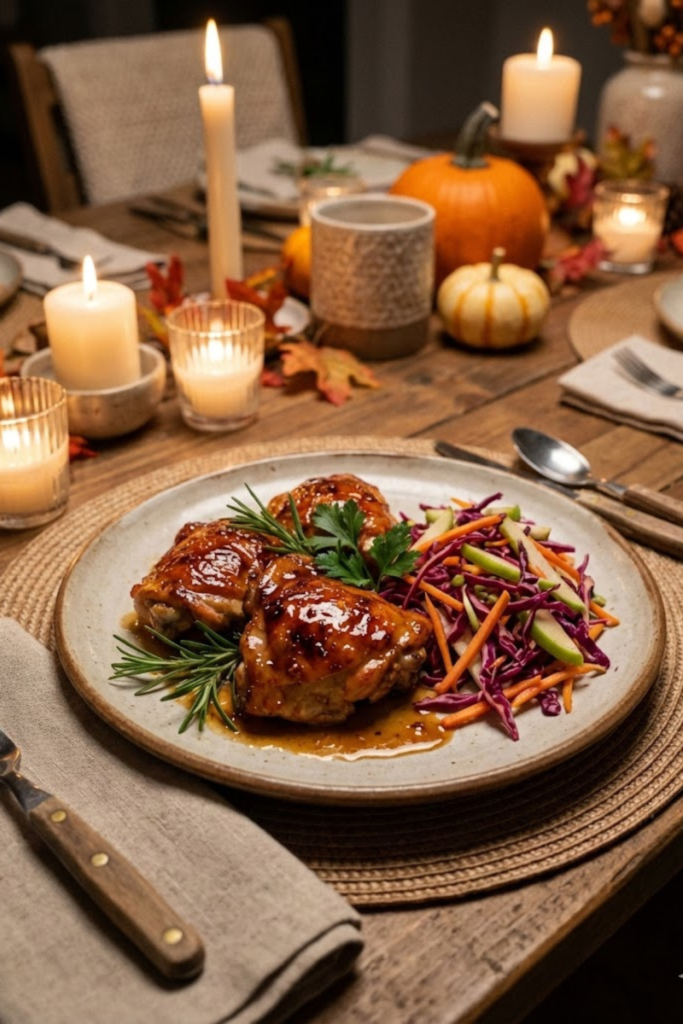
Now, I always plate them side-by-side. You want that contrast. The warm sticky chicken needs to stay hot, and the crisp autumn slaw needs to stay cold.
I also try to use white plates if I have them clean. The dark amber color of the glaze and the bright purple of the cabbage pop against white. It makes you look like a genius food photography expert, even if you are just using your phone camera.
Garnishing Like You Mean It
For the longest time, I thought garnishes were just those inedible green sprigs they put on your plate at weddings. But for this dish, they actually add flavor.
You need something green to break up the color. Fresh thyme is my go-to because it smells like heaven when it hits the hot chicken. If you don’t have thyme, parsley works too. Just chop it up finely.
And let’s talk about texture. I like to sprinkle toasted pecans on top. But watch out! I have burned more batches of pecans than I can count. They go from raw to burnt in about ten seconds if you aren’t paying attention.
Toast them in a dry pan just until you smell them, then get them out immediately. That little bit of crunch makes this feel like a legit dinner party main course.
What to Drink With It
I am terrible at pairing wine. I usually just drink whatever is open in the fridge. But for autumn entertaining, I tried to actually think about it.
Since the sauce is sweet and tangy, you don’t want a heavy red wine. It just fights with the apples. I found that a crisp white wine, like a Pinot Gris, cuts through the richness of the chicken skin perfectly.
Or, if you want to be really on theme, serve it with a hard apple cider. It’s kind of meta—cider with cider chicken—but it works! The bubbles scrub your palate so every bite tastes fresh.
Whatever you do, just keep it simple. This meal is about comfort, not stress.
Bringing It All Together
So, there you have it. My secret weapon for winning autumn. It is funny, looking back at that first disaster with the burnt pan and the dry chicken, I never thought this dish would become our absolute family favorite. But that is cooking, isn’t it? You mess up, you learn, and eventually, you get to eat something amazing.
I really hope you give this sticky apple cider chicken a shot tonight. It is one of those meals that looks fancy enough for company but is actually easy enough for a Tuesday when you are exhausted.
Don’t let the glaze intimidate you. Just keep an eye on it, and remember that burnt sugar waits for no one! If you do make it, I would love to see how it turned out. Did you get that skin crispy? Did you use the pecans?
Please snap a picture and share it on Pinterest! Tag me so I can drool over your creation. Seriously, seeing you guys cook these recipes makes my whole day. Now, go enjoy that taste of the tropics—or well, the orchard—right in your own kitchen!